
New York City’s immigrants have shaped the U.S. over the last 250 years — and beyond, historians and officials say.
From the days of Dutch colonists in the early 1600s to the opening of Ellis Island hundreds of years later, to the formal recognition of neighborhoods like Little Haiti in 2018, they’re coming to America — even as the federal government seems determined to stop them like never before.
“When I think about America’s story, I think about New York City and how for generations this has been the place where people come from every corner of the world,” said Faiza N. Ali, commissioner of the Mayor’s Office of Immigrant Affairs (MOIA).
Ali is the daughter of immigrants from Azad Kashmir, Pakistan. Two-thirds of New Yorkers are first- or second-generation, like her. And one third of New Yorkers are immigrants. Forty-three percent of the workforce are too.
Yet the semiquincentennial also marks a time of challenge for immigrants. The second Trump administration has launched a brutal crackdown across the nation, with raids and arrests in New York City and the threat of a surge. City and state officials, meanwhile, have introduced a variety of laws and bills to uphold the city’s sanctuary status of protecting immigrants from potential federal deportation.
“One of the defining stories of the last 250 years is how America has continuously been renewed by people who arrive here with hope,” Ali said.
Early days of immigration
New York City has always been a city of immigrants, according to Nancy Foner, a distinguished professor of sociology at Hunter College in Manhattan. She’s researched and written extensively about immigration for decades.
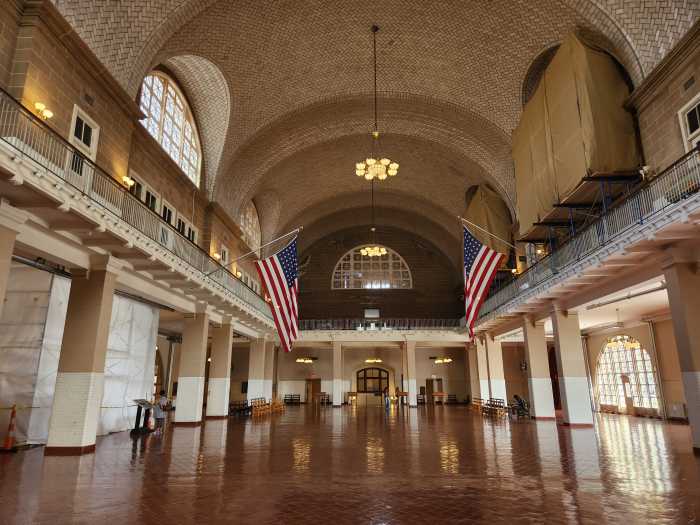 Ellis Island
When New York City was only a Dutch outpost of about 500 people in the 1600s, many non-Dutch immigrants came among them, Foner said. During the British colonial era, from the late 1600s to 1700s, immigrants came from across the British Empire.
In the 1800s to the early 1900s, Germans and Irish began arriving in large waves. Eastern European Jews and Southern Italians followed, around the turn of the century. The city was rapidly growing, becoming a manufacturing center.
It also had a convenient location and large port, Tyler Anbinder, historian and emeritus professor of history at George Washington University, said. He’s the author of the 700-page City of Dreams: The 400-Year Epic History of Immigrant New York.
“New York City has been the number one destination for immigrants in the United States for most of the city’s 400-year history,” Anbinder said. While immigration has dispersed to other hubs throughout the country in recent years, namely Los Angeles, New York City has remained the largest due to its size, he said.
Ellis Island and modern immigration
Ellis Island was once the epicenter.
While open from 1892 to 1954, Ellis Island processed over 12 million immigrants, primarily from Europe. That’s about half of all immigrants that came to the U.S. during that period. It was the busiest in the nation, until the mid 1920s, when processing moved to overseas consulates and arrivals at Ellis Island were reduced.
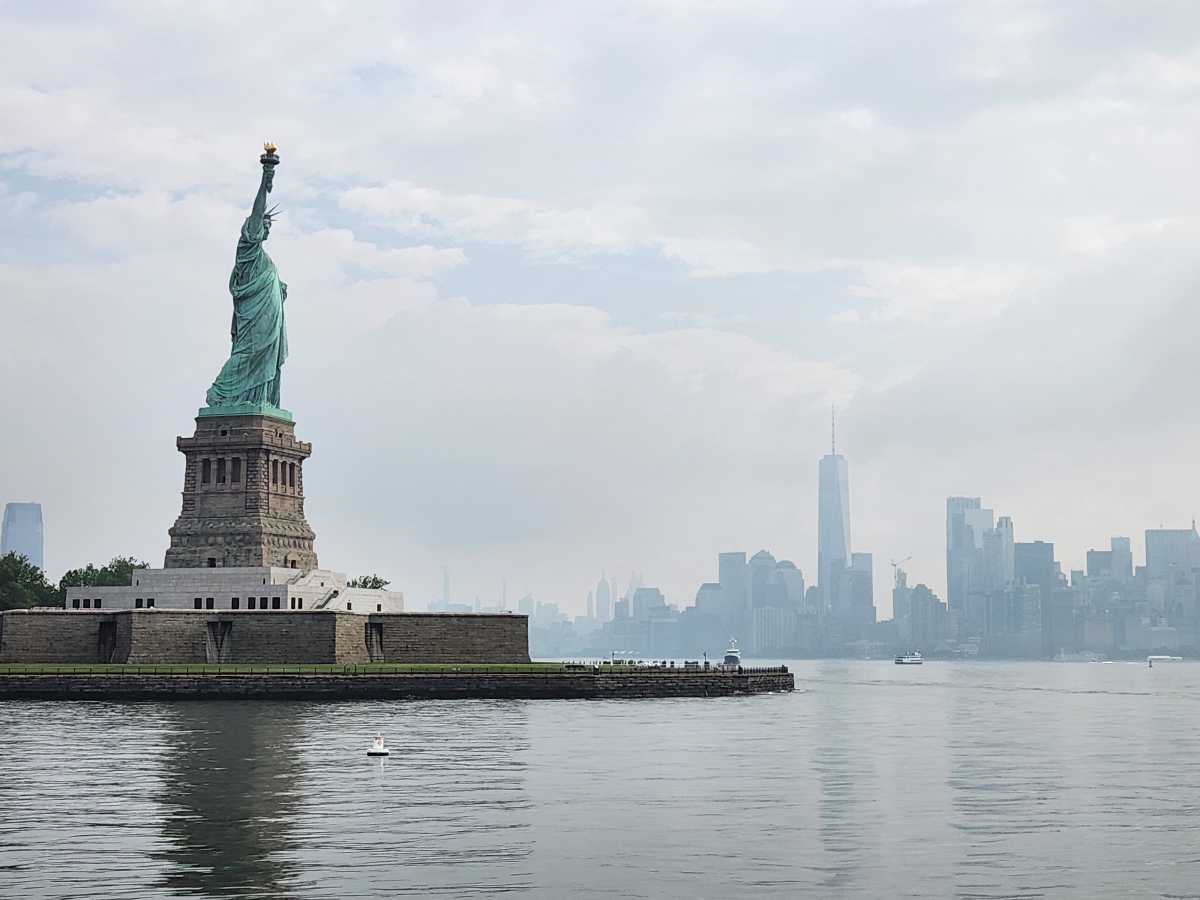
The nearby Statue of Liberty on Liberty Island was a symbol of freedom and the inspiration for Emma Lazarus’s legendary poem “The New Colossus.” Referencing the statue, Lazarus wrote, “her name / Mother of Exiles.”
“Give me your tired, your poor/Your huddled masses yearning to breathe free,” she wrote. “Send these, the homeless, tempest-tost to me/I lift my lamp beside the golden door!”
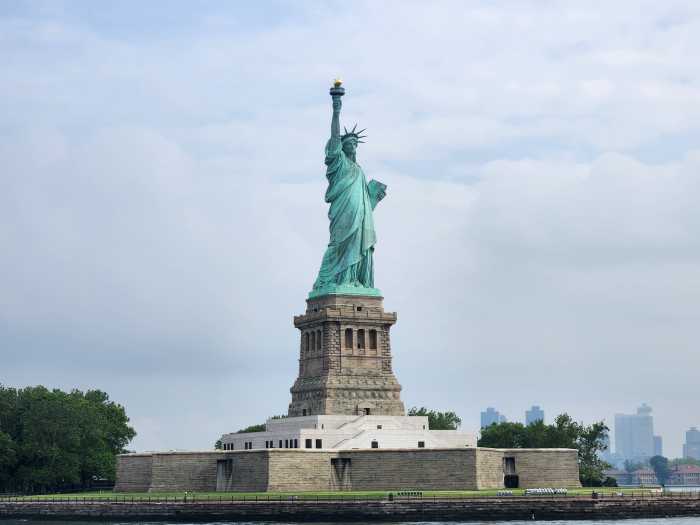 Statue of LibertyPhoto by Shane Gomez
In 1924, immigration to New York City dampened with the Johnson-Reed Act, which limited immigration by creating national origin quotas. This was designed to curb the influx of Eastern and Southern European immigrants, Foner said. The bill also made Asian exclusion permanent.
“It’s really important that we understand that every generation of American immigrants has been unwelcome to some extent,” Anbinder said. Until the 1900s, the question was not whether to welcome immigrants, he said, but how quickly they should become citizens and get voting rights.
In 1965, the quotas were abolished under the Immigration and Nationality Act. Since then, New York City has seen massive waves of new immigrants. This era is defined by immigrants from “virtually all over the world,” Foner said. It is also driven by existing communities and family members already here.
Immigrant New York City today
The New York Immigration Coalition (NYIC), founded in 1987, is one of many in the city’s network of immigrant support organizations. NYIC’s efforts include advocacy, workshops, presentations, and helping with legal services and healthcare.
“Over the past 250 years, we’ve yet to achieve the freedoms for all who call this country home, and the American dream has become so distant for so many,” said Murad Awawdeh, president and CEO of NYIC.
NYIC has taken a hard approach against the Trump administration. Awawdeh, the son of Palestinian immigrants, cited a quote by Ronald Reagan.
“The day that we close the door on new Americans is the day that we close the future on the United States of America,” he paraphrased.
New York City’s immigrants — across the city’s history — have shaped the U.S.’s food, music, culture, and infrastructure, he said.
In recent years, immigrant neighborhoods in the city have grown. Jackson Heights in Queens, for example, is 60 percent foreign-born. That makes it one of the most immigrant-dense communities in the nation.
“On any given block, you’ll hear dozens of languages, you’ll see families from all walks of life, you’ll see different cultures living alongside one another,” Ali said, “and I think that’s what America is.”