
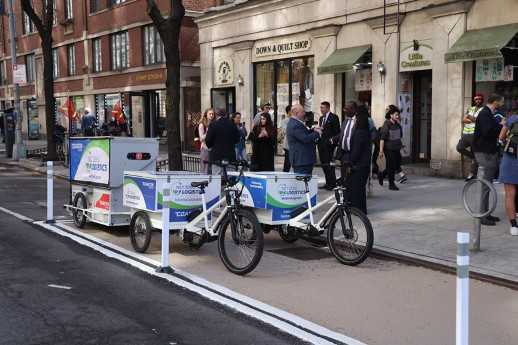
A pending New York City Council bill known as the Delivery Protection Act. could threaten over 10,000 local jobs and severely disrupt shipping and delivery operations, a new industry analysis has found.
The transportation and consulting firm AKRF released its 146-page report on Tuesday, which analyzed the potential impacts of Intro 0518-2026, which Queens City Council Member Tiffany Cabán (D-Queens) introduced in February 2026.
The proposed bill would require last-mile storage facilities to obtain business licenses from the Department of Consumer and Worker Protection that require additional safety, training, and employment requirements
AKRF found that the proposed requirements could force last-mile storage facilities to locate outside of the city, increasing delivery costs for consumers and propagating as many as 132 million additional late deliveries each year.
Rudy Cazares, founder of the delivery service provider Team Cazar Logistics, said in a Tuesday press release from the New York Delivers Coalition that the study “puts numbers behind what small business owners have been saying all along.”
“Many of us have spent years building our companies, creating jobs, and investing in our communities,” Cazares said. “The findings in this report show that businesses like mine could be forced to close, putting thousands of New Yorkers out of work and taking away opportunities that local employers have worked hard to create.”
Stakeholders, including Amazon, have echoed the bill’s commitment to delivery driver safety, but voiced concerns over its potential impacts on small businesses and operating costs.
“Our commitment to providing safe, fast, and affordable delivery to New Yorkers is central to everything we do in this city,” Amazon stated in testimony submitted to the council on April 8. “If enacted as written, Introduction No. 0518-2026 would directly undermine that commitment by threatening the more than 40 local small businesses we partner with to deliver to Amazon customers and the jobs of the more than 5,000 people they employ.”
If forced to relocate, the study found that annual household delivery costs could increase by $664, and that small businesses dependent on delivery services could expect heightened operating costs.
The report found that pushing last-mile delivery facilities out of the five boroughs could also worsen traffic congestion and emissions, adding an estimated 10 to 16 million vehicle miles traveled annually in the city.
The MTA launched its congestion pricing program in January 2025 to combat dense vehicle traffic, requiring passenger and commercial vehicles to pay a toll when entering Manhattan south of 60th street, known as the “Congestion Relief Zone.” The program sparked opposition over its impacts on the trucking industry and delivery vehicles.
Tom Grech, president and chief executive officer of the Queens Chamber of Commerce, said in the press release that the bill would “fundamentally reshape how last-mile delivery operated in New York City.”
“Forcing delivery facilities outside the five boroughs would do far more than disrupt our network that provides for millions,” Grech said. “It would put jobs at risk for drivers, warehouse workers, and the small businesses that depend on our operations, while increasing costs, slowing deliveries, and reducing the fast, reliable delivery service that New Yorkers rely on every day.”
The bill was last heard by the council’s Committee on Consumer and Worker Protection on April 9 and is currently being laid over in committee.