
Dad Don’t Read This
St. Luke’s Theatre
May 4–24, 2026
New York
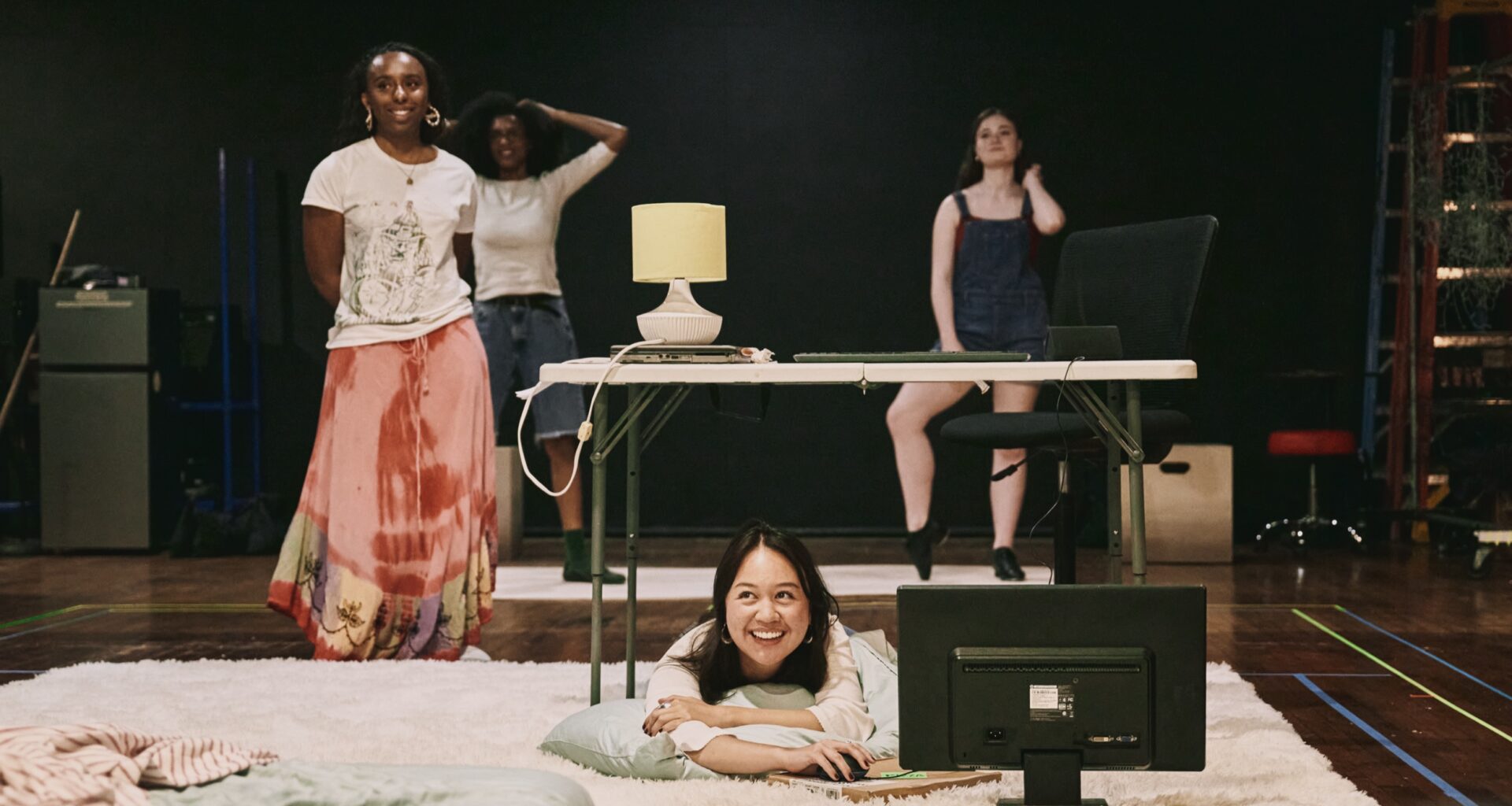
In John Berryman’s seminal poem “Dream Song 14,” our “heavy bored” narrator’s mother berates him for saying so: “Ever to confess you’re bored / means you have no // Inner Resources.” True and deep boredom, in all its wrestling mundanity, feels few and far between in an overstimulated world less and less used to the feeling of nothing to do. Onstage, the challenges of conveying this malaise multiply. How does one externalize a thoroughly internal state? How does one make an event out of its lack? How does an audience learn to sit through it? For Eliya Smith (Grief Camp), the key to success is in embracing the inevitability of failure. In Smith’s latest play, Dad Don’t Read This (running May 4–24 at St. Luke’s Theatre), four Ohio teens plead, act out, and create in glorious (and often futile) attempts to express what they may not fully understand how to say. They also, in what may encapsulate all of the above, play The Sims. Ahead of the upcoming run, I sat down with Smith to talk collaborators, The Sims, and Midwest ennui.
Ethan Karas (Rail): There’s this metatheatricality in Dad Don’t Read This where the characters and the play itself seem to be grappling with how to perform or signal a kind of unsettledness, to make it controllable for themselves or legible to others. How do you represent that ennui on stage when the lived experience can feel, from the outside, blasé?
Eliya Smith: To me, that’s the best thing about dramatic writing. There’s so much room in between the text for the substance to happen. That’s what’s attractive to me about writing for young people; they don’t know how to say what they’re trying to say, and they’re constantly failing. We were talking the other day [in rehearsal] about one of the exchanges where they’re all sort of mean to each other. It’s fun to watch with young people, because if you’re watching older people, you can be like, “Just communicate better!” [Laughs.] But they’re children, they actually can’t, they are doing their best. I don’t really ever know exactly what my plays are saying, but I also think that, because of the form of dramatic writing, the characters also don’t know what they’re saying. To me, whatever the play is saying exists between whatever it is that they’re trying to say and then the way it actually comes out.
Rail: Especially in adolescence, where it feels like the person you want to be is so removed from the person that you are right now.
Smith: Which, to be fair, I don’t know if anyone ever becomes the person they wanna be.
Rail: It feels like adolescence is the first moment that you become aware of that gap. Self-consciousness starts to enter your psyche.
Smith: You’re just enough out of childhood that you have started to realize that something is wrong, but you’re so far from self-actualization that it’s like…maximum gap. [Laughs.]
Rail: Dad Don’t Read This is also the latest in a long series of collaborations with the Goat Exchange, led by Chloe Claudel and Mitchell Polonsky. What drew you to each other and keeps you collaborating on show after show?
Smith: So much. I think you get a lot out of working with people that you love, and I really, truly love working with them. Chloe said this thing that I think is true, that we make something better together than any one of us could make on our own. It’s so hard to be in a rehearsal room watching something happen to your play that isn’t what you imagined, which is always what’s happening in the best way. In any rehearsal room, there’s a constant push and pull of like, “Do I fight for the thing that I think is right? Or do I choose to let in other people’s visions?” I feel like fifty percent of the time the right thing to do is fight for what you think is right, and fifty percent of the time the thing that will make a play sing is somebody else’s idea. When I work on stuff with them, I have so much respect for them and so much trust that they know what they’re doing, that it’s very easy for me to be like, “Go on, do your thing.” We often disagree about what’s wrong when something’s wrong, but we can all agree when something’s right. I think they’re geniuses and have a singular theatrical sensibility. I often feel like I have no idea what I’m doing, and I really feel like it’s nice to be in a rehearsal room with people that I feel absolutely do know what they’re doing.