
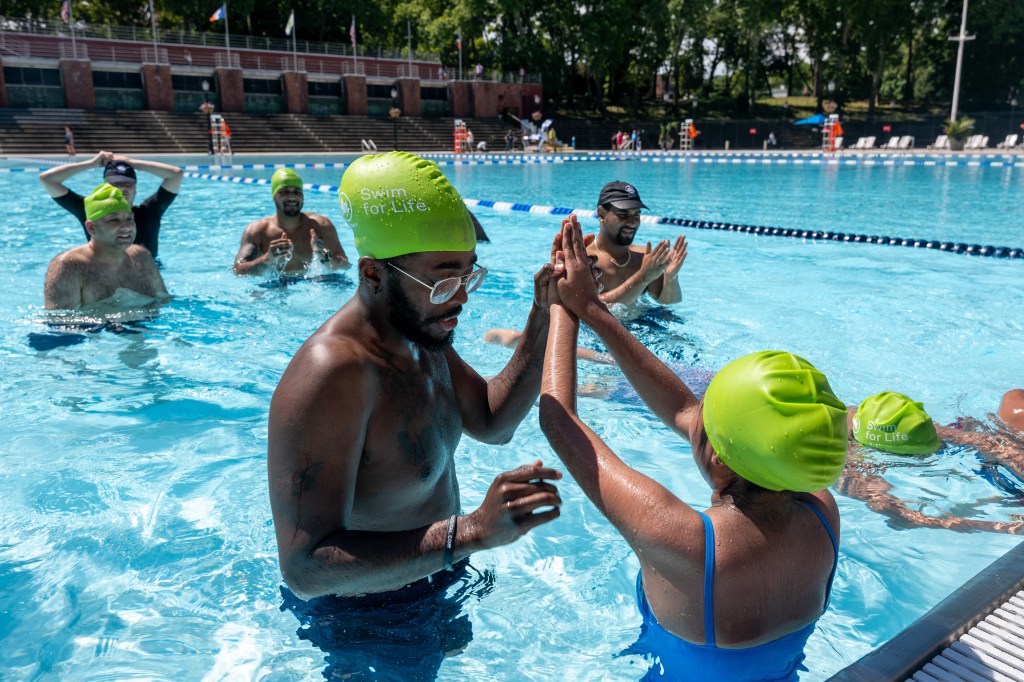
Drowning is the No. 1 cause of death for children aged 4 and under, and deaths increase during the summer as people head to pools, rivers, and lakes across the country. Every drowning death is a tragedy, but the risk is not evenly distributed.
In swimming pools, Black children drown at rates nearly eight times higher than their counterparts. This gap is rooted in a lack of access to water safety training and swim lessons, not ability. For generations, low-income communities of color have been shut out of swimming pools and water safety education.
As New York City pools open this summer, we have an opportunity to confront this legacy and ensure that knowing how to swim is not a privilege for a few, but a life-saving skill that every child needs to learn regardless of their ZIP code.
New York has made meaningful strides to increase access to swim lessons. Mayor Mamdani and Parks Commissioner Tricia Shimamura expanded free swim classes this summer, building on last year’s $5.5 million investment in swimming lessons. New York City is also in its highest period of pool investment since the 1970s, with more than $1 billion committed to building, improving, and maintaining public swimming facilities.
At the state level, Gov. Hochul’s NY SWIMS initiative provides competitive matching grants to help communities build and modernize swimming facilities. And beginning this month, every family enrolled in a public school will receive a water safety packet that outlines drowning prevention strategies and the importance of formal swim instruction.
These investments are important, but they won’t close the gap alone. Public schools that require swimming lessons like Amber Charter Schools could help bridge the divide.
At Amber Charter Schools, swimming instruction is integrated in the school’s curriculum, requiring every second grader to learn how to swim. Through this program, roughly 1,700 students have mastered swimming skills and learned about water safety. With swimming part of the curriculum, the burden no longer falls on parents to find the time, money, or transportation for lessons.
Bringing swim lessons to school removes barriers for working families — already stretched thin by the rising cost of living — and ensures a child’s ability to stay safe in the water isn’t determined by a family’s schedule or bank account.
Recognizing the importance of basic water safety, some school districts across the country — from Missouri to Maryland — are working to incorporate swimming lessons into school curriculum as well and proving these programs can be done at scale.
In New York, public schools are not universally required to provide swim lessons. However, there’s a much-needed push to change that. A bill introduced in the New York state Senate in April would require water safety instruction and free swim lessons annually “in schools in a city with a population of one million or more.”
This common-sense legislation aims to “address the increase in drowning rates and implement a system where all students are educated on water safety. This is targeted at communities where pools may be inaccessible, swimming lessons are unaffordable, and travel expenses are too great for families.”
Imagine the impact mandatory swim lessons in schools would have in New York City, where one in four children don’t know how to swim.
With public beaches and pools now open for the summer in New York City — which has 520 miles of coastline — knowing how to swim is fundamental and necessary. We owe it to our children to ensure they have all the skills they need to stay safe in the water.
Almedina and Gomez are co-CEOs of Amber Charter Schools.