
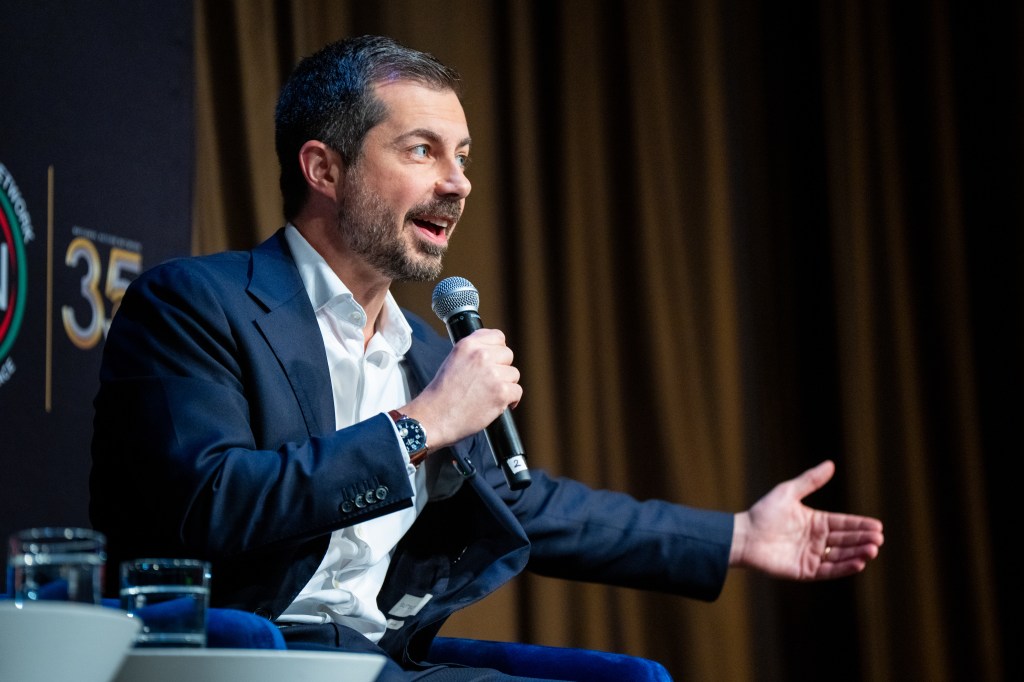
Former Transportation Secretary Pete Buttigieg was the recent target of a malicious report of suspected child abuse. Following an anonymous report, Michigan’s child protective services launched an investigation to determine whether Buttigieg’s children were at risk.
The report was false but, as someone who has dedicated my life to child welfare, I know the long-lasting impact child protective investigations have on families.
Buttigieg noted that the child protective workers investigating the allegations were not at fault, stating they have “admirable jobs that must be incredibly difficult every day, protecting the most vulnerable children from the most horrible threats.” Having worked on the front lines and now commissioner of the NYC Administration for Children’s Services, I wholeheartedly agree. That is why more must be done to ensure time and resources are focused on children who are in truly unsafe situations.
To start, states should eliminate anonymous reporting. This year, New York became one of just three states to do this. While callers must leave their contact information when making a report in New York, their name is kept confidential unless ordered to be released by a judge. In New York, the anonymous report made against Buttigieg would not have been accepted, so no investigation would have been launched, meaning child protective services would not have been at his door.
Second, states should reduce unwarranted reports of child abuse and neglect. That is a top priority of mine at ACS. While someone’s intentions may be good, some reports are related to poverty, not safety. When families need food or clothing, an investigation is likely not warranted.
Reducing the time spent on unnecessary investigations enables child protection teams to respond to cases where children need it most. It also limits families, like Buttigieg’s, from unnecessary involvement with the child welfare system.
In New York City, we’ve been working with public schools and other systems to help mandated reporters better assess when a report is necessary. In many cases, families just need some support. Last year, fewer than 7% of child protection cases led to ACS action in family court, including 2.6% that involved a removal to foster care.
The issues that the majority of families we interact with are facing may be better suited for ACS’s Support Line (212-676-7667), which is staffed by social workers and connects families to in-home services, assistance with basic needs, and other resources.
Since January 2023, ACS has conducted more than 450 sessions for more than 29,000 mandated reporters. Between 2023 and 2025, reports from schools are down 17%; reports from social services reporters are down 16%; and reports from health and mental health reporters is down 7%.
Finally, states should divert certain types of low-risk reports, where there is no impending danger to children. New York City’s Collaborative Assessment, Response, Engagement and Support (CARES) approach is an alternative child welfare approach that begins by making sure the children are safe but otherwise does not require a typical investigation.
CARES is less intrusive because visits are scheduled in advance, interviews with family contacts are made in partnership with the family, and there is no formal determination of whether child maltreatment occurred. It is designed to support families to prevent future involvement with ACS.
My heart goes out to Buttigieg’s family, as well as any other family who has fallen victim to a malicious report. Child welfare systems should do everything they can to ensure investigations are reserved for children who need it most and this is a priority for me here in NYC.
Jones Gaston is the commissioner of the NYC ACS.