
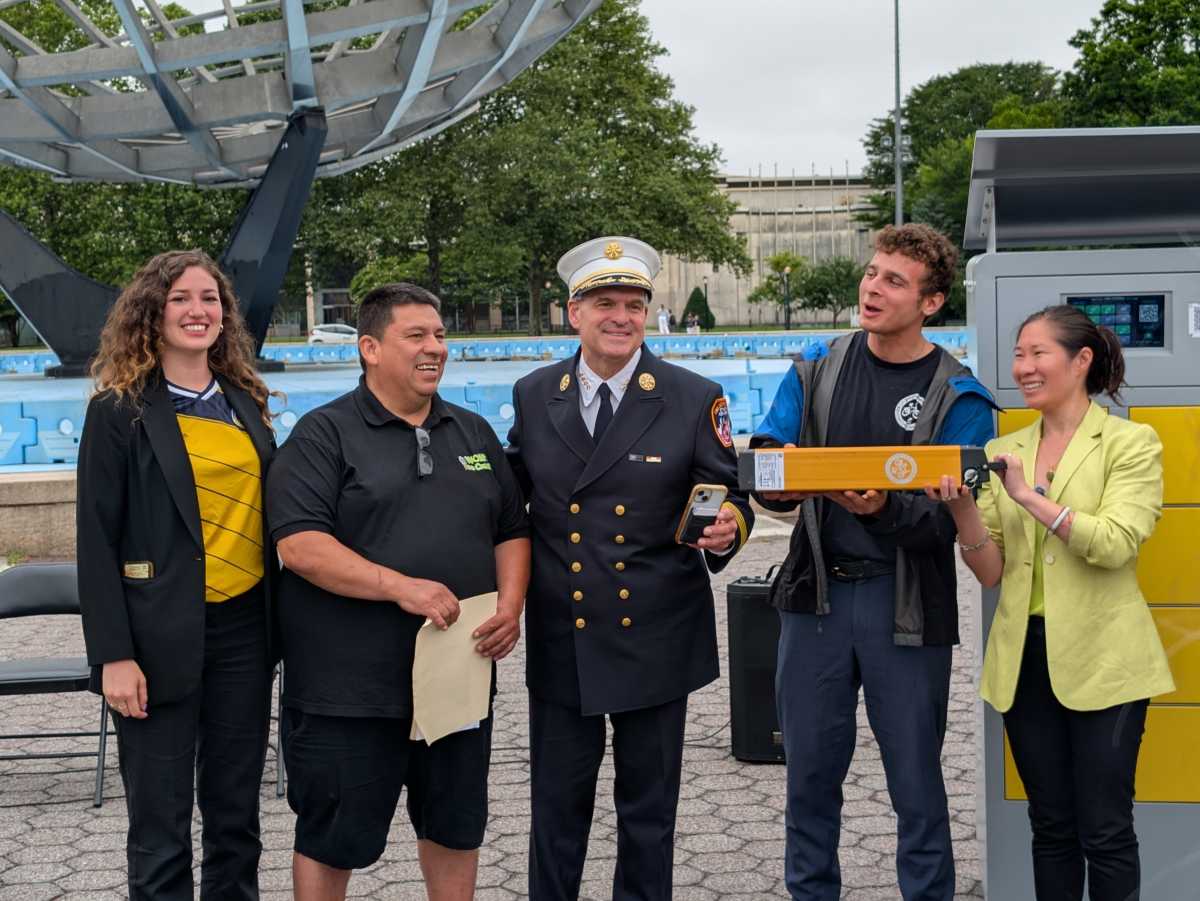
New York City’s Chief Climate Officer Louise Yeung on July 7 unveiled a six-month pilot that replaces gas-powered generators on mobile food carts with rechargeable electric batteries during a press conference near the Unisphere in Flushing Meadows Corona Park .
Titled the NYC Clean-Powered Carts Challenge, the initiative will support the electrification of ten mobile food vendors operating around Flushing Meadows Corona Park to reduce greenhouse gas emissions. The pilot is designed to serve as a proof of concept, enabling the city to test battery performance, gather vendor feedback, and expand for broader deployment.
“If we electrified every food vending cart in New York City, we can reduce greenhouse gas emissions by over 120,000 metric tons of carbon dioxide, which is the equivalent of taking 30,000 cars off the road each year,” Yeung said. “This is transformational for our parks, our streets, and the lives of New Yorkers all across the city.”
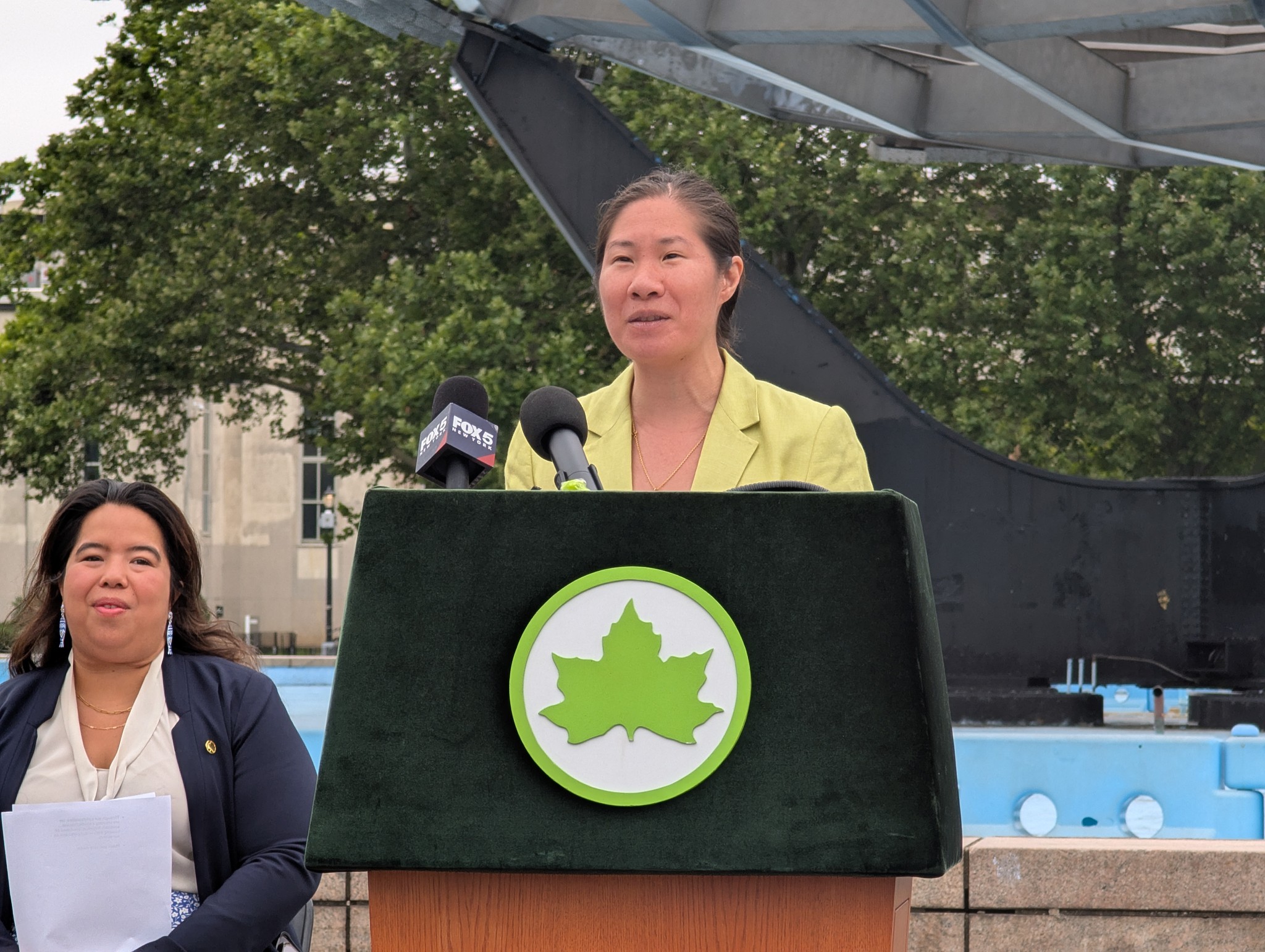 New York City’s Chief Climate Officer, Louise Yeung, spoke about the climate benefits of rechargeable electric batteries.Photo by Joshua Lee
In collaboration with PopWheels, which provided battery-swapping infrastructure, the program retrofits existing carts from participating vendors with rechargeable electric batteries. At the beginning and end of each shift, vendors can exchange their used batteries for fully-charged replacements. Depending on the energy needed, the electric batteries can last between an entire day to an hour.
The transition away from gas-powered generators also reduces noise pollution while improving air quality.
“Our membership has shared numerous stories of health complications as a result of working next to gasoline generators all day,” said Mohamed Attia, managing director of Urban Justice Center’s Street Vendor Project (SVP). “This initiative is rooted in environmental justice.”
PopWheels President and co-founder David Hammer demonstrated the battery’s sound insulation using the refurbished cart of William Arévalo, a participating street vendor.
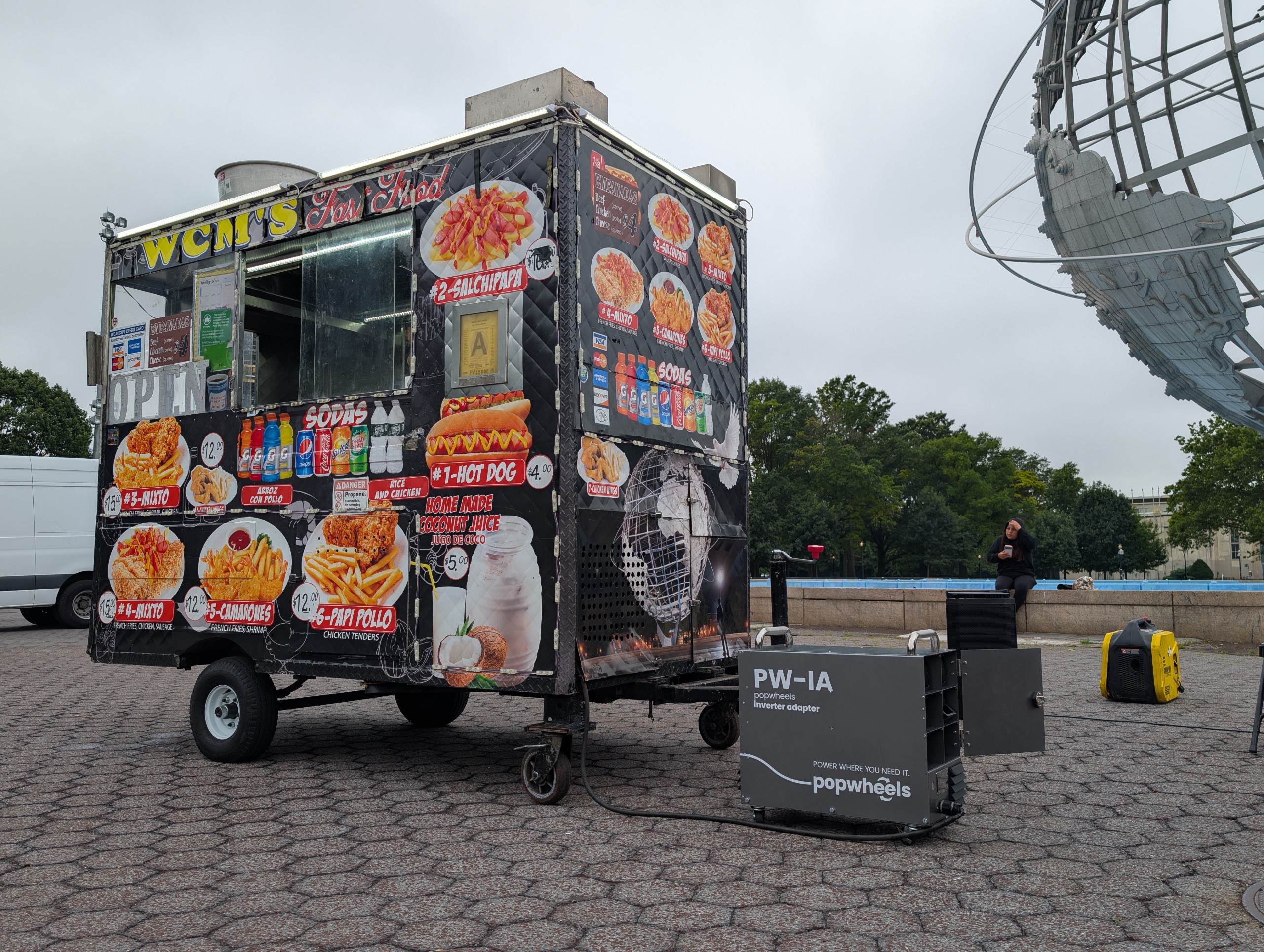 William Arévalo, a participating street vendor, brought his mobile food cart to the press conference.Photo by Joshua Lee
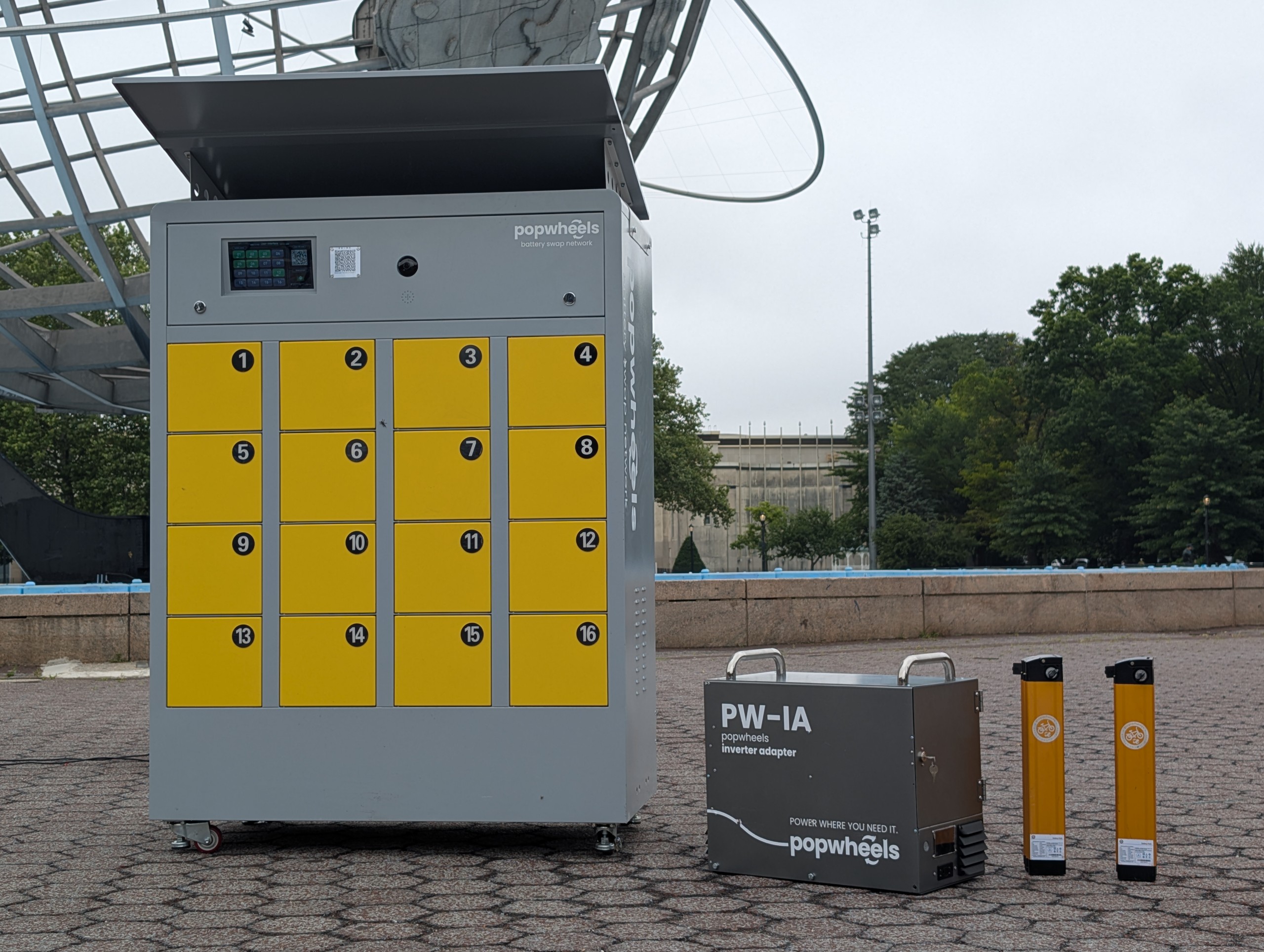 Participating vendors, with the help of PopWheels’ battery-swapping infrastructure, can exchange their used batteries for fully charged replacements.Photo by Joshua Lee
Arévalo, who addressed the announcement in Spanish, has worked in Flushing Meadows Corona Park for eight years and owns three businesses there. Drawing on his own experience with the noise and fumes from gas-powered generators while working all day, he expressed optimism that the initiative will lead to better working conditions.
“This program means so much to us,” he said. “Not only will we have a cleaner, safer, and much quieter workspace, but we’ll also help make the park a more pleasant place for everyone by using batteries instead of generators.”
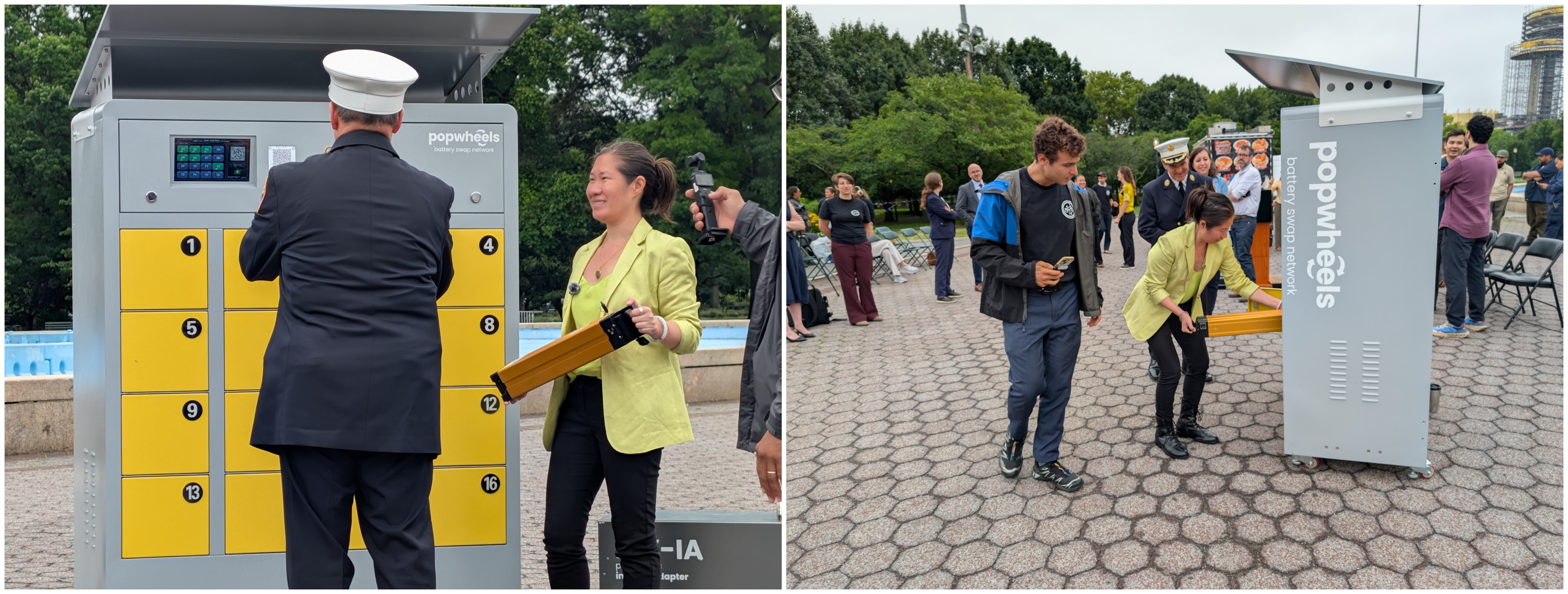 Louise Yeung and Thomas Currao demonstrate PopWheels’ battery swapping technology during the press conference.Photo by Joshua Lee
To ensure battery safety, the Mayor’s Office of Climate & Environmental Justice (MOCEJ) partnered with the Fire Department of the City of New York (FDNY), which offered its subject matter expertise to guide a safe rollout of the batteries, according to FDNY Chief of Fire Prevention Thomas Currao.
The press conference also featured Carina Kaufman-Gutierrez, Executive Director of the Office of Street Vendor Services, and Tricia Shimamura, NYC Parks Commissioner, who emphasized the importance of supporting street vendors, given their role in reflecting the city’s cultural diversity and working class.
“Street food entrepreneurs, like William, are our City’s smallest businesses,” Kaufman-Gutierrez said. “[They help] shape New York City’s unique flavor and culture, making affordable, diverse food offerings accessible to working-class New Yorkers and to tourists alike.”