
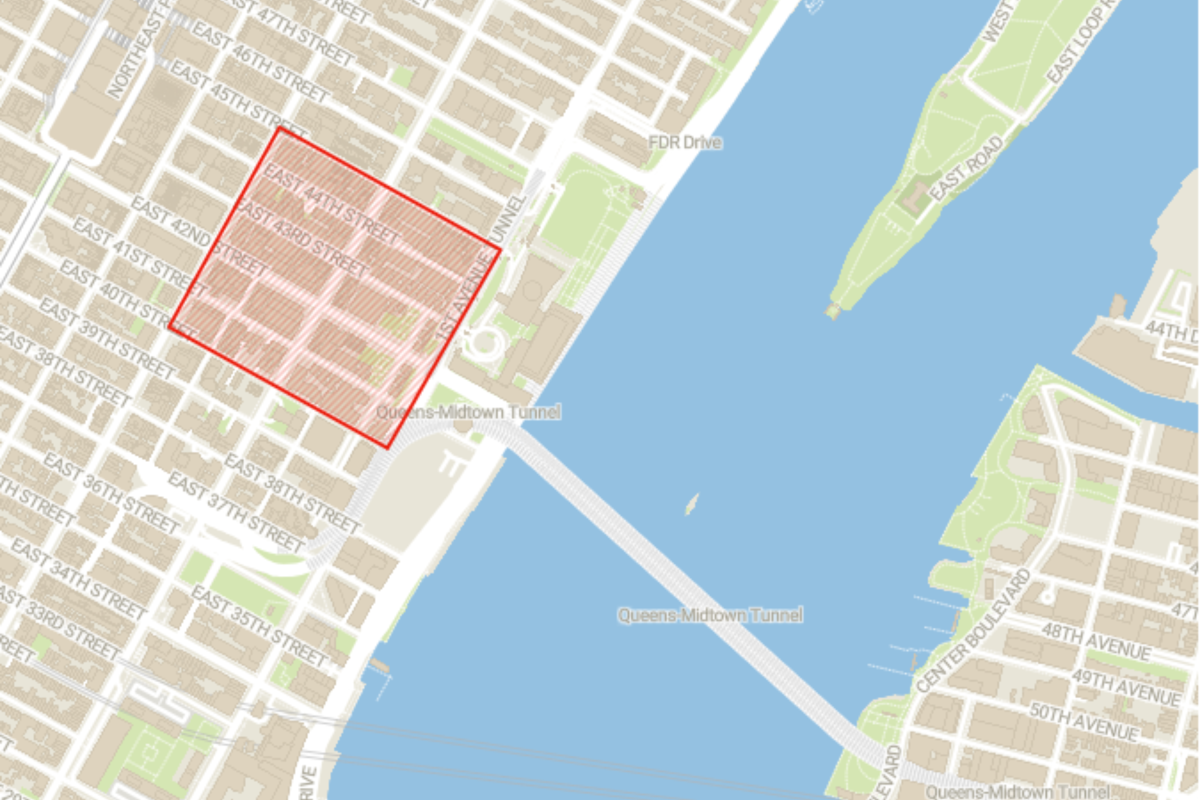
A large section of Midtown Manhattan remains sealed off on Wednesday as engineers work to stabilize a 37‑story tower at 235 East 42nd Street, where buckled columns and sagging floors triggered an emergency evacuation and the creation of a “frozen zone” spanning several blocks. MetroLoft issued a new statement Wednesday, calling the incident “a localized situation affecting less than 30 apartments out of over 1,600,” and insisting that “at no time was the building, or any portion of it, at risk of collapse.”
The building — the former Pfizer headquarters — showed “alarming signs of stress,” including steel beams “bending like cigarettes,” according to construction workers who first raised the alarm. The tower is part of a major office‑to‑residential conversion led by MetroLoft, with Gensler serving as the architect — a redevelopment that includes adding new floors atop an older structure.
1 of 6
Read More on News
Newsweek has reached out to Gensler and MetroLoft for comment on the matter.
Emergency Shoring Work Underway
City officials say all emergency stabilization work is being overseen by the building owner’s engineer along with a third‑party engineering firm brought in specifically for the response. According to the Department of Buildings (DOB), the emergency plan involves installing structural steel shoring columns and light‑duty shoring posts from the 9th floor to the roof to support compromised areas of the tower.
Additional steel shoring columns are expected to arrive later on Wednesday. Those heavier columns will replace the temporary light‑duty posts on every affected floor. “The light‑duty posts were installed first because this can be done quickly as an emergency measure,” the DOB said, noting that steel columns “take longer to be delivered and installed, but are a more long‑term solution.”
Photos released Wednesday show shoring jacks and box steel columns positioned beside the buckled supports. Shoring jacks — heavy‑duty adjustable props used to temporarily support vertical structures — are providing immediate stabilization, but engineers warn that the beams beneath them may not be able to carry the building’s full load. Full stabilization may require extending shoring 20 floors down to the foundation and reinforcing sagging floors above. More than 100 additional shoring jacks have already been delivered and are awaiting installation.
How Big the Frozen Zone Is and Who’s Affected
City officials initially froze an area from 40th to 45th Streets and First to Third Avenues, halting all vehicle and pedestrian movement.
The perimeter was later narrowed, but 42nd and 43rd Streets between Second and Third Avenues remain closed, with access tightly controlled by police.
Five buildings are still under emergency evacuation orders:
815 Second Avenue235 East 43rd Street231 East 43rd Street225 East 43rd Street 217 East 43rd Street
The impact is significant for Midtown’s dense mix of offices, hotels, residential towers, and tourist traffic. Workers, residents, and visitors were left in limbo, forming crowds at barricades Wednesday morning as they waited for updates or attempted to retrieve belongings.
One hotel guest described being unable to return to the Westin New York Grand Central, while others sought escorted access to workplaces or apartments.
How Many People and Businesses Are Inside the Zone
Midtown East is among the most heavily trafficked corridors in Manhattan, with tens of thousands of workers commuting daily to offices near Grand Central Terminal, the United Nations, and the Chrysler Building. The immediate frozen zone includes:
Multiple hotels (including the Hampton Inn Grand Central and Westin New York Grand Central)Residential buildings on East 42nd and East 43rd StreetsRestaurants and ground‑floor retail at the evacuated addressesOffices and medical practices, including a physical therapy center at 815 Second Avenue
While exact numbers vary by building, the affected blocks typically hold several thousand workers and residents on a weekday. The evacuation of a nearby school with 400 students highlights the scale of disruption.
Has New York Ever Created a Zone Like This Before?
Frozen zones are rare. The most extensive exclusion area in modern city history followed the 9/11 attacks, when lower Manhattan was sealed off for months. Other examples include:
The East Harlem gas explosion (2014), which shut down several blocksThe Chelsea bombing (2016), which created a multi‑block security perimeterMajor crane collapses, which have occasionally forced block‑level evacuations
But a multi‑block freeze in Midtown, triggered by structural instability rather than terrorism or explosion, is highly unusual — especially involving a tower undergoing a complex office‑to‑residential conversion.
What Caused the Structural Failure
Firefighters arriving Tuesday morning found two buckled columns, multiple cracks, and floors beginning to sag on the 21st floor. The building consists of a 37‑story tower connected to a 22‑story section, where workers were adding 11 new floors as part of the redevelopment. Officials say the added weight likely contributed to the failure. “The building has continued to move since we have been on the scene,” FDNY Chief John Esposito said.
Developer Nathan Berman of MetroLoft downplayed the danger, calling it “a typical construction mishap” and insisting the building was never at risk of collapse. The Department of Buildings notes the site has 44 prior complaints, including reports of falling debris earlier this year.
Investigation Into Structural Failure
The DOB says a full investigation is underway to determine the cause of the failure, including reviews of construction documents, witness interviews, and analysis of video and photo evidence. The building’s owner has also been ordered to hire a third‑party forensic engineer to conduct an independent evaluation of the incident.
“Contractors and site safety professionals have a legal responsibility to ensure that they maintain a safe working environment on their construction sites, for the safety of their workers and for the general public,” the DOB said. Any enforcement actions will depend on the results of the ongoing investigation.
What the Frozen Zone Means for Traffic and Transit
City officials warned of “traffic delays, road closures, mass transit disruptions” near Second Avenue through Wednesday morning. Bus routes, including the M42, M15, M15‑SBS, and northbound First Avenue buses, were diverted or delayed. Subway service on the 7 train, the closest line, remained normal.
For drivers, the closure of 42nd and 43rd Streets — key crosstown arteries — created ripple effects across Midtown, with congestion spilling into adjacent blocks.
When Will the Area Reopen?
Officials say the building is now stable, but reinforcement work will continue for days. “We feel confident in the emergency plan we have now,” Buildings Commissioner Ahmed Tigani said, while cautioning that “the public should not engage with that area.”
Mayor Zohran Mamdani said reopening the area is a priority but emphasized that safety comes first. Most residents have been allowed to return, but the five evacuated buildings remain off‑limits.
Contact Newsweek editors on this story: Samantha Beech and Gray R. Thomas