
by Michelle Mullen
Bronx Community Board 8 is taking another look at its outreach methods, but this time, board leaders say the goal goes beyond simply posting online.
Its newly formed social media working group is tasked with finding better ways to expand the board’s reach and make sure residents know what it is doing, whether that means using new digital platforms, boosting existing accounts or improving old-fashioned outreach on the ground.
Farrah Kule Rubin, Bronx Community Board 8’s district manager, said the new working group grew out of a recognition that while the board already has social media accounts, it still is not reaching enough of the district’s roughly 100,000 residents. Established this spring, the group will research how to best utilize online platforms to increase its presence, usage and “increase dissemination throughout the district not utilizing current sites used by CB8,” according to the board.
This is not the first time the organization has taken a look at its outreach presence. In 2018, it launched a similar group, but Rubin said this year’s project takes it a step further.
“The initial one was to really launch the social media presence, which we didn’t have at the time, so that was really where we developed and created social media and our website,” she said. “[Now] we have Facebook, we have Instagram, we have YouTube. So that really was the basis of the beginning.”
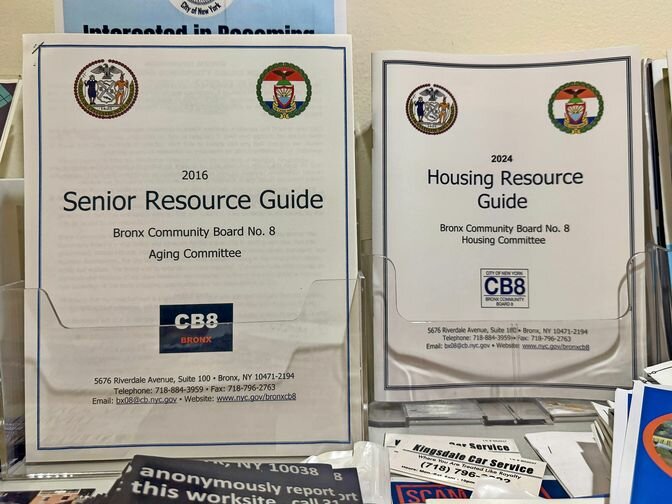
Still, she said the board has plenty more work to do to reach populations in its district that may be out of the loop. Among the ideas already discussed, Rubin said, is bringing in interns who could help their small team with more physical outreach — putting up flyers, distributing information to local businesses and extending the board’s visibility beyond meetings and tabling events.
“How can we physically do more outreach, aside from social media?” Rubin said. “Some of the residents have said, ‘We don’t hear about anything,’ but they don’t have social media.”
Constance Barnes-Watson, chair of the board’s economic development committee, said the group has been looking not just at what the board posts online, but also at whether it is communicating consistently and in ways that reflect the district’s needs.
“We’re not consistent with our posting necessarily, but we have to get on the same page about what it means to share information,” she said. She also said the broader approach includes questions about language access and whether the board needs better tools to manage its communication.
That challenge echoes the goals of the board’s first social media working group from 2018. In an interim report issued in May of that year, the earlier group identified a long list of possible benefits to utilizing social media — sharing board news and community events, sending urgent information in real time, reaching younger residents who are heavy social media users and broadening the board’s use of photos and video.
The 2018 group, led by former board vice chair Paul Ellis, also surveyed other community boards about their online presence and found broad support for expanding digital outreach. At the time, the group concluded that Instagram did not yet seem worth the added workload.
For Barnes-Watson, one of the biggest barriers to community engagement is simple awareness.
“Do people even know that they’re part of this community board, and do they know where the community board is?” she said.
She said that challenge is especially pronounced among older residents, as well as the small, independent businesses that line Broadway and other commercial corridors.
“Most of these are mom and pop businesses,” Barnes-Watson said. “How will we get to them? What would make the most sense for them? Probably not to come to a meeting at 7 o’clock.”
That has led the group to think beyond online outreach alone. Barnes-Watson said she and fellow board members have walked local corridors with flyers in hand, stopping into businesses to ask whether owners know what the community board is and what it does.
Whether the working group ultimately recommends new platforms, more frequent posting, more video, more interns or more flyers, its creation reflects a larger concern, said Rubin. In a sprawling district like Bronx Community District 8, getting information out and making sure residents understand how to plug into local government remains one of the board’s biggest challenges.
Keywords
Bronx Community Board 8,
Bronx news,
community outreach,
community engagement,
social media,
district outreach,
Riverdale