
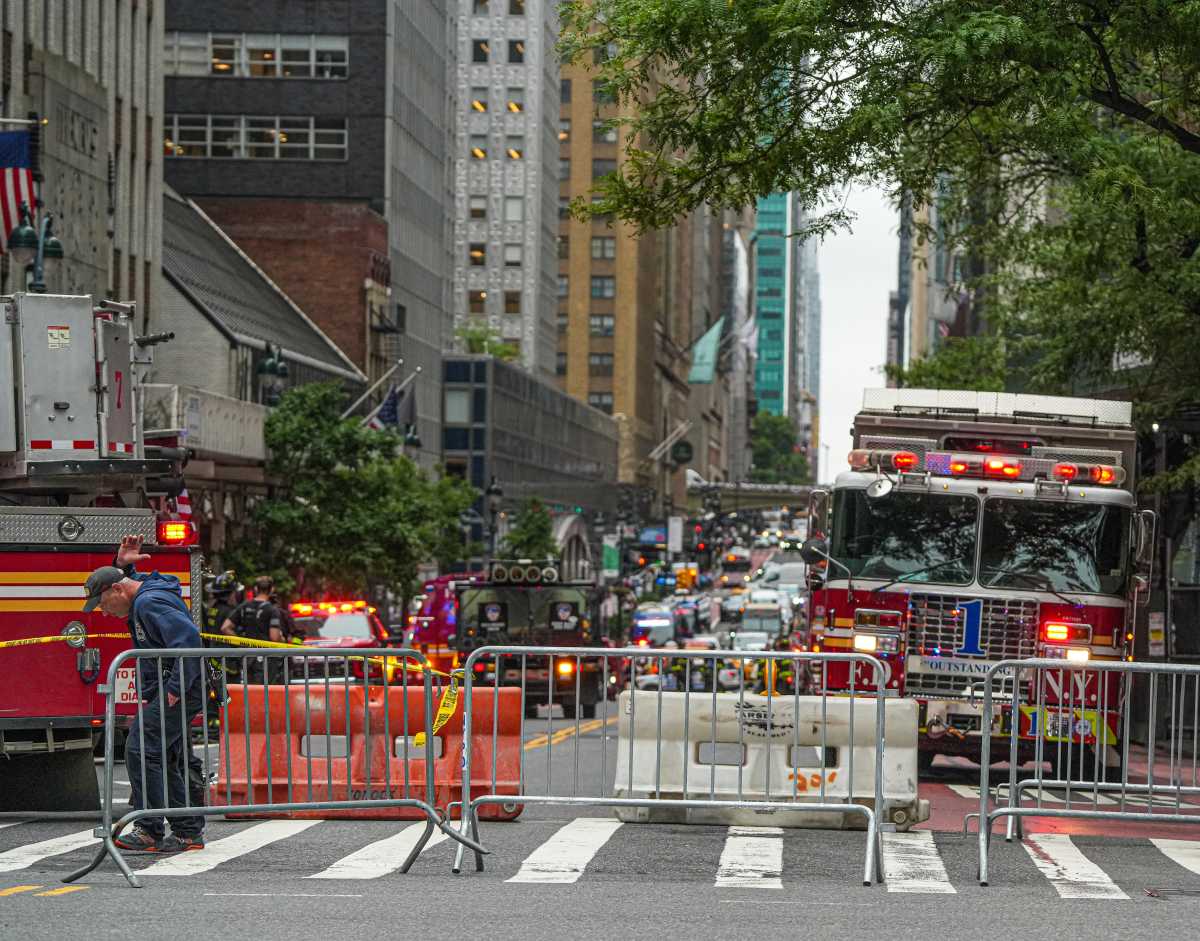
The buckling of support columns in Midtown has revealed the lackluster safety efforts many contractors implement on construction sites in New York. Thankfully, the workers inside the building were evacuated safely, and as of July 8, the building appeared to be stable.
While the buckling of support columns and risk of collapse are relatively rare in construction in New York, the lack of proper safety protocols and rushed construction techniques results in constant violations all over projects in the city. While not nationally newsworthy, accidents consistently occur on job sites where corners are cut.
A lack of safety almost inevitably results in falling debris, scaffold collapses, and ladder falls that can result in worker injury or death.
Take the story of an immigrant laborer working at 219 East 42nd St. in Manhattan. Three weeks prior to the events on July 7, the laborer stated that he was injured due to falling debris because of the vibration of the building elevator. The laborer was severely injured, placed in a cervical collar by EMS, and was removed from the scene of the accident by ambulance to NYU Langone Hospital.
A stop work order was issued by the Department of Buildings (DOB) regarding his accident on June 16, less than a month prior to the partial building collapse at 219 East 42nd St. The DOB inspected the scene and issued a violation that the egress from the area the laborer was in was obstructed with debris, and there was a failure to maintain housekeeping.
The lack of egress led to the incident. The worker was neither provided with a safety orientation, nor was he able to attend preshift safety meetings. Nonetheless, the stop-work order was eventually lifted, work continued, and, as seen on July 7, a much larger accident followed.
 Jay Nelson Gorayeb is an attorney with Gorayeb and Associates, P.C.Gorayeb & Associates
While the Department of Buildings can issue fines, many of them do not improve safety on job sites. These fines, many of which can be in thousands or tens of thousands of dollars, are more often than not ignored as de minimis expenditures and regarded as a cost of doing business on multimillion-dollar or billion-dollar projects.
As a result, lawsuits stemming from safety violations or DOB fines are considered small losses compared to the cost of building cheaply and quickly.
As such, even when accidents happen in New York construction projects, little is done to remedy the issue.
Further resulting in a lack of accountability is the ability to create hollow entities on these lackluster construction projects.
In the case of the building located at the site of the partial collapse at 219 East 42nd St., the general contractor is “219 GC LLC,” a foreign limited liability company formed on March 19, 2024. Soon after the formation of this entity, the DOB issued permits for work to begin. Furthermore, the ownership entity of this project was formed under a similar guise, “219 Owner LLC.”
219 Owner LLC was formed on May 14, 2024, and shortly afterward, in August of that year, the property was “sold” to 219 Owner LLC right before construction began on site. These entities are created to hide inexperienced contractors from liability when they build cheaply and dangerously.
Unfortunately, the victims of these practices are, more often than not, immigrants.
Many of the owners of projects like the Midtown Manhattan project employ immigrants. Unfortunately, all too often, immigrants are taken advantage of by shoddy general contractors and left to work in unsafe conditions. The contractors know that when they hire immigrants, the workers will not complain of unsafe conditions, report an accident, or report a violation to the DOB. If these workers complain, they know that they will be thrown off the job.
Fortunately, over 115 years ago, the New York legislature recognized the indispensable role construction workers play in New York City’s productivity, prosperity, and culture. In 1885, New York passed Labor Law 240, the only law of its kind that protected the rights of construction workers who work in unsafe conditions.
Nevertheless, New York’s labor law is not enough to protect construction workers who require safe working practices on job sites. More needs to be done to require contractors to adhere to building codes and keep workers out of harm’s way.
Thankfully, in the case of the column collapse at 219 East 42nd St., the workers appeared to exit the building safely. But accidents will continue to happen, and the most vulnerable of construction workers will continue to pay the cost so that developers can make more money.
Jay Nelson Gorayeb is an attorney with Gorayeb and Associates, P.C.