
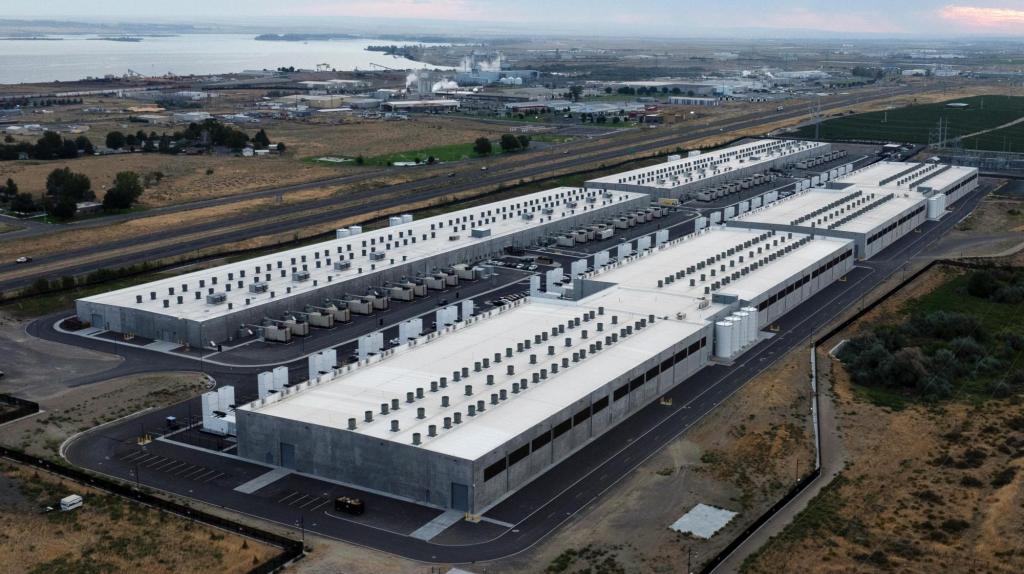
New Yorkers are right to be skeptical of the explosion of data center development.
No community wants to see its electricity bills rise, its water resources strained, or its quality of life diminished so that a trillion-dollar technology company can build another server farm. Those concerns are real. Which is precisely why New York should resist the temptation to enact a blanket moratorium.
Instead, the state should adopt a far more practical stance: No new data center should be approved unless it clearly leaves New Yorkers better off than before it arrived. That is the opportunity before Gov. Hochul.
The Legislature has sent her a moratorium on large data centers. It reflects growing public concern, but it also risks giving away something extraordinarily valuable: leverage.
The current surge in AI investment is unlike anything we’ve seen in decades. Companies are competing aggressively for locations with available power, skilled workers, and predictable permitting. That gives states unusual bargaining power—but only before permits are issued and utility agreements are signed.
A moratorium is useful only if it leads to a better deal. If it simply sends projects elsewhere, New York loses not only jobs and investment, but also its chance to negotiate terms that could lower electricity bills, modernize the grid, and deliver lasting benefits to local communities.
New York’s first demand should be non-negotiable: customers should never pay more because a data center arrives.
Every data center company seeking hundreds of megawatts of electricity should be required to help build a grid that serves everyone better. That means bringing new clean generation online, adding energy storage, and paying for the infrastructure needed to support its operations.
Minnesota has created a separate utility service class for very large electricity users and protecting existing ratepayers from stranded costs if those customers leave. New York can build on that model and also use this wave of private investment to make energy cleaner and more affordable and use the grid more intelligently.
Too often, the conversation jumps immediately to building more power plants and transmission lines. But utilities and developers should first demonstrate that they are maximizing the capacity of existing infrastructure. Data centers themselves can become part of that solution.
Many computing workloads are flexible. Facilities can shift certain operations to times when electricity is abundant, participate in demand response programs during periods of grid stress, and pair with battery storage or other distributed energy resources that improve reliability.
Those same companies should also be expected to invest directly in the communities where they locate — enforceable commitments to support workforce development, improve local infrastructure, disclose and responsibly manage water use, and contribute to community priorities.
Some of the most promising possibilities go even further. States could encourage developers to invest in home batteries, rooftop solar, heat pumps, virtual power plants, or other distributed energy resources that permanently lower household electricity bills while making the local grid more resilient.
The question isn’t whether data centers will be built somewhere. They will. The question is whether New York uses this moment to negotiate one of the strongest public-interest bargains in the country — or whether it watches those negotiations, and the accompanying investment, happen somewhere else.
During my time as secretary of energy, I saw how much influence states have before a project moves forward. Once agreements are signed, much of that leverage disappears.
Now is the time to use it.
Granholm is a former U.S. secretary of energy.