
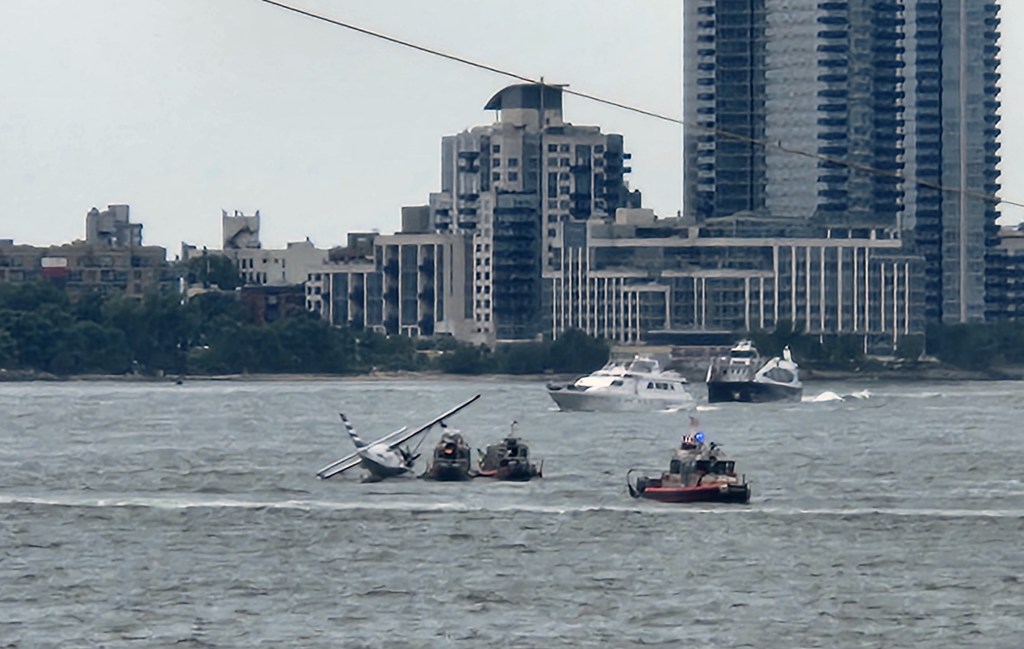
Last Sunday, a seaplane made a hard landing on the East River between Brooklyn and Manhattan, snapping a wing strut. While all eight people aboard were rescued and only one person was injured, the outcome could easily have been far worse. It was also not the first close call on this river in recent weeks.
When seaplane service began here in the 1930s, the East River waterfront was largely industrial. Today, it is a densely populated residential corridor. Waterside Plaza alone is home to roughly 4,000 residents and sits just a few hundred yards from the E. 23rd St. seaplane base, adjacent to schools serving approximately 1,800 children.
Across the river, an estimated 50,000 residents live directly under the flight path between Hunter’s Point South and Greenpoint. The East River is also a major transportation corridor, with NYC Ferry’s East River route carrying approximately 11,000 passengers daily.
The Federal Aviation Administration (FAA) regulates East River operations for the 23rd St. Marina (6N7).These regulations mandate that aircraft maintain 1,000 feet from shore during takeoff and landing and to complete a qualifying “check flight” with the North East Seaplane Pilots Association
That 1,000-foot rule was established in 1946 to combat heavy maritime traffic, strict noise constraints, and treacherous 2.6 mph tidal currents, decades before residential development transformed this stretch of the East River. But who is enforcing these safety measures today?
Alarmingly, the agency that drafted these protective rules was dissolved in 1977. Nearly 50 years later, safety oversight has been handed to New York City’s Economic Development Corp. — an agency designed to manage real estate and economic growth, not write or enforce aviation safety rules.
As a result, pilots regularly ignore the 1,000-foot buffer, flying dangerously close to residential high-rises and local schools. Pilots are launching into a bottleneck already packed with ferries, commercial vessels, and tour boats, while sharing tight overhead airspace with NYPD, news, and helicopters, often with limited visibility. Furthermore, the rules predate every residential high-rise in the area.
The rules have not been reevaluated to reflect today’s dense population and traffic conditions, nor has the impact of the seaplane wakes and prop wash on the pile foundations supporting these buildings.
Safety is only part of the problem. Residents, teachers, and students experience frequent noise disruption from takeoffs, landings, and taxiing operations.
Under New York City’s Environmental Quality Review process, schools are classified as noise-sensitive receptors alongside hospitals and residences. The city’s Noise Code states that the “public policy of the city” is to “preserve, protect and promote the public health, safety and welfare” by reducing ambient noise, declaring that every resident is entitled to a healthy acoustic environment. If the city applies that standard to ordinary construction projects, an outdated aviation operation next to two schools should not get a free pass.
We are not calling for an end to seaplane aviation. We are asking that operations be moved out of a corridor now defined by dense residential development, large school populations, and heavy ferry traffic.
The FAA, the EDC, and elected officials should be studying alternative locations now — not after the next incident causes more than a snapped wing strut.
The Coast Guard tracks every commercial vessel through its New York Vessel Traffic Service. Yet, there is zero oversight for seaplanes sharing that same water. Before the next disaster, the city and the FAA owe the tens of thousands of residents living under this flight path a proactive plan, not another investigation after another catastrophe.
Handal is president of Waterside Tenants Association.