
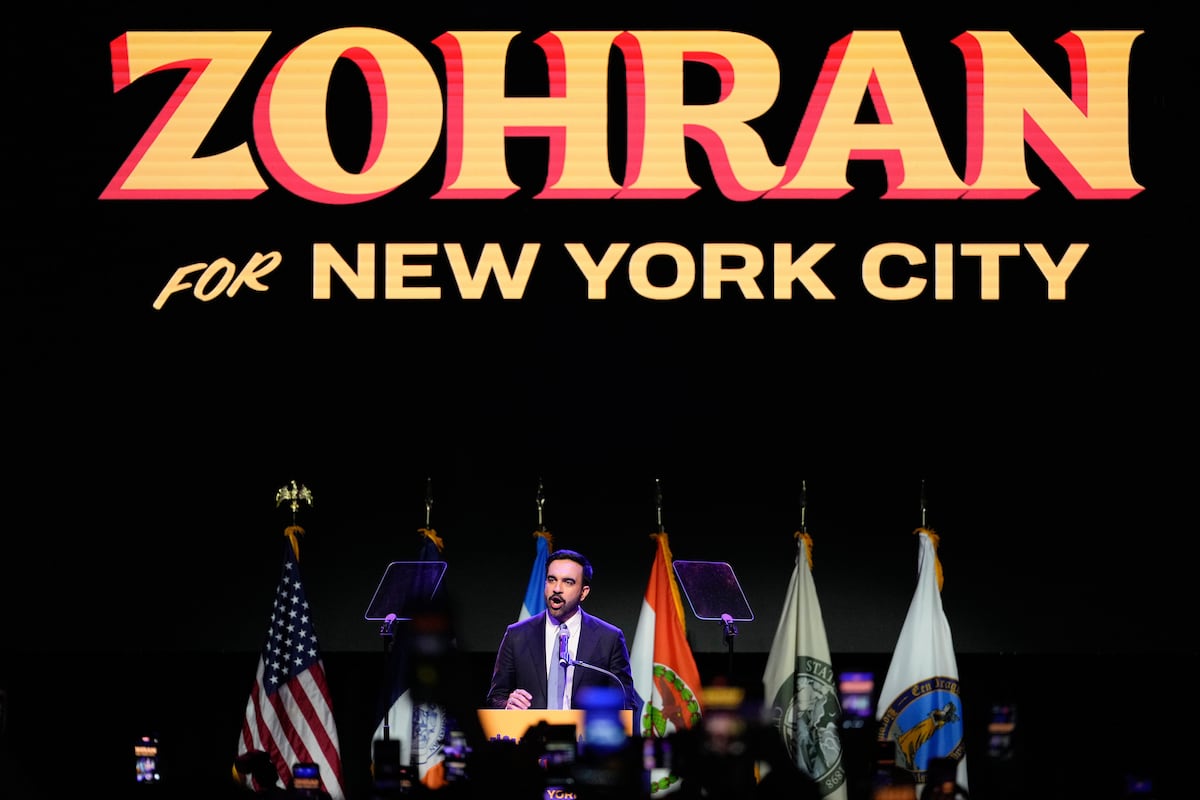
Democratic candidate Zohran Mamdani has won the mayoral race in New York: he will be the first Muslim and socialist mayor.
Below, we analyze his victory using seven key charts.
A comfortable victory
Mamdani secured more than one million votes — 50% of all ballots cast — defeating fellow Democrat Andrew Cuomo (41%) by nine points. Cuomo, who was defeated by Mamdani in the party primaries, decided to run later as an independent. The Republican candidate, Curtis Sliwa, without support from either his party or the Trump camp, received 7%.
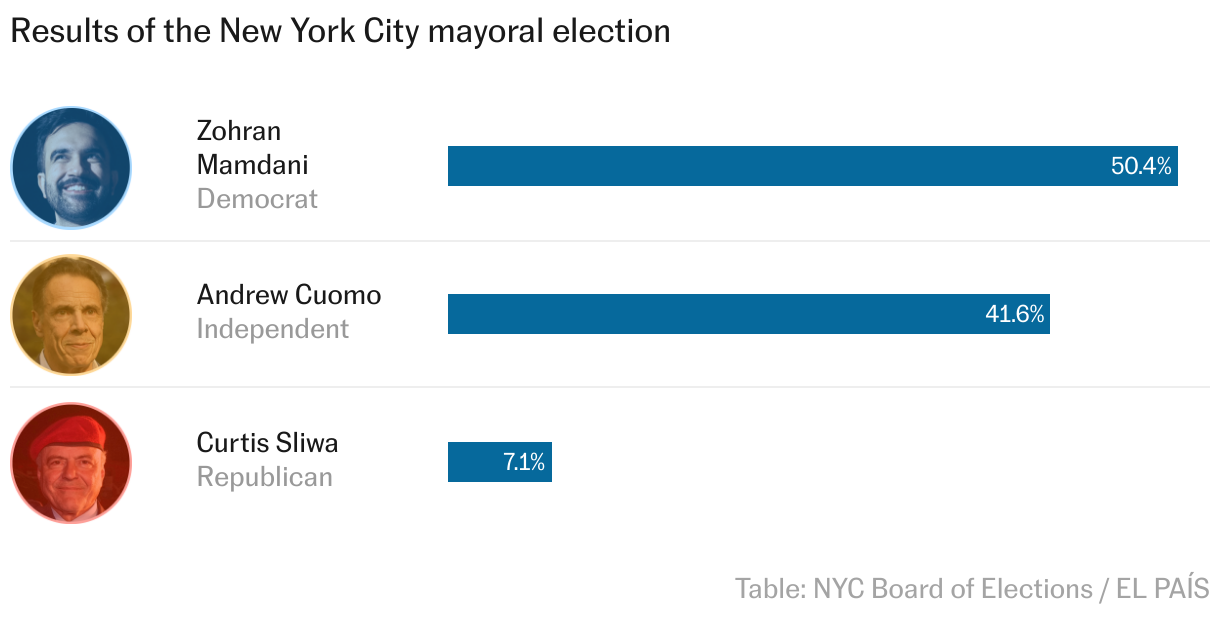
With 97% of the votes counted, the data confirms there were no surprises. Polymarket’s prediction market on Tuesday gave Mamdani a 92% chance of winning. Polls predicted he would win with 46% of the vote, and he ultimately secured at least 4 percentage points more.
Winner in each borough
Mamdani won in four of the city’s five boroughs. His best result came in Brooklyn — considered his stronghold — where he took 57% of the vote. In Manhattan and the Bronx, he also secured more than 50% of the ballots. He was unable to prevail in Staten Island, where Cuomo won with 55%. The island had been Republican territory: four years ago, Curtis Sliwa had won it with more than 60%.
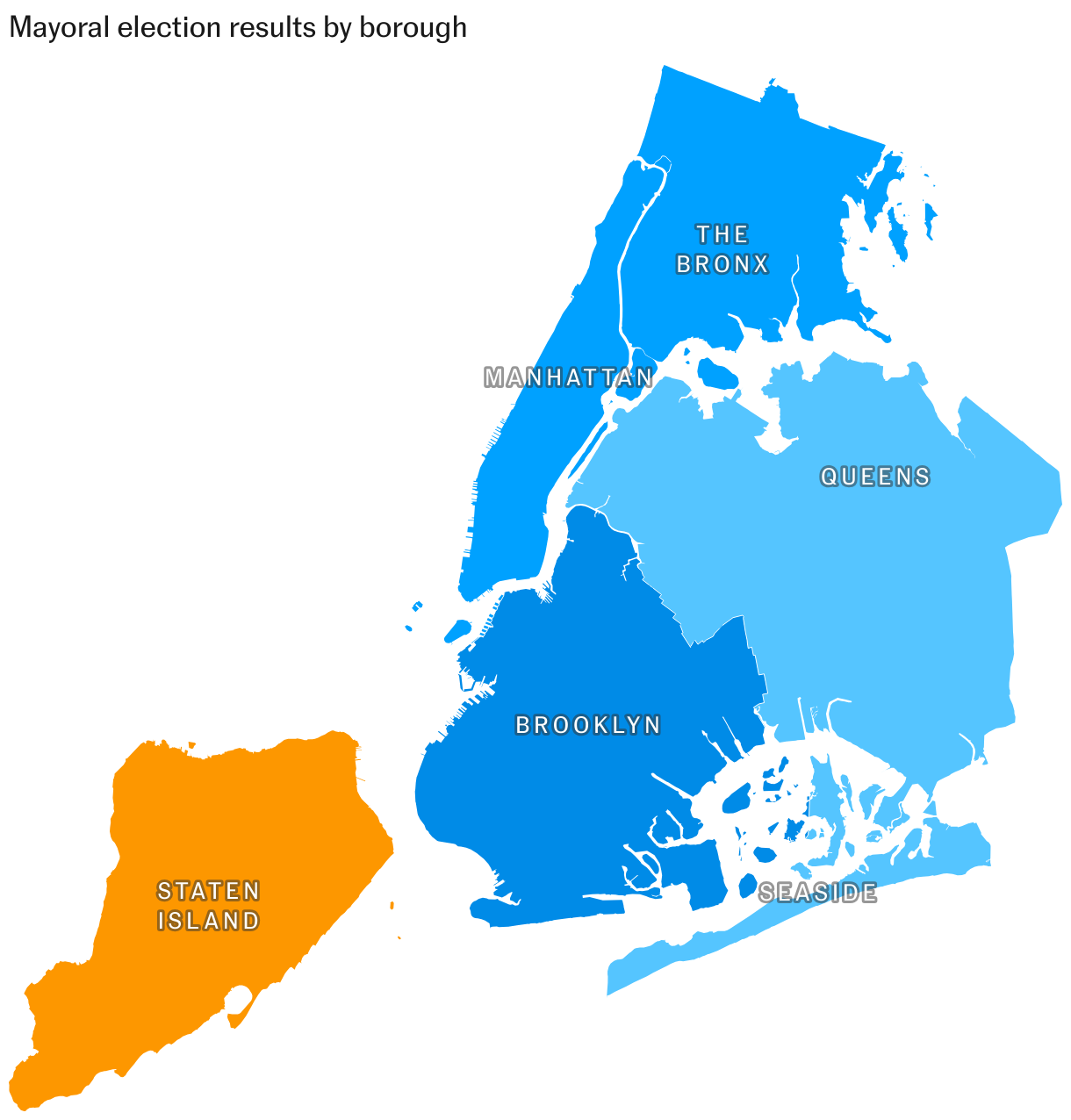
Initial analyses of the detailed results indicate that Mamdani won in the city’s most diverse neighborhoods, those with predominantly Black, Asian, and Hispanic populations. Cuomo was the favorite in predominantly white areas.
Turnout hits a 20-year high
Mamdani’s rise is one of the most meteoric in recent U.S. politics. Just a year ago, when he announced his bid for mayor, Mamdani was little-known beyond Albany, where he served as a member of the State Assembly. In January, prediction markets gave him only an 8% chance of winning.
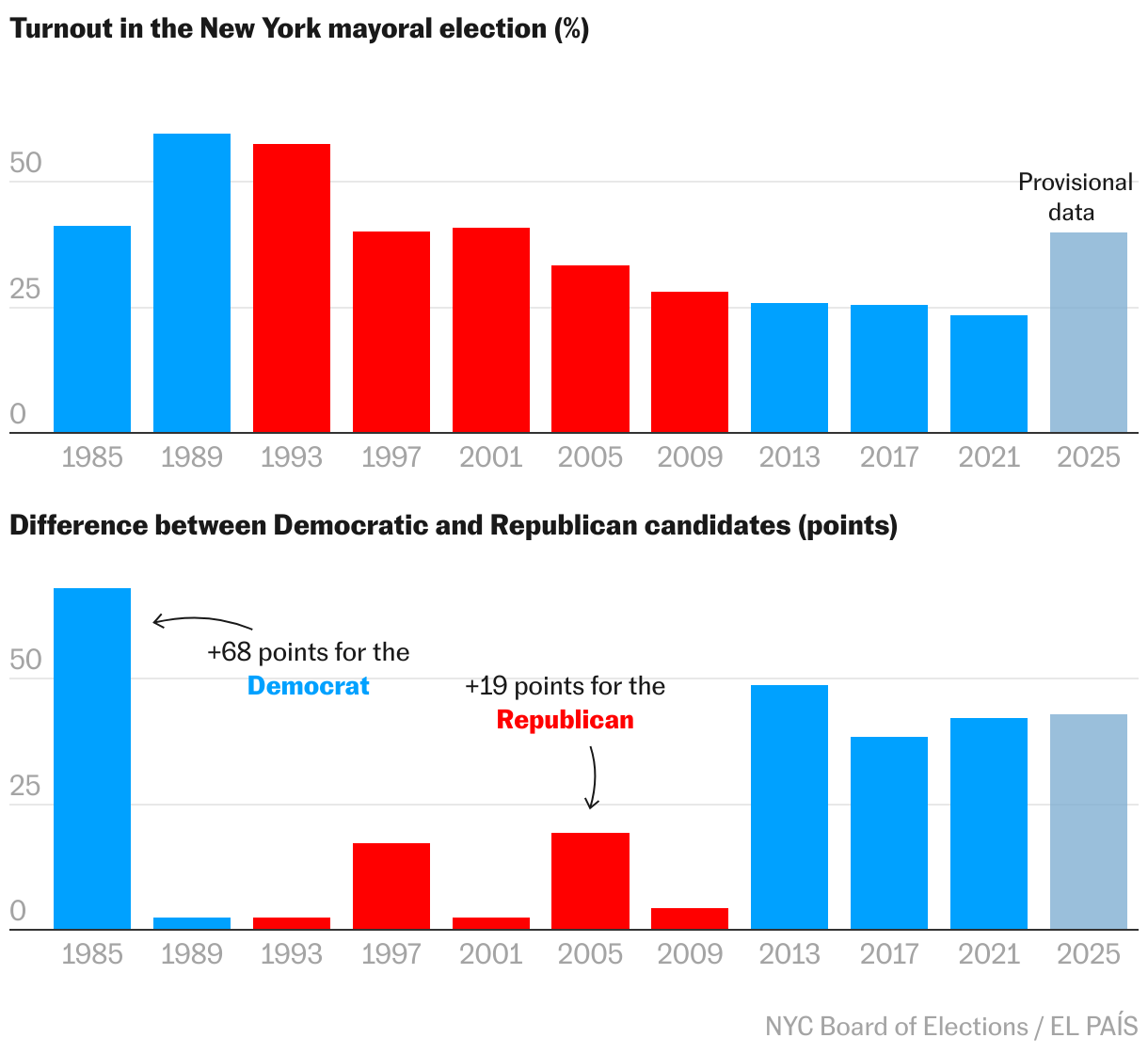
The left-wing candidate’s popularity appears to have driven record turnout. More than two million New Yorkers cast ballots on Tuesday — almost twice as many as four years ago. It was the highest voter turnout in two decades, and all indications suggest that young people turned out in far greater numbers than in previous elections.
Mamdani fails to win over all Democrats
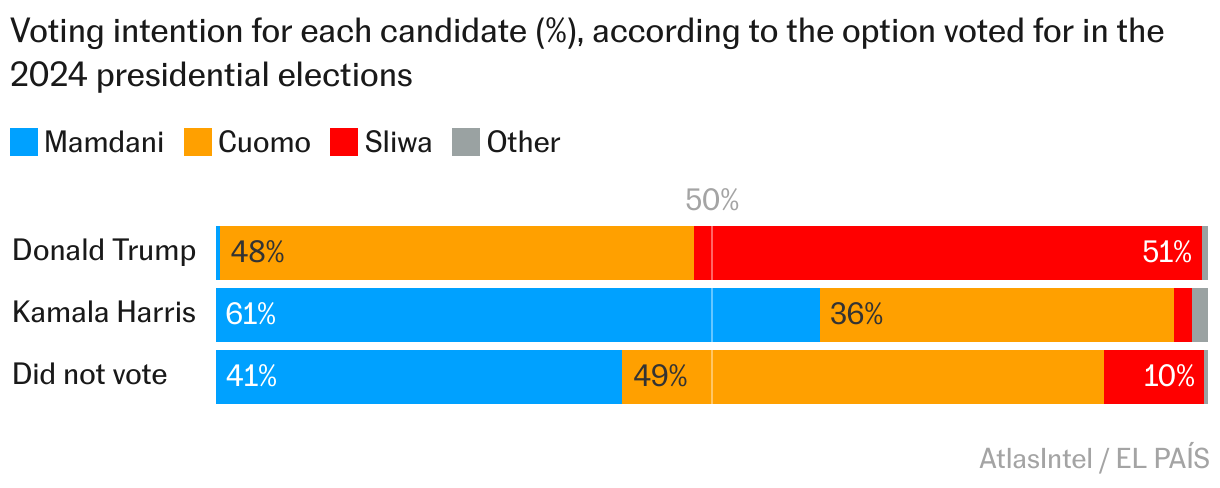
One peculiarity of this race was that two Democrats were on the ballot. That explains why Mamdani captured only 60% of the voters who had backed Kamala Harris in the 2024 presidential election, while another 36% went for Cuomo. The split highlights the deep divisions within the Democratic Party — between its left-wing and more moderate factions.
Trump voters from 2024 appear to have split almost evenly between the Republican candidate, Sliwa, and the moderate Democrat, Cuomo. But Cuomo’s success wasn’t enough for a simple reason: only about 19% of New York voters identify as Republicans.
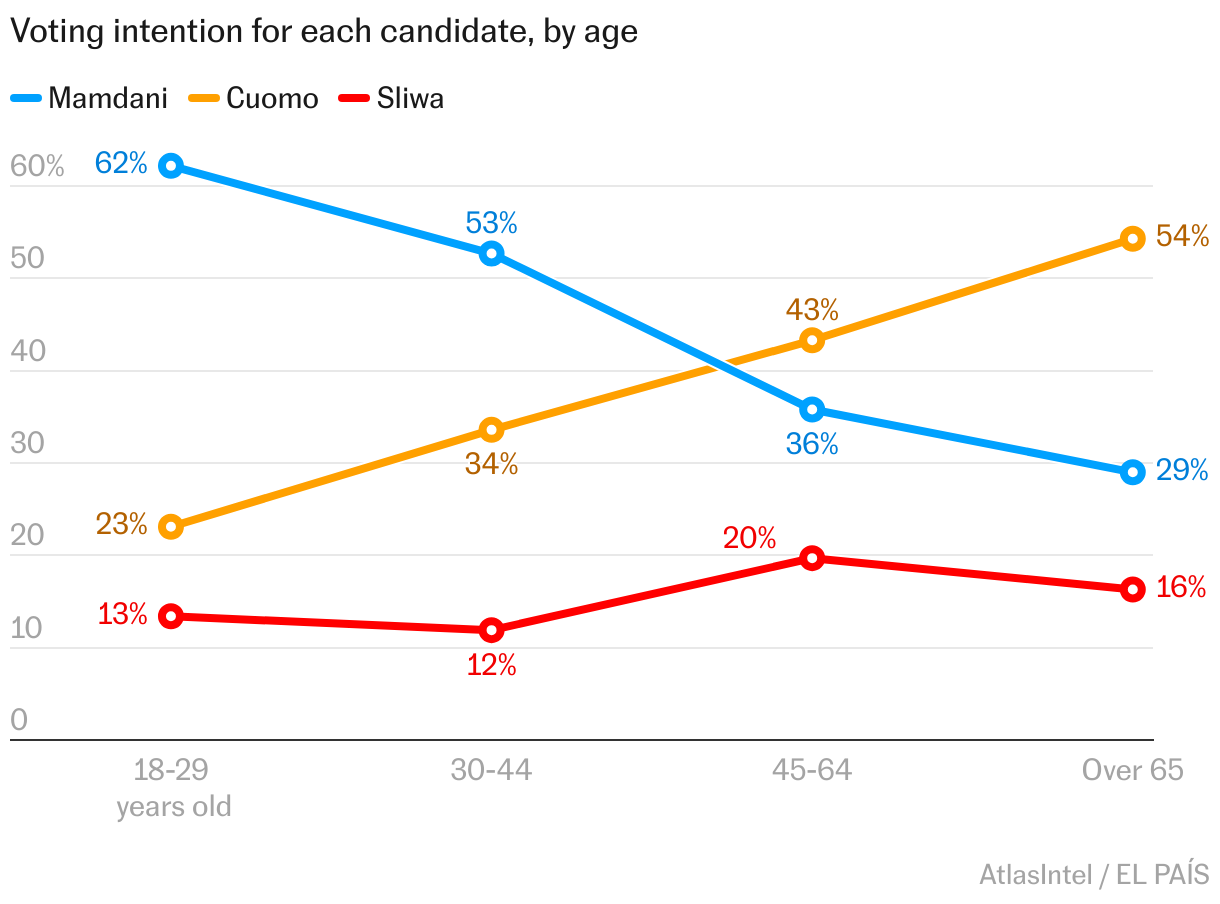
Young voters were key to Mamdani’s victory
Mamdani won about 62% of the vote among New Yorkers under 30, and more than half among those aged 30 to 44. By contrast, among voters over 65, he drew just 29%.
Support for Cuomo, meanwhile, rose sharply with age.
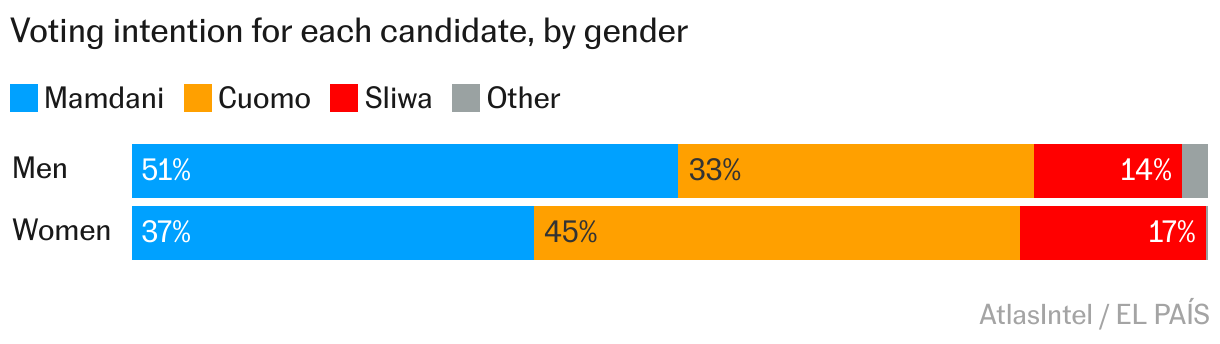
On the other hand, Mamdani’s electorate skewed male. According to the latest AtlasIntel poll, 51% of men voted for the Democrat, compared with just 37% of women.
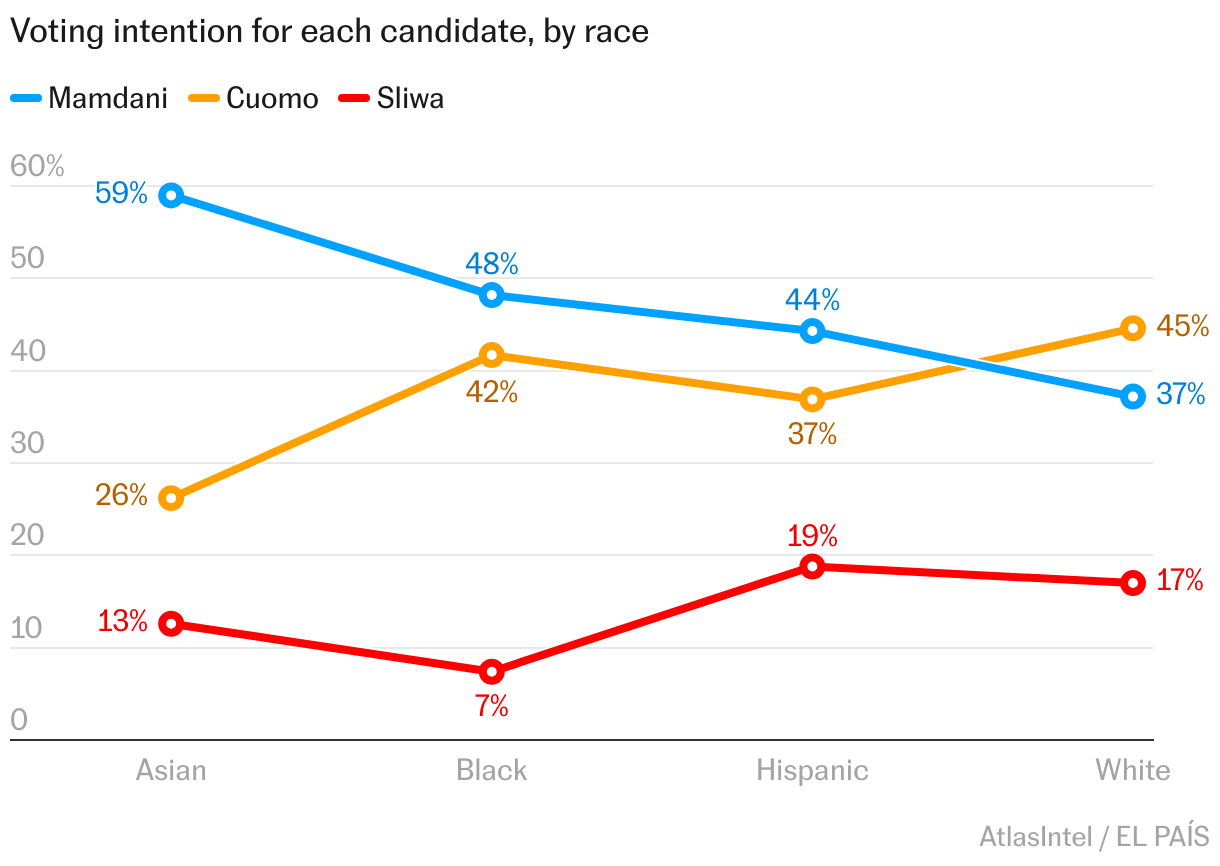
A candidate of the city’s minorities
Mamdani carried every racial group except white voters. Some 59% of Asian New Yorkers said they intended to back him — twice Cuomo’s share — along with 48% of Black voters and 45% of Hispanic voters. Cuomo, however, prevailed among white voters, taking 45% to Mamdani’s 37%.
No income gap
Mamdani campaigned on making New York more “affordable,” pledging to freeze rents and expand access to free public buses and childcare.
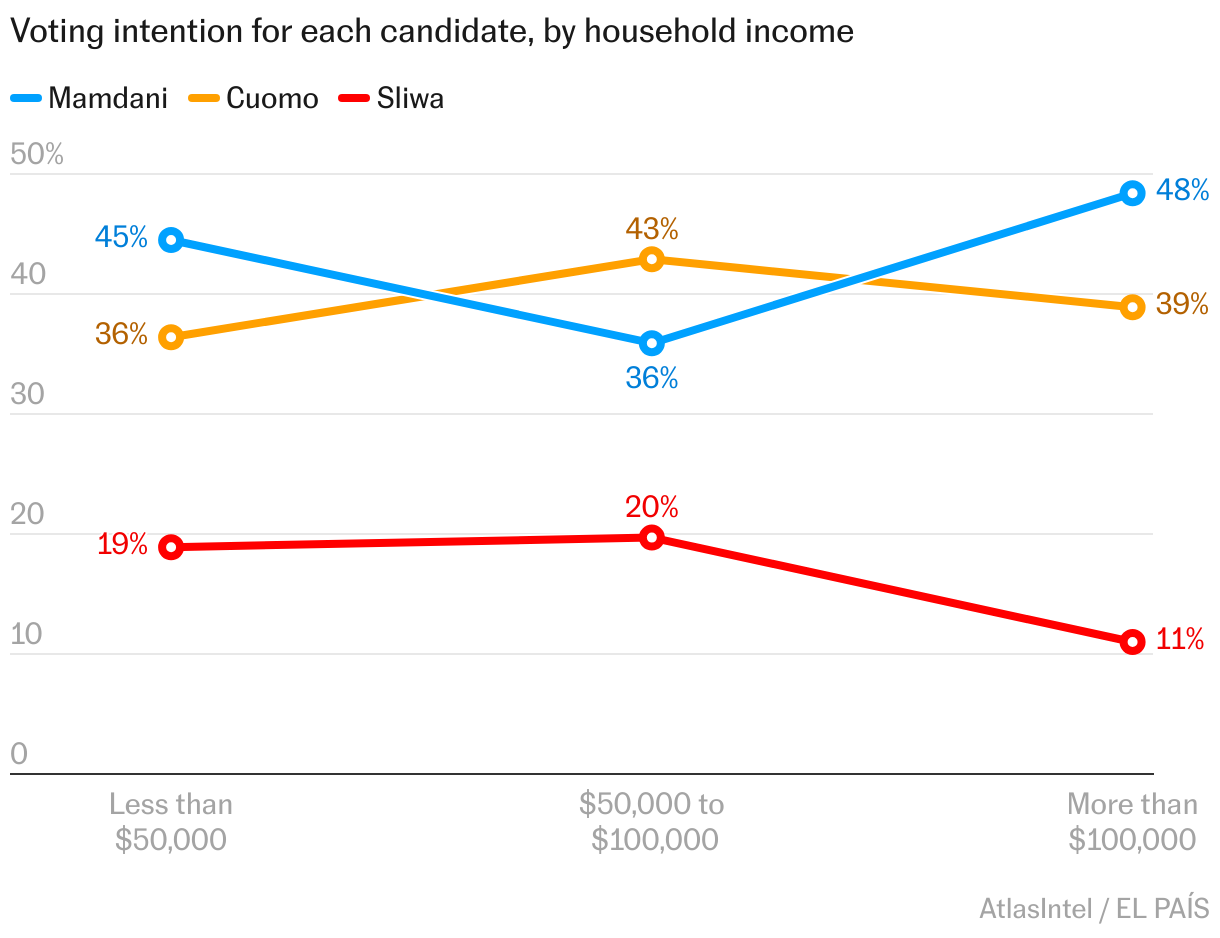
Even so, his support cut across income levels. According to the latest AtlasIntel survey, 44% of low-income New Yorkers (earning under $50,000) said they voted for him, compared with 36% of middle-income voters and 48% of those earning more than $100,000.
Sign up for our weekly newsletter to get more English-language news coverage from EL PAÍS USA Edition