
Spring has sprung and summer is upon us. As a kid, I had a thing for spring. I loved it when the crocuses, which I used to call “croqu-I,” pushed their blooms above ground, becoming sometimes the only dot of color against Flatbush’s dirty, grimy, leftover snow and ice.
I would wait expectantly for the first Robin of spring, wondering how they knew when the ground would be soft enough for pecking worms.
Though they were nasty, the Blue Jays brought additional color and noise to the occasion.
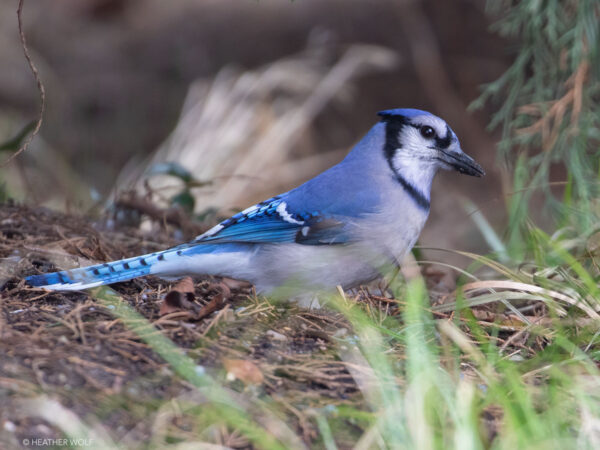 A Blue Jay. Photo: Heather Wolf
And then came the crazy Cardinal. The Cardinal is one of my favorite birds. My mom had a wooden cardinal on a stick stuck into the ground in front of her azalea bushes. I don’t know what was with this one lunatic bird, but he’d announce his arrival by flying head-on, full speed, into our kitchen window. His window of choice was over the sink, so if someone was doing the dishes, the smack of the bird hitting the glass would give them a jolt. I don’t think there are bird psychiatrists, but if there were, this bird should have been first in line.
I got this love of birds from my mother. She loved to hear them sing. One year in college, The George Washington University in Washington, D.C., I visited Shenandoah Valley National Park. In the visitor’s lodge, they were selling an LP (remember those?) with the songs of every bird in the valley. It was near mom’s birthday and a school break, so I bought it for her and presented it to her upon my arrival. In our living room, we had a Victrola (remember them?) set into what seemed like a three-ton piece of furniture. I had, I was sure, the perfect gift. She hated it. Don’t ask.
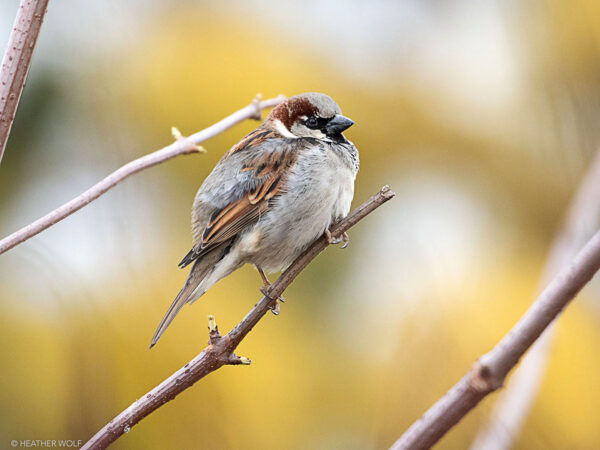 A house sparrow. Photo: Heather Wolf
Even today, I love listening to the birds on my street. I am a subscriber to and supporter of the Audubon Society. It’s like the American Kennel Club for birds. Anything you want to know about birds—they’ve got it. A recent article heralding spring caught my eye. Since my Robin days, I know that spring starts the return migration of birds that went south for the winter. Two figures grabbed my attention. The first was 3.5 billion. That’s approximately the number of birds that make the migration. Yes, 3.5 billion. The other was 1.7 billion. That’s the number that doesn’t make it back. I was stunned by both. Audubon estimates that more than a billion additional birds make the trip at night to find calmer air and fewer predators. They travel thousands of miles.
Spring migration generally runs from March 1 to June 15, with April being a peak month.
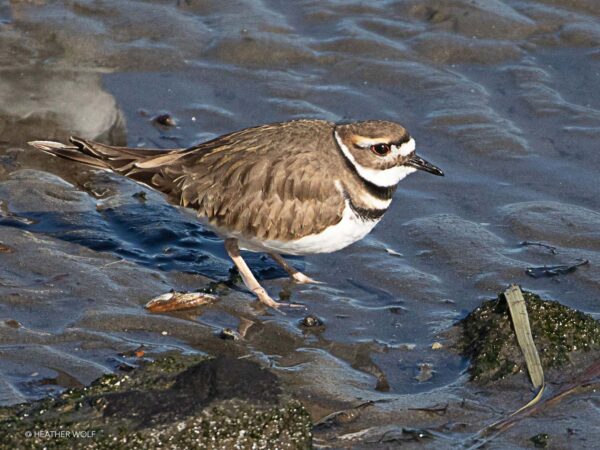 The Killdeer. Photo: Heather Wolf
Three hundred and fifty or more (350+) species of migratory birds are involved in this movement, experts say. If you want to watch this happen in Brooklyn, the borough offers plenty of places to do so. Prospect Park, the Brooklyn Botanical Gardens, Marine Park, Floyd Bennet Field, Green-Wood Cemetery, Shirley Chisholm State Park, and others all offer the potential for numerous bird sightings, some of whom are year-rounders, some of whom are visitors on their migratory routes. You won’t be looking for needles in a haystack. Each offers hundreds of species of birds and copious numbers of birds per species (Yes, there are experts and volunteers who actually count them.) There’s not a tree branch in sight that doesn’t have Mr. and Mrs. Name Your Favorite Species busily building their nests or hanging out once the eggs are laid and the fledglings have taken off.
Let’s start with the birds everyone sees, whether they notice them or not: Seagulls, Pelicans, Sandpipers, Robins, Blue Jays, and Pigeons. Where there are pigeons, there are hawks. Brooklyn boasts the Cooper’s Hawk, the Red-shouldered Hawk, the Peregrine Falcon, the Kestrel, and the Osprey. Where there’s water, there are fowl like Egrets, Herons, and Terns. You want color? Maybe you’ll see Painted Buntings, Purple Gallinule, a male Cardinal in bold red, or a Yellow-headed Blackbird. You’ll probably catch sight of Baltimore’s gift, the Oriole. Hunting? Not without permits, but the Ring-Necked Pheasants are waiting. You might even spot the rare Black Bellied Whistling Duck. You won’t hear show tunes, but you will get a show from this rare creature. In the winter, you might catch sight of a Snowy Owl. And come summer, here are two birds we don’t have enough of: Gnat Catchers and Fly Catchers.
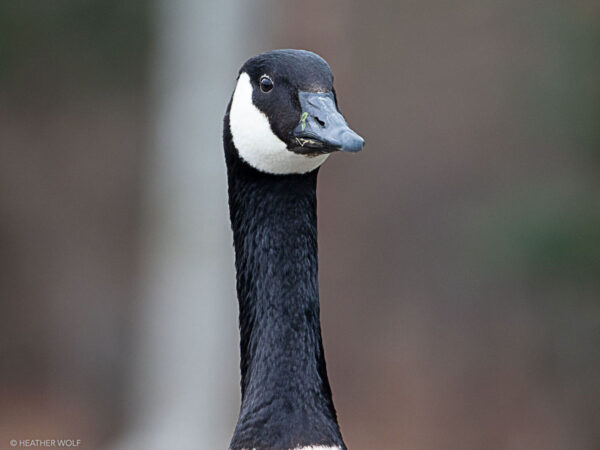 Canada Goose. Photo: Heather Wolf
I don’t expect these few sentences to start a stampede to the parks, but they might spark interest. Pick some birds that appeal to you and go online. You’ll see what you’d get if you were out looking for real instead of sitting at your computer. If I’ve only got you jacked up enough for one outing, let me suggest Green-Wood Cemetery. There you’ll find the unique-to-Brooklyn South American Monk Parakeet. It makes its communal nests on the fencing around the cemetery. A sight you’ll likely tell others about.
Whether or not you go on an outing, I also hope to have interested you in the subject. If so, that brings us to the 1.7 billion of our feathered friends who don’t make it through their migration. What can be done to increase the number of survivors? The answer is complicated, and effectuating it takes dedication. Here are some tips. Keep an eye on state and federal legislation that concerns wildlife. Let your local, county, state, and federal reps know this is an interest of yours.
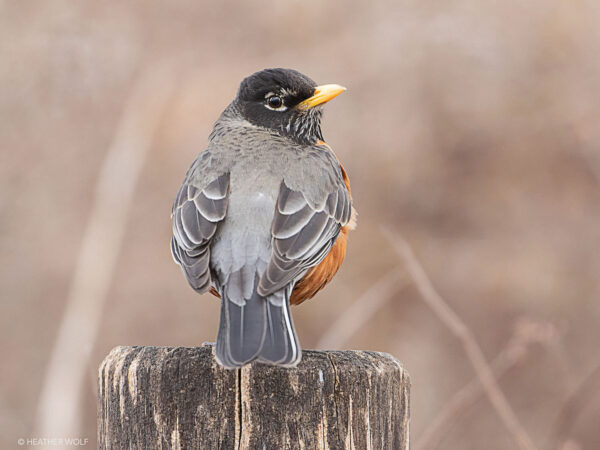 An American robin. Photo: Heather Wolf
Find out which companies build wind turbines. It’s been discovered that if every other blade is painted black, the birds don’t fly into them. If the turbines are already up, encourage companies to shut them down for a few hours to paint the blades. That’s all it takes.
Here’s another tip. Find out who is building tall buildings in the county. There are types of window glass that also, like the painted wind turbine blades, deter birds from committing mass suicide by flying into them. Read on to see who is already doing that.
And find organizations like Audubon, the New York City Bird Alliance, or the 100-year-old Brooklyn Bird Club. There is also the Wild Bird Fund. It will help you if you find an injured migratory bird. Send them a check. They’ll do the work for you. Here are some examples of that work from the NYC Bird Alliance:
Bird conservation in Brooklyn centers around the Atlantic Flyway, an essential migration route. Key local projects focus on creating vital green-roof habitats, conducting collision monitoring to protect migrating songbirds, tracking urban raptors, and restoring natural woodlands in major public parks.
In the Alliance’s Project Safe Flight, volunteers monitor urban areas, including Brooklyn Heights, to track bird-window collisions and advocate for bird-safe glass installations. Recent successes include the application of anti-collision film at 1 Hotel Brooklyn Bridge on the waterfront.
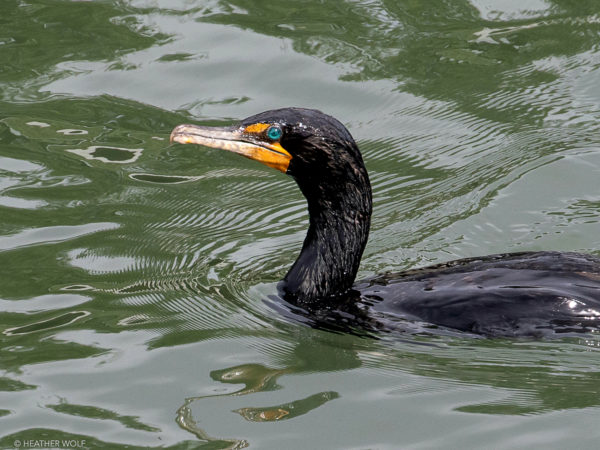 A double crested cormorant. Photo: Heather Wolf
Located in Greenpoint’s McGoldrick Park is the ongoing Kingsland Wildflowers project. It features nearly 24,000 square feet of green roofs planted with bird-friendly native flora. It provides much-needed stopover and foraging habitat for migratory birds in a heavily polluted industrial corridor.
One of the most unique efforts is the Urban Raptor Monitoring Project run by NYC Parks and the Community Science Network. It tracks raptor nests (such as Red-tailed Hawks) to monitor their breeding behaviors and inform local city agencies on when and where to suspend toxic rodenticide use. Remember, when a bird eats a poisoned animal, the bird dies. We almost lost the Bald Eagle that way.
Inside the park I knew best where I rode out my adolescent angers on my bicycle is the Prospect Park Important Bird Area. The 500+ acre park is home to birds galore and acts as a critical sanctuary for over 250 migratory and resident species. The Prospect Park Alliance actively manages the park’s fragile woodlands, lakes, and marshes to preserve these essential stopover habitats.
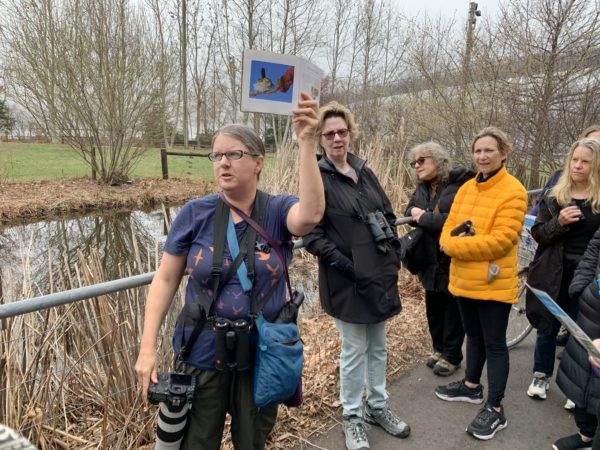 Heather Wolf, the author of “Birding at the Bridge: In Search of Every Bird on the Brooklyn Waterfront,” has been birding at Brooklyn Bridge Park since 2012. Photo: Mary Frost, Brooklyn Eagle
NACHA In Nature, for me, is the most creative program. It is a collaboration focusing on bringing birding and environmental stewardship programs directly to NYC Housing Authority campuses. It encourages local residents to engage with their local biodiversity. For youngsters, the learning opportunities afforded by caring for birds and participating in their life cycles can be life-changing. We see it in the lives of New Yorkers who raise, breed, feed, and fly pigeons.
And if volunteering is what makes your boat float, or inner bird fly, there are opportunities aplenty. Check out the NYC Bird Alliance website, which will steer you to them. There are opportunities to participate directly in community science, habitat planting, and bird-strike monitoring.
 William A. Gralnick. Photo: William A. Gralnick
Finally, here is another example of a building that has been retrofitted for bird safety: the Brookfield Place Passenger Terminal. It is owned by the Port Authority and run by NY Waterway. Located in Battery Park, it is a ferry terminal. A 2022 investigation of dead birds around the building found that the glass at the terminal entrances created dangerous fly-through conditions. Dead birds were piling up on the walkways and in the river. In 2023, the glass entrances were retrofitted with a product called “Feather Friendly” film that features a black dot matrix. Problem solved. Birds saved.
I’m going to close with two bets and an appeal. I bet that you didn’t know the names of half the parks in Brooklyn. I know I didn’t, and I bet that you had no idea about the birds and the conservation efforts going on in those parks and around the borough. Again, I’m guilty as charged.
The appeal is this: For every bird that has ever enchanted you, do something.