
The 2026 Queens Community Board Demographic Report shows a historic increase in participation from underrepresented communities, including women, Hispanic and Latinx residents, residents under the age of 40 and New York City Housing Authority residents.
The report, announced by Queens Borough President Donovan Richards Jr. on July 9 and can be viewed here, provided both an overview of the current demographic profiles of Queens’ 14 community boards and a detailed, multilayered breakdown of the 2026 class of community board appointees.
Richards’ office said it received an administration-record of 962 applications during the application period. Out of the 367 appointees across all 14 boards, 115 of them are new members who represent an increase in diversity of gender identity, age, race and housing status.
Among new members, appointees who identified as female rose to 60% — an increase from 43% in December 2020 — and those who identified as Hispanic and Latinx rose to 39.1% — up from 29.4% of new members in 2025.
Residents under the age of 40 made up 51% of new members, those under 30 made up 20% of the group, and the youngest new appointee is 17 years old. Prior to Richards taking office in 2020, less than 25% of community board members were younger than 45 years old.
Residents who either rent their homes or live in a NYCHA development, which is another historically underrepresented group on the city’s community boards, made up more than half of new members at 52.2%.
Additionally, residents who identify as African American made up 28.7% of new appointees — an increase of 6% from last year — and those who identify as East Asian, Southeast Asian, Pacific Islander or South Asian made up 16.5% of the group.
The report, which is required by the New York City Charter, demonstrated progress in addressing demographic inequities in community board membership by implementing reforms to the application process and prioritizing appointees from underrepresented communities.
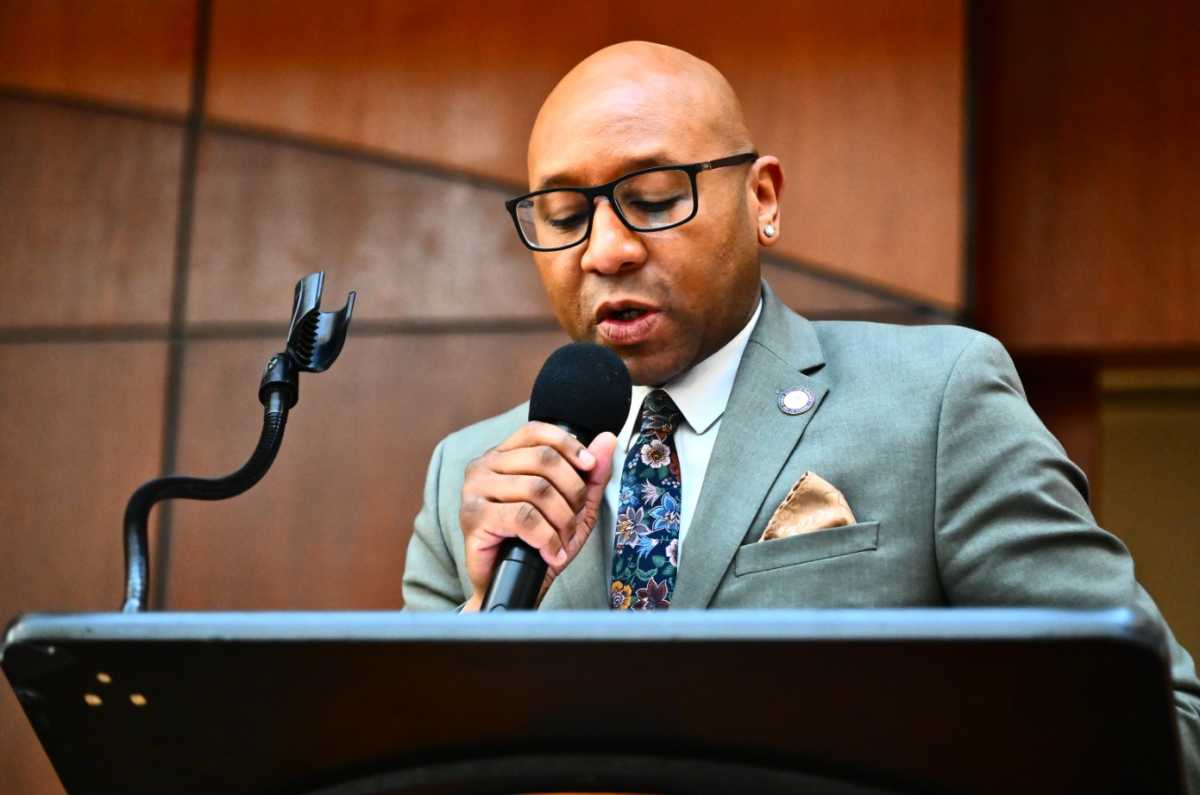
Richards explained that for generations, community boards did not reflect the neighborhoods they represented. For the past six years, he continued, his office has worked to remedy historic disparities on community boards and uplift entire demographics that have been marginalized.
Richards led an initiative to modernize and digitize the community board application in 2021, making it a fillable online form that no longer required notarization. His office also conducted sustained outreach to underrepresented communities that helped generate a more diverse pool of candidates for appointment to Queens’ 14 community boards.
Since he took office, Richards has received over 5,400 applications — the vast majority of which came from individuals who had not previously served on a board.
His office said it believes heightened interest in Queens community boards also stems from the borough president’s 2021 announcement of a series of reforms aimed at establishing a centralized code of conduct for all 14 community boards, as well as a call for a holistic review of each board’s bylaws, with the intention of making boards more welcoming places for new members.
“As this annual report lays out in great detail, we have made tremendous headway this year toward achieving that critical objective,” Richards said. “There is more work ahead, however, and I look forward to appointing yet another diverse class of community board members next spring.”