
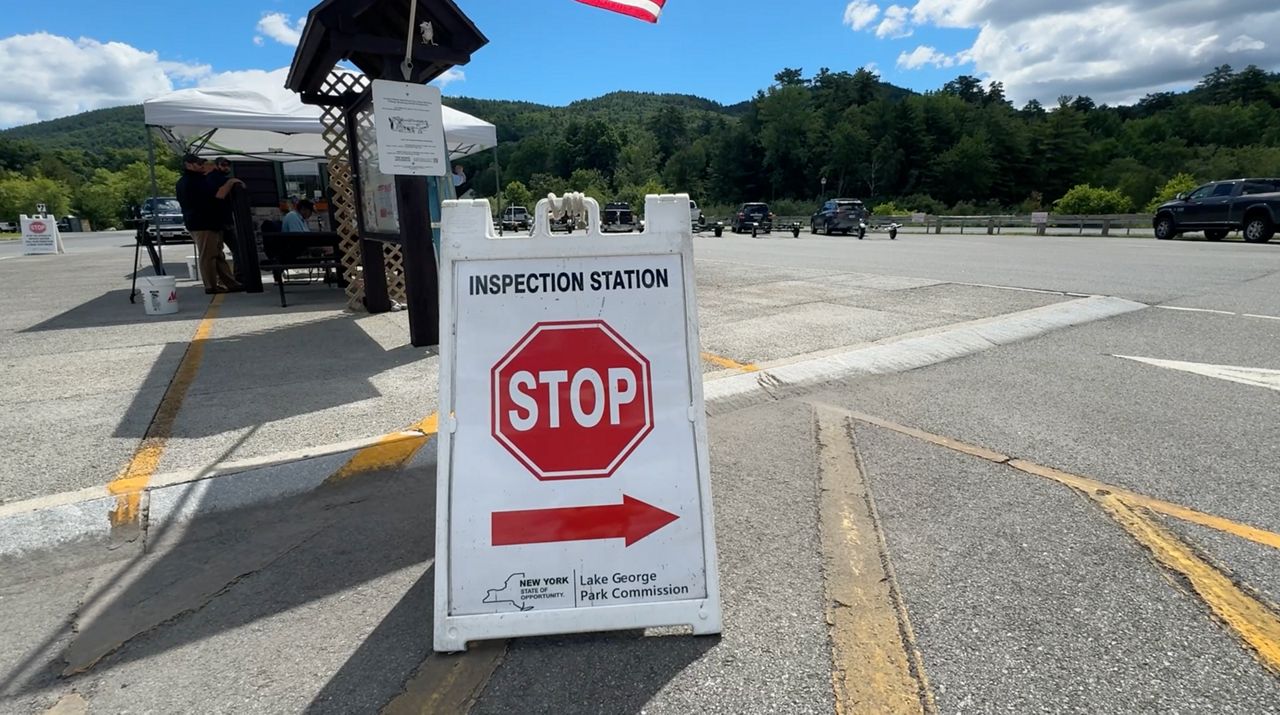
Lake George is one of the cleanest lakes in the country, but keeping it that way takes real work. The Lake George Park Commission runs a mandatory boat inspection program aimed at stopping invasive species before they touch the water, as officials work to halt the spread of invasive species from waterway to waterway across the state.
Lake George has a nickname – the Queen of American Lakes. The people who live and work there will tell you that title is worth protecting.
“Lake George is an economic engine for our region. And if people don’t want to drive from all over the country to come here anymore because Lake George is no longer the beautiful place that it was, the economy here would be devastated,” said Justin Luyk, director of operations for the Lake George Park Commission.
That economy runs on clean, clear water. And protecting that water means stopping invasive species at the shoreline.
“When a boat arrives at Lake George, it is required to have an aquatic invasive species inspection prior to launch. We provide those inspections and possible decontamination services at five regional inspection stations,” Luyk explained.
Inspectors use an acronym — HEAD — to guide every check.
“H is for the hull. Staff are going to visually and tactile feel the hull. E is for engine. We’re going to make sure that the engine is drained of any water. A is for anchor line, or other equipment. And D is for drain. We’re making sure that all compartments are drained,” Luyk said.
If a boat doesn’t pass, decontamination is done right there.
“That decontamination service is free. There’s no cost to the boater. And depending on what needs to be done, it could be anywhere from 30 seconds to 30 minutes,” Luyk said.
The stakes are high. Lake George is classified “special,” the highest standard for water quality in New York state. Deputy Director Joe Thouin says keeping it that way is exactly what the commission was built to do.
“Lake George is the lifeblood of our local communities. We’ve done over 120,000 boat inspections. Among those, we’ve removed 1,500 individual invasive species from those boats and conducted 15,000 decontaminations,” Thouin said.
The commission says since the start of this program 12 years ago, there has not been a new invasive species found in the lake, crediting their inspection teams for keeping it that way.