
Following the death of 7-year-old Harbe Nagi in the Capital Region, a program designed to help locate people prone to wandering is receiving renewed attention from families across New York.
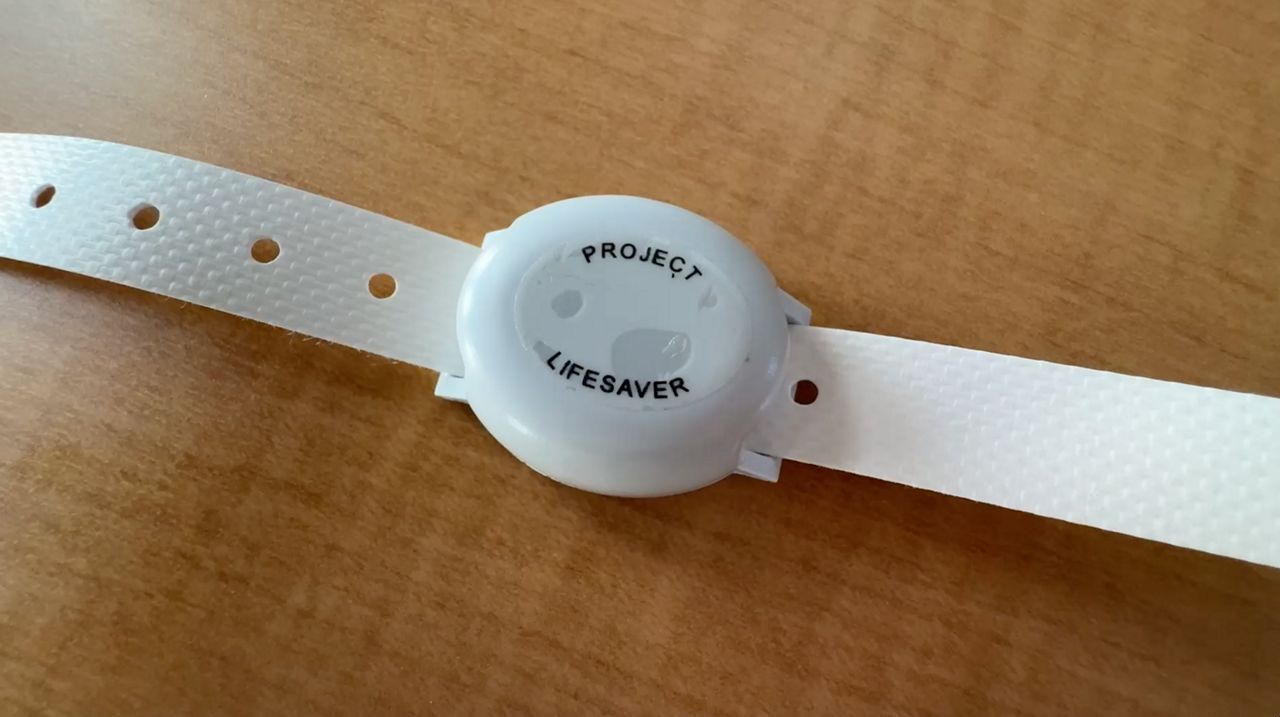
Project Lifesaver equips participants with a wearable device that allows law enforcement to track their location if they go missing. Officials say the program benefits not just the person wearing the device, but their families as well.
“Nobody is a wanderer until they wander,” said Elizabeth Smith-Boivin of the Alzheimer’s Association.
Lisa Connally knows that firsthand. Her daughter, Coco, who has Down syndrome, left the family’s home and ran away one day. She was found safe, but the experience changed how the family approached her safety.
“My daughter didn’t wander until she did. I never thought it would happen. She left our house and ran away,” Connally said.
After that day, the Connally family contacted the Albany County Sheriff’s Office and enrolled in Project Lifesaver.
The device is worn on an ankle or wrist and emits a radio frequency. If a participant goes missing, sheriff’s deputies use a directional finder to track the signal, according to Albany County Sheriff Craig Apple.
“We don’t track GPS. We don’t monitor 24 hours. It’s strictly in case of emergency,” Apple said.
Apple said the response process begins as soon as a family calls.
“If they walk away, they call us. We immediately put the RF in. And as we’re driving to the scene, we can start to search. And as we’re there, we use the directional finders to locate that person,” he said.
Unlike GPS devices or cellphones, the technology does not depend on cell service or on the person remembering to carry anything with them.
Smith-Boivin said that reliability makes the program especially valuable for families affected by Alzheimer’s disease.
“I think Project Lifesaver is the gold standard,” she said. “Our estimates at the Alzheimer’s Association are that 60% to 70% of people with Alzheimer’s disease will wander and get lost at least once during the course of their illness. Having strategies to ensure that if the worst case scenario happens to your loved one, you can find them, is critical.”
Apple said the program is meant to be one part of a broader safety plan, not a guarantee.
“As a parent myself, I would want to make sure that I had every possible way to locate a loved one if they wandered off,” he said. “We’re not saying this is going to be the end-all, saves-all, but what we’re saying is it’s another tool in the toolbox for a parent to give them a little peace of mind and a little safety and security.”
For the Connally family, that peace of mind has extended well beyond emergency situations. Coco now attends concerts, prom and other typical teenage activities with the device on at all times.
“Well, it can save lives,” Connally said. “If you feel like your loved one may wander, then you should call.”
The Albany County Sheriff’s Office said it has seen a significant increase in requests to join the program since Nagi’s death.
Because Project Lifesaver is operated locally, program specifics and enrollment fees vary by county. Residents can find their nearest participating agency at the Project Lifesaver website.