
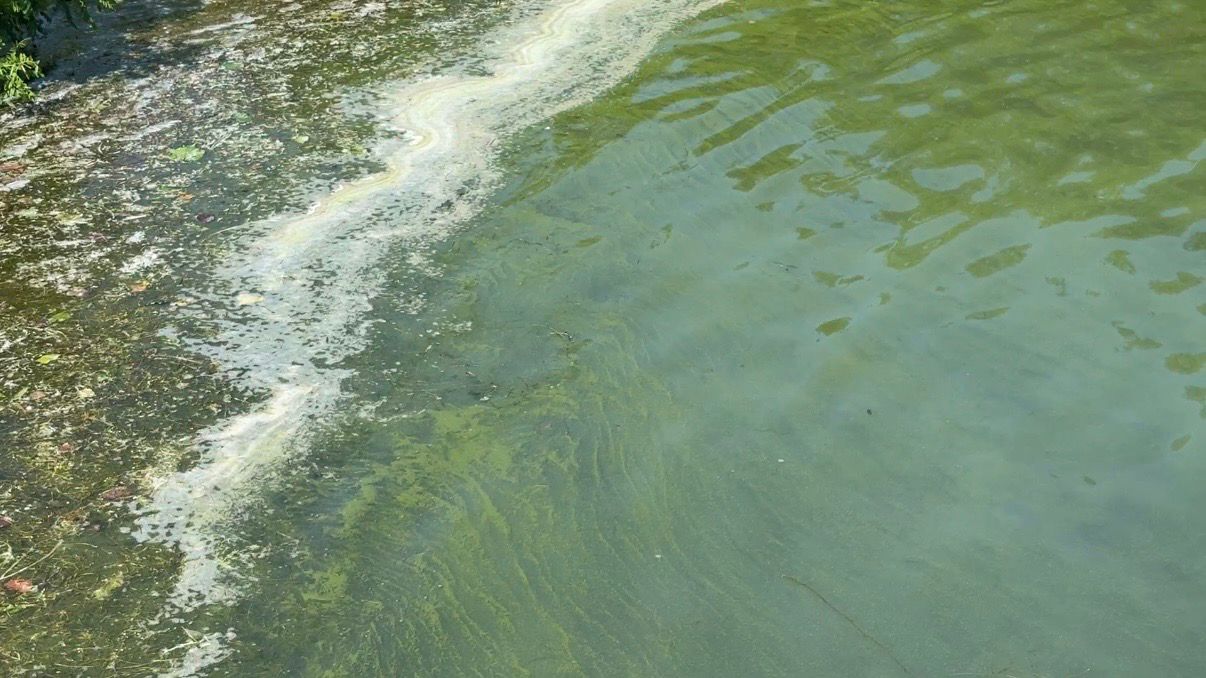
New York is home to more than 7,000 lakes and over 70,000 miles of rivers and streams. According to the state Department of Environmental Conservation, more than 650 of those waterbodies have experienced what’s called a harmful algal bloom, and that number is only expected to increase.
What You Need To Know
Waterbodies across the state have had harmful algal blooms (HABs) reported
Changing climate factors like warming waters, excess runoff and extreme weather events exacerbate conditions that allow for HABs
Monitoring and mitigation programs are in place to help understand and reduce these occurrences
Summer in New York state means the chance to explore its abundance of lakes and waterways. For the past several summers, however, the beautiful blue waters many have come to know and love have turned green. The phenomenon is called a harmful algal bloom (HAB) — though it has nothing to do with algae.
“When this phenomenon was first noticed in the environment, algae was blamed because it is a small, microscopic organism that does photosynthesize, but here it is cyanobacteria, and the risk with it is that it can create potentially harmful toxins,” said Alyssa Johnson, the Cayuga Lake HAB Monitor for the Community Science Institute.
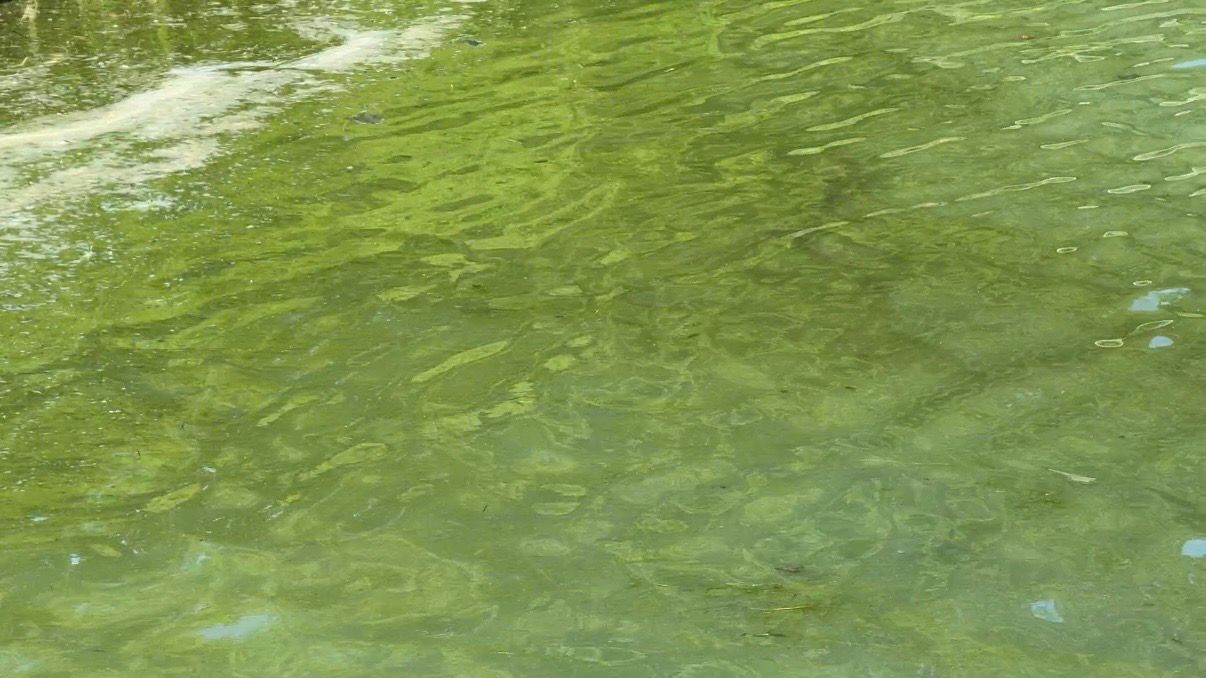
Water turned green from a HAB on Cayuga Lake. (Spectrum News 1/Natalie Mooney)
Contact with the toxins can make people and animals sick. The CDC says symptoms can range from mild to life-threatening, which is why it’s best to stay away from anything that might look like a bloom.
“Harmful algal blooms typically appear as a surface scum, however, they can be quite varied in that scum,” Johnson explained. “They can be streaking, there can be marbling, there can be splotches, sometimes there are tiny, tiny little dots that start forming in the water.”
When those sightings are reported, scientists like Johnson are on the case. She collects a sample of the bloom, brings it back to the lab at CSI and begins a series of tests to confirm the presence of cyanobacteria. They also measure the density and toxin level of the bloom.
While cyanobacteria does occur naturally in water, certain conditions can make them grow into a HAB.
“We often see HABs occurring around a boat launch, in a cove, a marina, where the water is a little bit trapped, maybe doesn’t move around as much and isn’t affected as much by wind or a wake,” Johnson said, “So low oxygen conditions, lots of sun, warmth and then the real driver is excess nutrients making its way into the lake.”
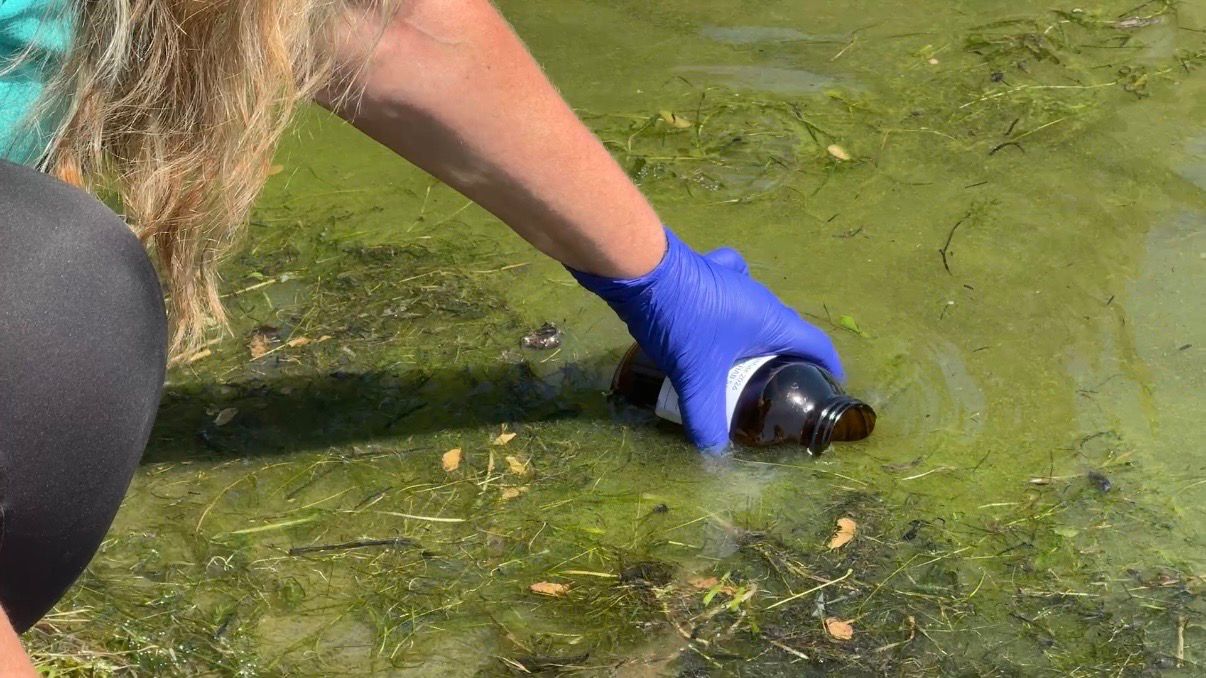
Alyssa Johnson collects a sample of water where a HAB was reported on Cayuga Lake. (Spectrum News 1/Natalie Mooney)
Changing environmental factors like warming waters, runoff pollution and extreme weather events exacerbate the conditions that allow for these blooms.
Johnson says she’s already seeing the effect on Cayuga Lake.
“We did receive our earliest report on record this year, which was April 23,” she said.
The DEC says it’s happening everywhere. In New York, more than 650 bodies of water have experienced a HAB since 2012.
“Science does suggest that increasing temperatures are certainly playing a role in HABs nationwide and worldwide,” DEC Research Scientist Tony Prestigiacomo said. “I think it’s reasonable to think that that’s also contributing to HABs in New York state.”
Prestigiacomo says even lakes thought to be pristine are taking a hit.
“Take, for example, Skaneateles Lake, one of the cleanest lakes in the country, right? And that’s a lake that now is having HAB reports,” he said.
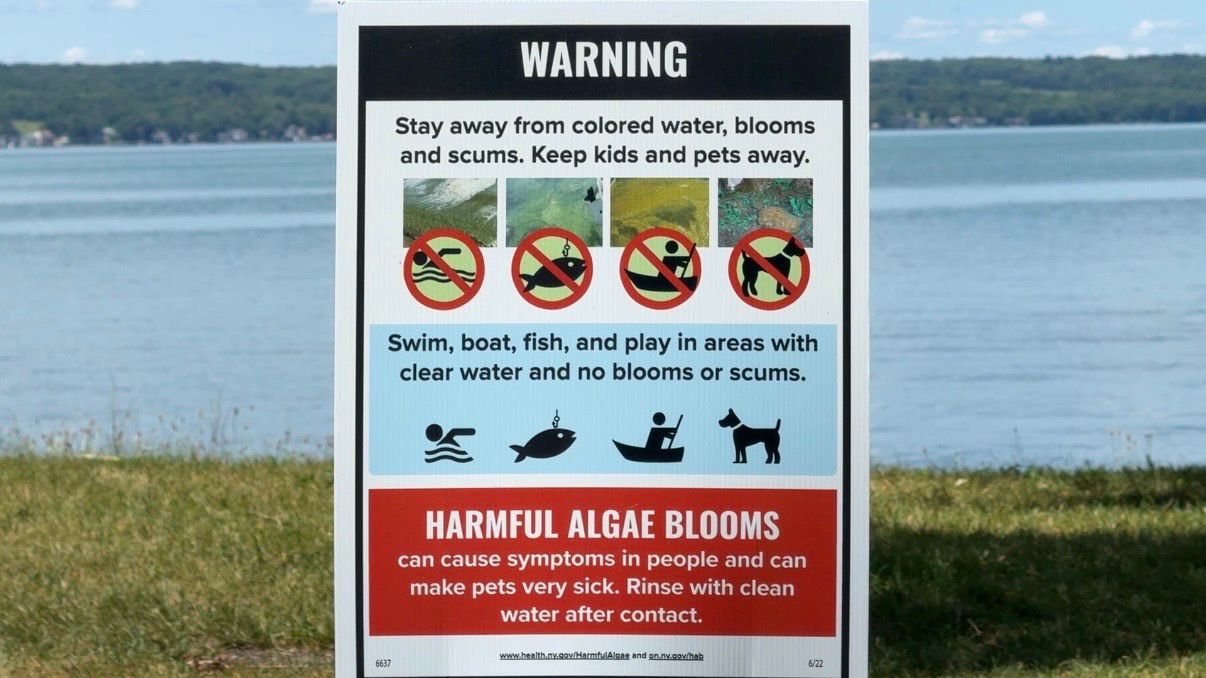
If you see a HAB, stay away and report it. (Spectrum News 1/Natalie Mooney)
He and Johnson believe conservation efforts are key. The DEC this year announced a “HAB Roadmap” to inform short and long-term management across the state. Shortly after that, the state invested $42 million into reducing the sediment and runoff that feed the blooms.
Johnson says she hopes these efforts will be enough to protect the waters in New York.
“I love living in this area that has an abundance of fresh water between the Finger Lakes and the Great Lakes,” Johnson said. “I believe, myself included, that many of us take it for granted, because it’s just here.”
If you think you see a HAB, the DEC recommends reporting it so it can be tested and the public can be notified.
A map of HAB locations across the state can be found here.