
The First Statewide Data Center Pause
New York Governor Kathy Hochul signed an executive order this Tuesday freezing new hyperscale data centers that draw 50 megawatts or more, for up to one year. No other state has done this. The order pauses state environmental permits while regulators build a framework covering energy demand, water use, air quality, and ratepayer protection. Projects already holding every required permit move forward. Everything still waiting goes on hold.
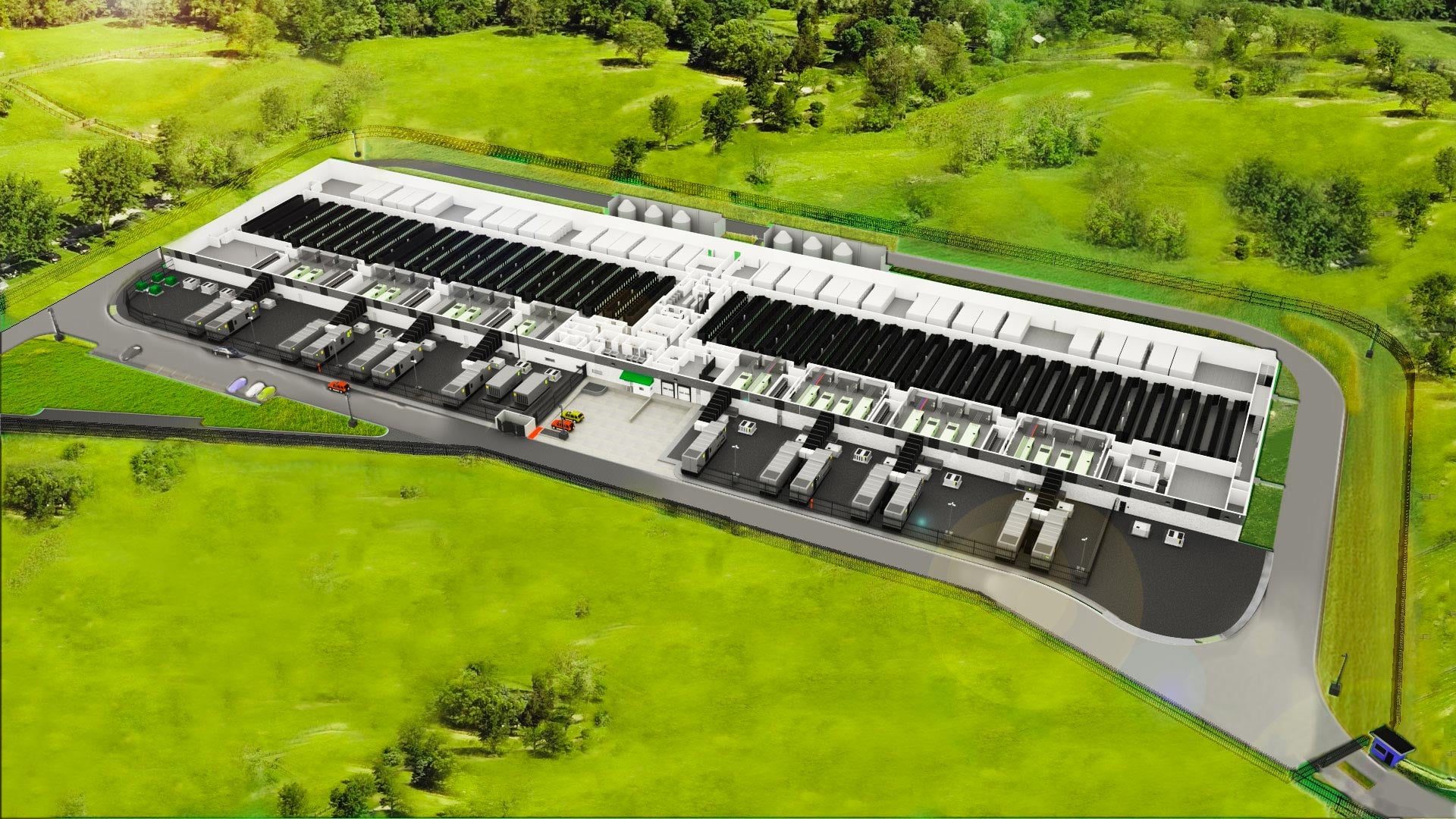 Amazon AWS data center. Image credit: Amazon.com
Key Takeaways
The order blocks state agencies from approving discretionary permits for any data center pulling 50 megawatts or more, and exempts smaller facilities serving hospitals, universities, and back-office financial operations.
New York’s average residential electricity price has climbed nearly 68 percent since 2019, and a June Siena poll found 46 percent of respondents backing a moratorium against 21 percent opposed.
Fourteen state legislatures have introduced bills restricting data center construction and none have become law, while Maine’s governor vetoed a similar bill in April.
Hochul announced the order in New York City and framed it as arithmetic rather than ideology.
“We’re in the midst of one of the most significant economic upheavals in generations … perhaps ever,” she said. “These hyperscale AI data centers consume enormous amounts of power, truly threatening to outpace our grid’s capacity.” She added: “They drive up costs for local ratepayers, and I refuse to let those costs get passed down to New Yorkers.”
Her office put the policy plainly in a statement. “As data center development threatens to hike up utility bills, deplete our natural resources, and create uncertainty for New Yorkers, it’s my responsibility to take action and lead,” Hochul said.
What the Order Actually Does
The Department of Environmental Conservation must produce a Generic Environmental Impact Statement setting uniform standards for the industry. Within 60 days, the state will hand local governments guidance on negotiating community benefits with developers: infrastructure money, child care investment, direct payments. Hochul also said data centers will either generate their own power or pay a premium to use New York’s grid, and she wants them contributing to a statewide fund supporting the grid itself.
She is pushing legislation to repeal sales tax exemptions for large data centers, and she opposes tax subsidies for the sector outright.
Once the framework lands, the pause lifts. Her office expects that inside a year.
Who Cheered
Environmental groups treated the order as a win they earned.
“This one-year moratorium is a huge step forward for New York communities fighting against an onslaught of massive data center proposals,” said Laura Shindell, director of New York State’s Food & Water Watch. “It comes as the direct result of immense public pressure from people across the state demanding their elected leaders protect them from Big Tech’s assault, which threatens the state’s clean air and water and New Yorkers’ financial security.”
Senator Kirsten Gillibrand framed it around credibility. “This one-year moratorium is fundamentally about trust,” she said in a statement provided to WRGB Albany. “Right now, New Yorkers aren’t convinced these massive facilities benefit them. Before we move forward, our communities need ironclad guarantees that their energy bills won’t spike, their water will be protected, and their air will remain clean.”
State Senator Kristen Gonzalez, who sponsored the legislature’s own moratorium bill, spoke at the announcement. “Technology should make our lives better, not pollute our water, strain our energy grid, or drive up our utility bills,” she said. “By giving our State time to plan, we can ensure that development and innovation do not come at the expense of all of us.”
Who Objected
Construction unions and Republican lawmakers pushed back hard.
“A statewide moratorium is the wrong answer to the right questions,” New York State Assemblyman Scott Gray and three colleagues wrote to the governor in June. “It freezes investment, takes decisions away from the communities that should be making them and duplicates or ignores work the governor’s own administration already has underway.”
“Siting belongs to local communities. Albany’s job is to set the regulatory framework, facilitate interconnection and protect ratepayers and grid reliability,” they added. “It is not Albany’s job to decide for a town or village whether it wants one of these projects. That is a local decision, and it should remain one.”
Mark McManus, general president of the United Association of Union Plumbers and Pipefitters, was blunter. “A shortsighted moratorium only accomplishes one thing: it kills good-paying union jobs. Rather than implementing guardrails to build the future of American ingenuity, Gov. Hochul is taking her ball and going home,” he said.
Pennsylvania Senator John Fetterman posted two words on X Tuesday morning: “China wins.”
The Grid Math Behind the Fight
The pressure Hochul described is measurable. Federal forecasters expect US electricity demand to break records in both 2026 and 2027, driven largely by AI data centers and electrification. Data centers now account for roughly 4 to 5 percent of all US electricity use, and bills near major hubs have climbed as much as 267 percent over five years. AI servers themselves are the reason: they draw up to ten times the power of a standard server, and companies are installing them faster than utilities can build capacity.
The backlash is national. At least 11 states have active moratorium bills, and more than 150 energy-related bills have been considered across statehouses in 2026 alone. Coverage of the growing revolt shows how towns from New York to Georgia have started blocking projects and cutting tax breaks. Alternatives are emerging on the margins, including startups pitching small AI compute nodes distributed across homes to use grid capacity that already exists.
Politics runs underneath all of it. Hochul faces reelection in November against Nassau County Executive Bruce Blakeman, who opposes a statewide moratorium and wants local governments cutting their own deals. The same Siena poll showing 46 percent support for a pause also showed Hochul leading Blakeman by 20 points. Democrats in Maine and Virginia had warned against exactly this move, and the state’s own announcement makes clear that Albany intends to write the national template rather than follow one.
The legislature already passed a broader bill in June, the Responsible Data Center Development Act, covering facilities at 20 megawatts and up, with new utility rate classes and mandatory public hearings. Hochul has not signed it. “Frankly, the bill is complicated,” a Hochul staffer said on a press call. “It’s going to take some time to work through it with the legislature, and this felt like the fastest way to be able to act now.” Reporting on the order notes the executive route took effect the moment she signed it, which the bill would not have.
New York was ranked among the best-positioned states to win AI data centers in a recent annual business ranking. It just told them to wait.
Written by Vytautas Valinskas