
The Brief
The air quality index (AQI) for New York City is currently 100, according to AirGov.
Here’s a closer look at what that number actually represents.
NEW YORK – The air quality in New York City has been deemed “moderate” – let’s break down what that means.

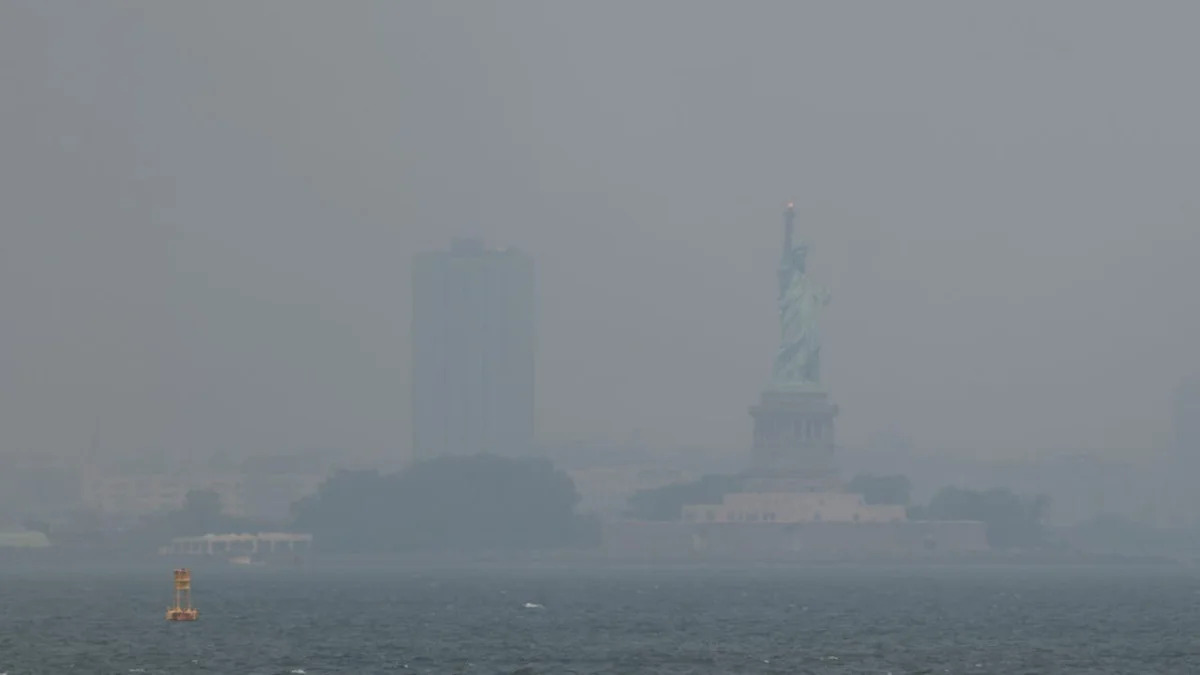
NEW YORK, NEW YORK – JULY 15: Haze from Canadian wildfires blankets the Statue of Liberty as seen from a Brooklyn pier on July 15, 2026 in New York City. New York City is under an Air Quality Health Advisory as the Canadian and Great Lakes wildfire smoke gradually moves through the area, creating a thick haze in the heat. New York City and much of the East Coast are experiencing temperatures with the heat index over 100 degrees as the region confronts another heat wave. (Photo by Spencer Platt/Getty Images)
HEADER
The air quality index (AQI) for New York City is currently 100, according to AirGov.
Here is a closer look at what the numbers represent:
0-50: Good, with little to no risk of pollution.
51-100: Moderate and really is not a risk to anyone unless they’re unusually sensitive to poor air quality. The national weather service will often still issue an air quality alert when we’re in this range.
101-150: This is a risk for sensitive groups and people with asthma.
151-200: A risk for everyone and people who are sensitive are at risk for more severe complications.
201-300: Very unhealthy and a risk for everyone.
301+: Emergency conditions.
The Source
This article includes information provided by AirGov.