
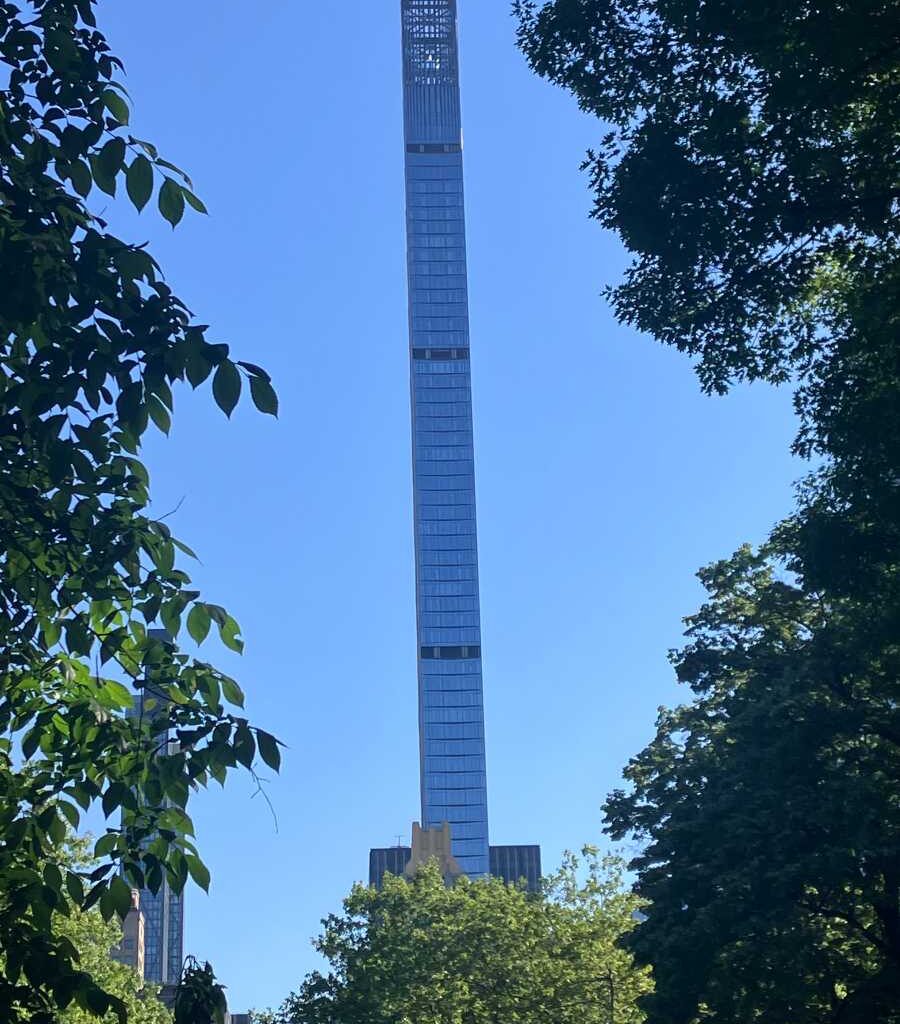
A recent Court of Appeals decision over Midtown’s superskinny Steinway Tower divided New York’s high court in a four-three split and marked a shift in the state precedent on real estate contracts.
Now real estate attorneys have begun to raise questions about whether the recent Steinway Tower decision will be used as a tool to overwrite clauses of contracts that would have in the past been considered ironclad.
It has been long held that in New York every contract contains an implied obligation to act in good faith. New York’s courts have historically used this legal principle to fill the gaps that might exist in contract language. In the June decision, 111 West 57th Investment LLC v. 111 W57 Mezz Investor LLC, the state Court of Appeals allowed a lawsuit to proceed despite having “sole discretion” contract language that normally would have given the defendants a shield to dismiss.
“They’re saying, notwithstanding what the contract says, you cannot breach the implied covenant of good faith,” said Joshua Kopelowitz, the national co-chair of real estate litigation at Fox Rothschild, who shed some light on what the decision holds for the future of real estate lending agreements.
In 2018, 111 W. 57th Inv. LLC, a subsidiary of the AmBase Corporation, sued private equity lender Apollo for acting in bad faith when it restructured the finances of the prominent Steinway Tower supertall skyscraper. Apollo sold the loan that formed AmBase’s stake in the project to another real estate investor as part of a restructuring allegedly devised to wipe out AmBase’s equity in the project.
While Kopelowitz agreed that in the 111 W. 57th case it seemed possible that the developer did act in bad faith, he raised concerns that in its decision strayed from the unique facts of the case to setting a sweeping precedent.
“I think this just may be a case of bad facts make bad law,” Kopelowitz said.
 Joshua Kopelowitz, partner at Fox Rothschild
He suggested that the fallout of the decision is most likely going to be evident in the courts themselves. While real estate contracts may eventually adapt to include new language to strengthen their enforceability, the reverberations of the case could clog the courts with entrenched trials that drag lenders into expensive discovery regarding their intent.
Kopelowitz said this could pose a problem for New York courts that are already backed up.
“I can foresee a situation now where many, many judges will read this case and they will say, ‘I can’t dismiss the implied covenant of good faith.’ So as long as they put that in there, that case now has to go forward,” Kopelowitz said. “This new case… gives everyone a lifeline to at least drag things out and say to the lender, ‘Hey man, good faith is a question of discretion.’ You’re going to have to go through discovery, depositions, trial, and you may win in the end, but it’s going to cost you a fortune.”
On the other hand, he estimated that the shifting legal precedent won’t have a notable effect on the rate of development in New York City where he remains “bullish” that smart lawyers and market corrections will overcome any bumps in the road.
What’s likely to change in the real estate world, Kopelowitz suggested, is how lenders write contracts. One such adaptation could come through new contractual waivers that would relinquish a borrower’s right to challenge a lender’s “good faith discretion.”
Other loopholes could come from shifting legal jurisdiction. To avoid the shades of grey in New York’s legal landscape, some lenders may ask for clauses that would require legal disputes to be governed by Delaware or Texas law.
“They choose the law which governs the contract because that’s the law they think will be more favorable,” Kopelowitz said.