
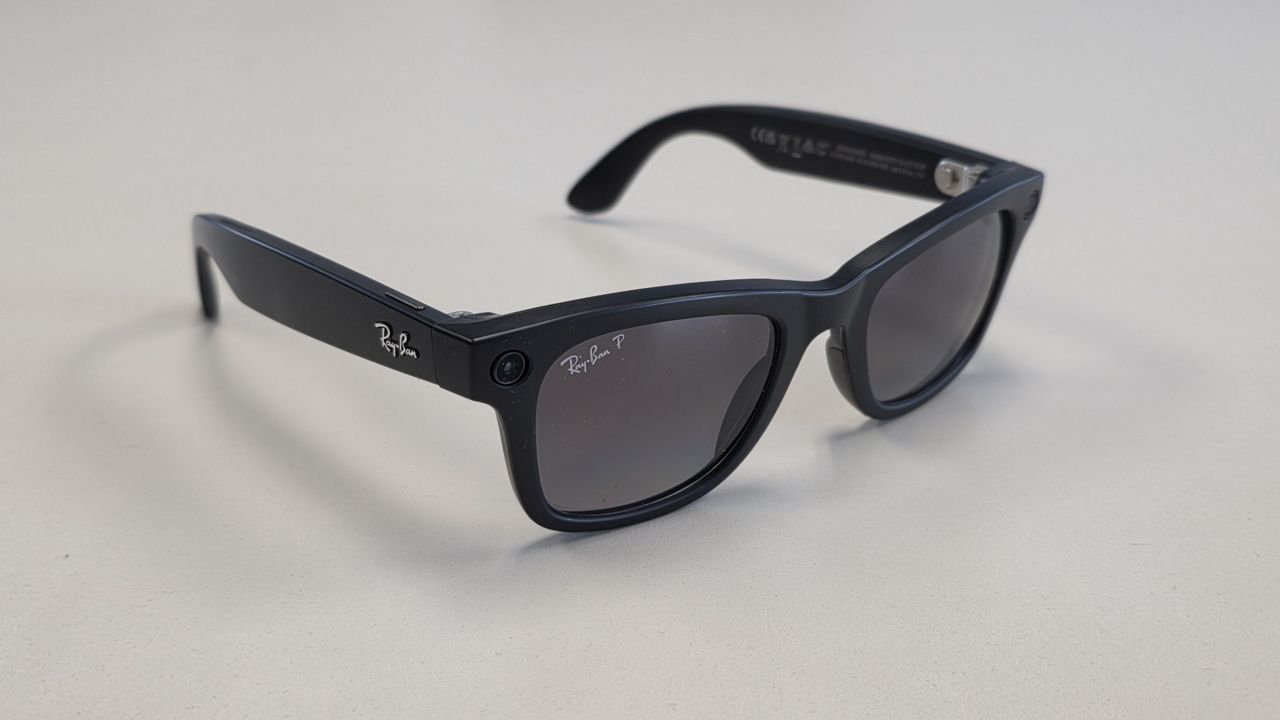
On July 20, the New York State Unified Court System will enact a ban on all smart glasses in its courtrooms.
Signs alerting the public to the ban are posted on the doors of the Monroe County Hall of Justice in Rochester.
The New York State Unified Court System issued a memo at the beginning of July stating: “Effective July 20, 2026, ‘smart glasses’ – i.e., eyewear or headwear containing a camera, microphone, computer or other technology that permit the user to record video or audio – either prescription or non-prescription, are prohibited inside any Unified Court System facility.”
“This is an example of policy doing a good job of keeping up with technology, which we don’t always see in our legal system,” said Jane Manning, the director of Women’s Equal Justice, an organization that serves survivors of sexual assault.
As a former state sex crimes prosecutor, Manning shares the level of sensitivity of some of the cases that go before the court.
“Courthouses are home to all types of cases with sometimes very sensitive witnesses such as sexual assault survivors, child victims, and witnesses who not only their privacy might be compromised, but whose safety might be compromised,” said Manning.
Manning says that includes jurors, law enforcement officers and informants.
She also points out specifically when it comes to sexual assault cases under New York state civil rights law, survivors of sex crimes have a right to their privacy and their identity being protected, and this ban helps to uphold that.
The ACLU told Spectrum News 1, “it hasn’t taken a position” on the smart glasses ban, but it is advocating against Meta’s plan to add facial recognition technology to Ray Ban and Oakley smart glasses.
The ACLU along with nearly 80 other local, state, and national organizations, urged Meta to reconsider the technology for reasons including domestic violence survivors, worker rights and civil rights back in April.
“Nobody wants to live in a world where strangers can secretly identify them, learn about their activities and interests, record their interactions, and track who they meet or how they exercise their free speech rights,” said Daniel Schwarz, NYCLU’s senior privacy and technology strategist. “Equipping these glasses with facial recognition trained on billions of unsuspecting social media users is not just unconscionable but highly dangerous.”