
On Sunday, New Jersey will host the FIFA World Cup final. But there has still been time for one more collision between New Jersey Gov. Mikie Sherrill and world soccer’s governing body in the week leading up to the most popular sporting event in the world.
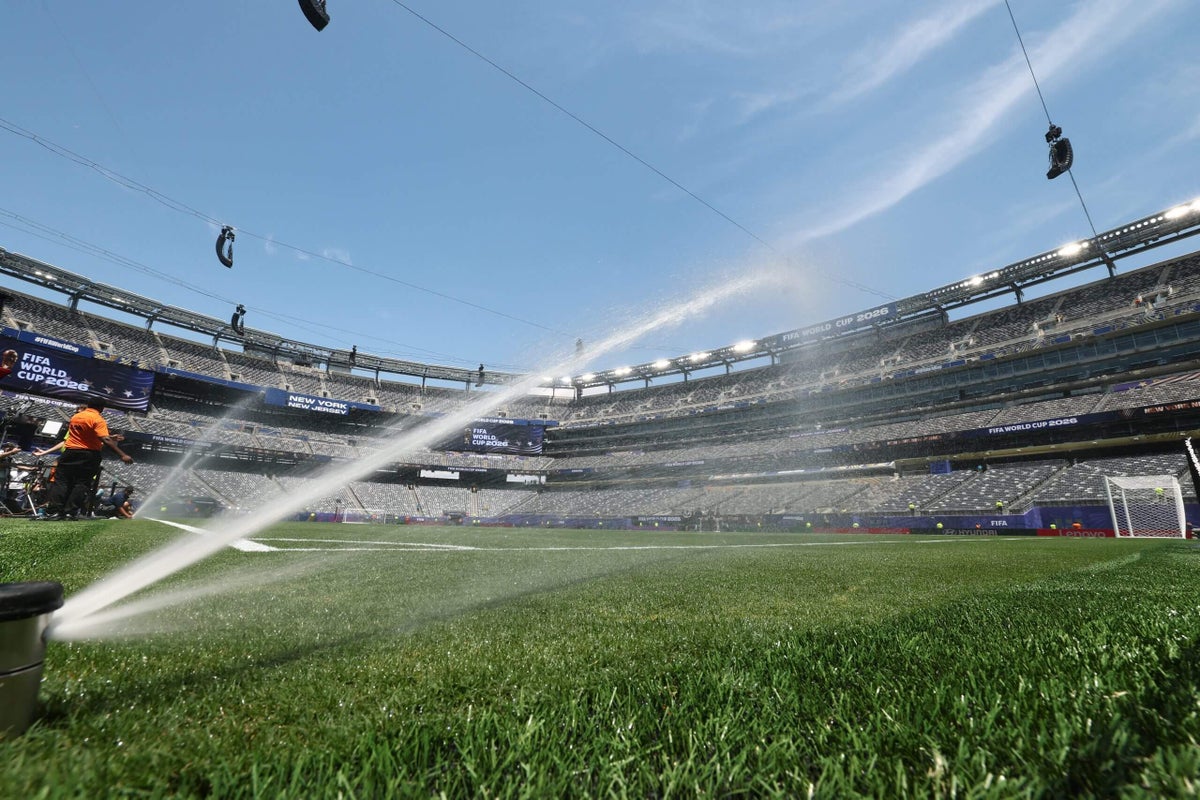
The latest argument broke out this week when FIFA began selling small pieces of the MetLife Stadium pitch, where the 2026 World Cup final will be played, on its website.
Priced at $450, a note on the sales page told buyers that parts of the pitch, encased in resin to preserve the grass, will be shipped after the final on July 19. The collectibles are manufactured by UK-based Keep Stub, which offers three additional versions on its website priced at $900, $1,200 and $3,000. Each of the four tiers is limited to 2,026 pieces, meaning that if they all sell out, they will generate more than $11.2 million in revenue.
Weather concerns ahead of World Cup final | World Cup Daily Briefing
Megan Feringa and Laura Williamson
This provoked concern in the New Jersey governor’s office, as state taxpayers paid for the field in the first place. According to documents obtained by northjersey.com, the New Jersey Sports and Exposition Authority spent $13.04 million to ensure the turf would be up to FIFA’s standard, with the agency attributing the spending to “design work, field construction and pitch maintenance equipment and service.” The NJSEA is a public authority and operates the Meadowlands Sports Complex, which houses MetLife Stadium.
To New Jersey, therefore, it looked as if the state had taken on all the costs while FIFA basked in the profits. Steve Sigmund, a spokesperson for Gov. Sherrill, told The Athletic: “As the Governor has said, New Jersey paid multiple millions for the total expense for the pitch at MetLife Stadium, so New Jersey taxpayers should share in any proceeds.”
New Jersey Assembly Republicans agreed with Gov. Sherrill, a member of the Democratic Party, underlining how hostility towards FIFA has become a cross-party venture in New Jersey.
“FIFA needs to get off our turf, literally,” said Assemblyman Mike Inganamort. “New Jersey taxpayers funded $13 million in upgrades to MetLife Stadium, including replacing the artificial turf with grass. Additionally, the New Jersey Sports and Exposition Authority holds the stadium’s land lease. This is state-owned property. FIFA can’t just sell off the soccer pitch without permission.
“What is happening is not just a bad deal for the taxpayers of New Jersey, it’s illegal. The Sherrill administration must use every tool at their disposal to stop FIFA from selling off our field, including seeking a restraining order.”
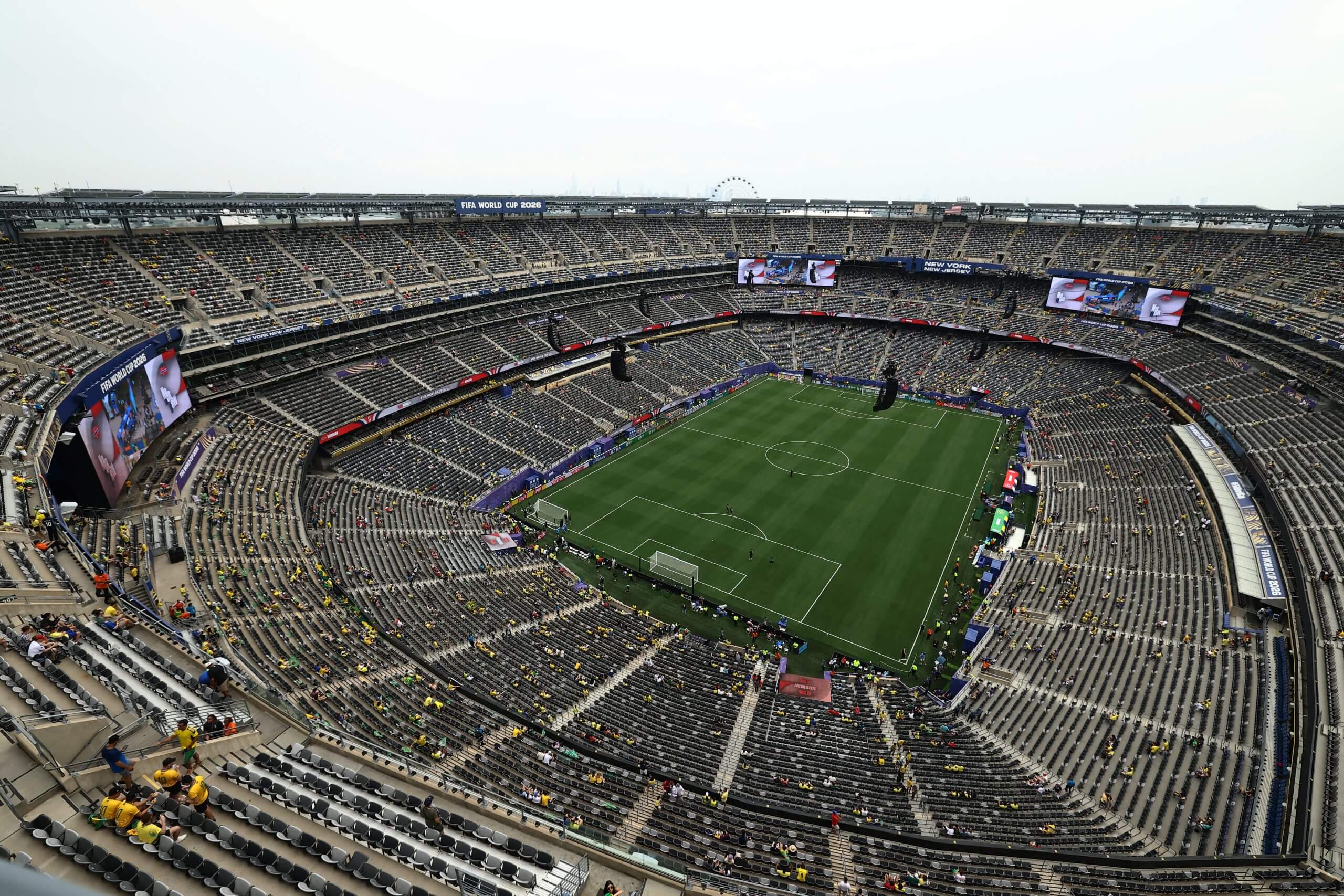
The MetLife Stadium will host the World Cup final on Sunday. (Charly Triballeau / AFP via Getty Images)
Inganamort, who sits on the Assembly Budget Committee, continued: “It is American-grown grass paid for by the taxpayers of New Jersey and planted at a state-owned complex. The sale must follow all the rules and laws that dictate how state surplus property is sold. It must benefit New Jersey taxpayers — not FIFA or a host committee that splits resources across New Jersey and New York.
“FIFA’s World Cup was bankrolled by New Jersey taxpayers, and they have walked all over us. This is the final insult. It is time this administration stands up to them.”
In this case, however, sources close to both FIFA and the joint host committee have claimed that, on this occasion, FIFA is only partially responsible. They say that the host committee and FIFA have an agreement to sell a small portion of the pitch, around five yards in total.
They say the host committee will receive the majority of the proceeds, which will go back into the committee’s continued investments in the region. FIFA receives a smaller revenue share than the host committee for the use of FIFA’s licensing, which FIFA sources say is a single-figure percentage.
Sigmund wants the money to go more directly to New Jerseyans, given the state’s investment, rather than going to a joint host committee to divide up or invest.
Natalie Hamilton, communications director for the host committee, said: “Investments, including the pitch, made by New Jersey, New York State, New York City, the federal government, and our partners have generated billions of dollars in economic impact, hundreds of millions of dollars in regional tax revenue, and permanent infrastructure improvements that will last well beyond the World Cup. The tournament has been a massive success and we can’t wait to welcome the world for the largest sports and entertainment event in history.”
Collectively, New York and New Jersey have poured hundreds of millions of dollars into this World Cup. Between New York City and New York State, the host committee has received $61 million, and New Jersey has put in $50 million — $15 million of which was a loan from the New Jersey Sports and Exposition Authority.
The states have also spent millions marketing themselves around the World Cup, while they jointly received over $66 million in federal security funding. New Jersey also spent more than $37 million on improvements to MetLife Stadium, and $40 million has been spent — with $13.2 million in federal assistance — on a new pedestrian walkway near MetLife. An additional $40 million has been budgeted for New Jersey agency costs, which may emerge over the summer.
The calculus with all of this is that the spending will be recovered in the estimated $3.3 billion worth of economic impact in the region, although such studies are often treated with caution.
Gov. Sherrill and FIFA previously clashed over public transportation costs to World Cup games, after the New Jersey politician directed the state transit agency to ensure state taxpayers did not subsidize the cost of round-trip rail tickets from Manhattan, N.Y., to MetLife Stadium. This meant that a ticket for the 18-mile journey, usually priced at $12.90, rose to $98 for World Cup fans during the tournament. FIFA said the pricing would have a “chilling” effect.
Sherrill mounted a strident defense at the time, saying FIFA was forecasting $11 billion in revenue during the tournament while tickets were going for up to $10,000 to watch the World Cup final at MetLife Stadium. She said that FIFA ought to step up and share the financial burden with U.S. host cities.
“I won’t stick N.J. commuters with that tab for years to come, that’s not fair,” Gov. Sherrill said. “FIFA should pay for the rides, but if they don’t, I’m not going to let N.J. commuters be taken for one.”
Then came a dispute over the new, FIFA-approved name for MetLife Stadium during the World Cup — officially New York New Jersey Stadium. Gov. Sherrill made an official request that one of two major signs at the stadium read “New Jersey New York,” despite the co-host city’s official name being the other way around since bids were first submitted in 2018.
The governor wanted the sign changed to better reflect New Jersey’s role, investment and contribution to the World Cup. According to a source with knowledge of the discussions, the governor’s request was made several months ago when FIFA requested some operational changes at the venue. Gov. Sherrill’s office said it was prepared to comply, but asked for the name change in return.
There was also displeasure towards the joint New York New Jersey host committee when The Athletic first revealed New York City mayor Zohran Mamdani had secured 1,000 $50 tickets for New Yorkers, creating affordable options exclusively for residents of his city. A spokesperson for Sherrill said: “FIFA not caring about costs for New Jersey residents isn’t new.” James J. Tedesco III, Bergen County Executive, sent a letter to host committee CEO Alex Lasry demanding an affordable ticket access program for Bergen County, N.J., residents. A week before the tournament, the New York New Jersey host committee then made 770 free tickets available for New Jerseyans.