
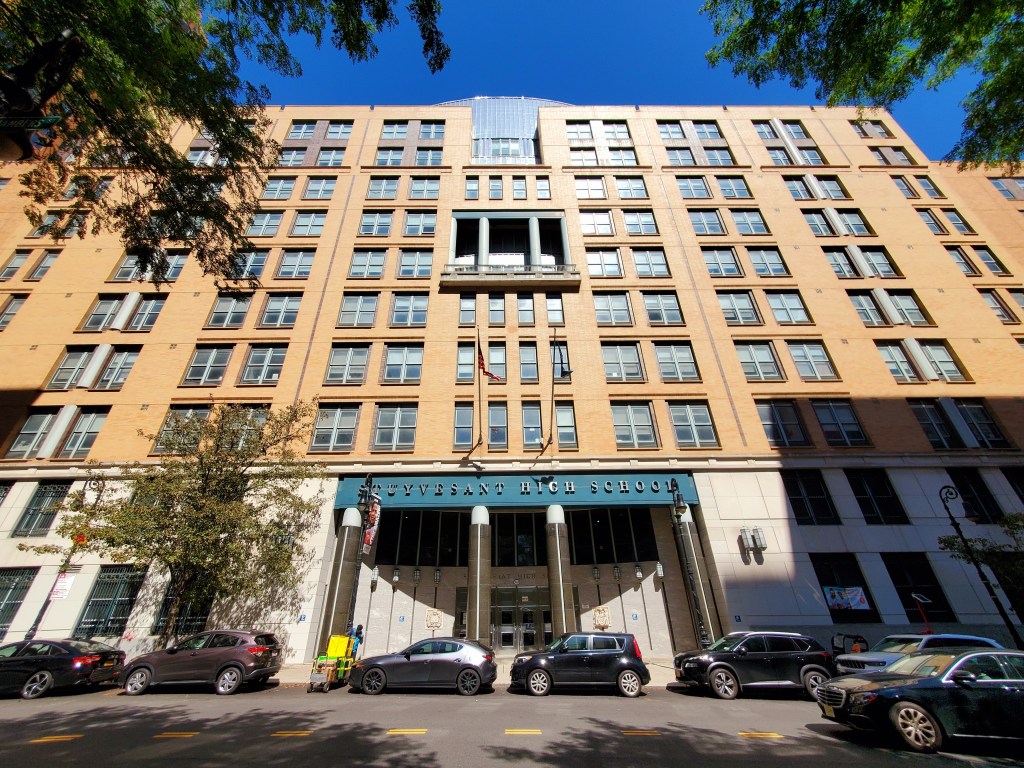
Only three Black students were admitted to Stuyvesant High School this year.
That number should prompt reflection — not about the ability or potential of Black students, but about the systems that shape opportunity.
Three students do not reveal a lack of talent. They raise a larger question: How do we define and recognize excellence?
As a proud graduate of NYC Public Schools and the first Black woman to lead the nation’s largest school system, this conversation is deeply personal.
I know what a NYC public education can make possible. Throughout my career as a teacher, principal, superintendent, and chancellor, I have seen Black students excel in every field. The question has never been whether Black students are capable. It is whether our systems recognize their potential early, nurture it, and provide equitable access to opportunities that allow it to flourish.
In 2017, I served on the School Diversity Advisory Group. The group, which included students, recommended expanding pathways to advanced learning while maintaining high expectations. Having helped develop those recommendations, I remain convinced that excellence and equity are not competing goals — they are mutually reinforcing. Nearly a decade later, many of those recommendations remain unfinished business. Revisiting them would provide us with a roadmap for expanding opportunity while preserving rigor.
Across the city’s specialized high schools, approximately 4,000 offers were made this year. Yet only 3.5% went to Black students and 6.5% to Hispanic students. Stuyvesant is the most visible example of a broader pattern that should concern anyone who believes talent exists in every community.
The question is not simply who gains admission. It is whether we have built systems that identify, prepare, and provide access to opportunities for students to thrive.
That work begins long before eighth grade. By the time students take the Specialized High Schools Admissions Test, years of opportunity — or missed opportunity — have already shaped students’ educational journeys. Early literacy, strong mathematics instruction, enrichment, advanced coursework, mentoring, and educators who recognize potential all matter.
There should be no part of our educational system where a single test determines access to opportunity.
The SHSAT measures performance on one exam, but excellence is broader than a single score. It includes creativity, critical thinking, persistence, leadership, curiosity, and the ability to apply knowledge in meaningful ways. As access to preparation varies — and more students achieve perfect scores — we should ask whether one exam remains the best measure of academic promise.
This is not an argument against rigor. It is an argument for ensuring our definition of rigor reflects what we truly value.
New York is already engaged in that conversation through NY Inspires and the development of a Portrait of a Graduate. If we believe graduates should be critical thinkers, effective communicators, creative problem-solvers, collaborative leaders, adaptable learners, and engaged citizens, then our systems of assessment and opportunity should reflect those values.
After a lifetime in NYC public schools, from student up to chancellor — I know this with certainty: brilliance exists in every neighborhood, ZIP code, and classroom.
The true measure of an education system is not simply how well it identifies students who have already had every advantage. It is how consistently it discovers, develops, and elevates brilliance wherever it exists.
If three students cause us to ask bigger questions about opportunity, let them inspire us to build a system that recognizes excellence in every classroom, across every borough, and in communities that have too often been overlooked.
Porter, a former chancellor of New York City Public Schools, is a visiting senior fellow at the Center for Educational Innovation.