
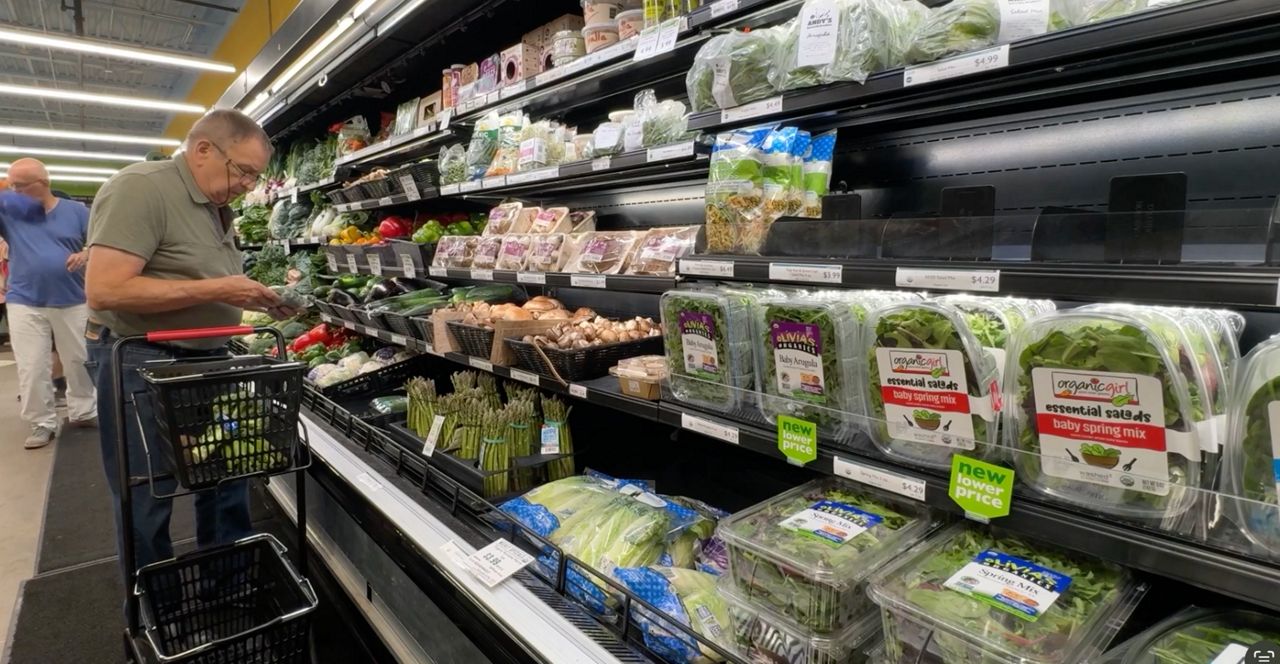
ROCHESTER, N.Y. — A nationwide surge in cyclosporiasis cases has raised concerns about produce safety.
As thousands of cases continue to be reported, the New York state Department of Health shares the medical impacts this infection has on consumers and the best practices to stay safe.
“There might be more than one source,” NYSDOH commissioner Dr. Jim McDonald said. “We just have to keep looking. Cyclosporiasis has been around like last year, we saw 700 cases, and the year before that, we saw 500 cases. This year we’re at 506 already.”
What You Need To Know
A nationwide surge in cyclosporiasis cases has raised concerns about produce safety
As thousands of cases continue to be reported, the New York state Department of Health shares its medical impacts this infection has on consumers and the best practices to stay safe
Cyclosporiasis is a seasonal infection. It occurs most commonly between May and the end of August. It is a microscopic parasite, and can be treatable with the antibiotic if necessary
The Centers for Disease Control and Prevention has confirmed over 1,600 reported cases, with over 500 of them being across New York state.
“Cyclosporiasis has been around, like last year, we saw 700 cases, and the year before that we saw 500 cases,” McDonald said. “This year we’re at 506 already, because there’s 34 states reporting and at the same time, I think it’s why it’s getting more attention. We are seeing more cases, like the most recent data I looked at today. Statewide, we’re at 576 cases since May 1. About 70% of those cases are from the New York City area. That 30% of them from the rest of the state. So that’s interesting. I think one of the other things that’s new for us is, although CDC announced lettuce, there might be an association with that that’s really, so far, limited to the five states.”
Reports are pointing to produce and greens as a source of the illness, linking back to growers like Taylor Fresh Foods. With findings of the microscopic parasite, its company has removed all iceberg lettuce from the market, especially from its partners like Taco Bell.
“New York isn’t one of those states, so we still don’t know the source,” McDonald said. “There’s challenges with every outbreak. One of the challenges about finding cyclosporiasis is the incubation period. In other words, the time from when people maybe either contaminated food or when they get symptoms is two to 14 days, and then you have to have time to go to the doctor and get the test done. So a lot of time has elapsed before we actually know you’re a positive case, and then we have to reach out and talk to you. So then people have to recount in their mind what they ate sometimes a week ago or two weeks ago. And that’s but, you know, we can help people figure that out. That’s something we’re good at doing.”
Although the illness is rarely fatal, its symptoms can last for weeks.
“Testing is getting a lot better in the last several years,” McDonald said. “So I think it’s part of why we’re finding more cases nationally. That’s a good thing, by the way, because when you find more cases you trigger a disease detective not just here but all over the country to make sure we look at our food supply, to make sure the food supply is safe. When people do get cyclosporiasis and they’re fighting the parasite, they’re often to start with nausea, maybe some vomiting. And the diarrhea, you try is best to keep your diet gentle and keep your fluids up. You really want to combat dehydration. You know, if the diarrhea goes on for several days and you feel like you’re not getting better, some people will go to their doctor, not just get tested, but see if an antibiotic is right for them. You never take an antibiotic without knowing the cause of your diarrhea, because sometimes antibiotics make diarrhea worse. So it’s really important to know the cause. That’s why you have to be tested before an antibiotic for any diarrhea related on this.”
Public health authorities are warning consumers to be diligent about washing your fruits and vegetables. And although no produce is completely risk-free, experts say farmers markets may be a safer option.
“When you’re thinking about how to prevent getting cyclosporiasis, clean your fruits and vegetables really thoroughly, running under warm water for these 20 seconds,” McDonald said. “Another thing is, if you can scrub them with a kitchen scrub brush. Another thing you can do is cook your vegetables and fruits. You know, when you cook your fruits and vegetables, you will actually kill this microscopic parasites on there. Using soap or veggie wash isn’t really going to move the parasite off there. You have to vigorously scrub them to get that off there, but you can’t tell if food is contaminated just by looking at it.”