
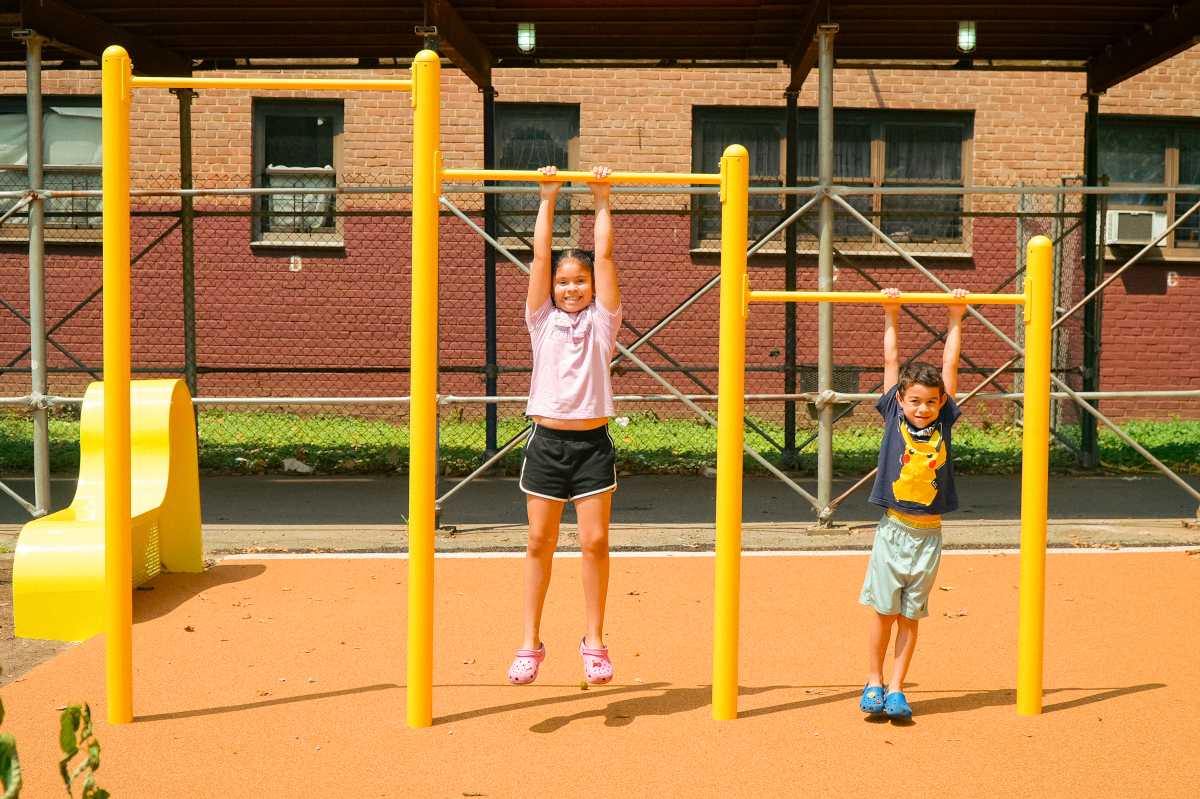
A neglected stretch of open space at the Marlboro Houses in Gravesend has been transformed into an environmentally friendly community gathering place thanks to more than half a million dollars in investment focused on sustainability, accessibility, and resident-driven design.
The Public Housing Community Fund, NYCHA and a coalition of design and community partners unveiled the renovated space on July 15, marking the completion of the second phase of Green Space Connections, the $3.2 million initiative that aims to reimagine public spaces at NYCHA developments across the city.
The project revitalized more than 7,200 square feet of outdoor space at the Marlboro Houses with new accessible walking paths, sensory play features, native landscaping and stormwater improvements designed to make the area more resilient to flooding.
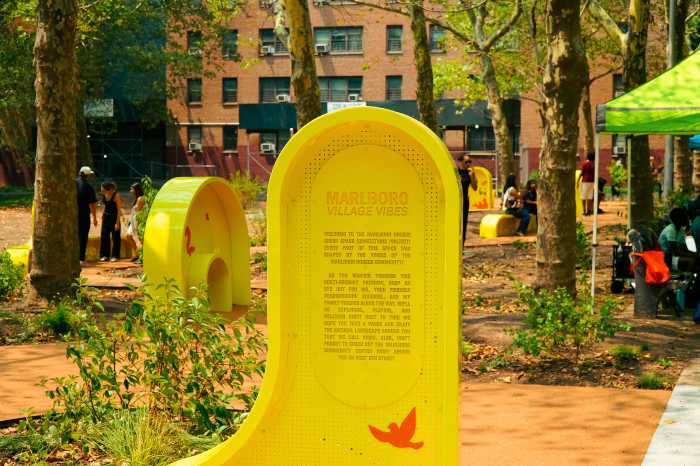 The park at Marlboro Houses was designed in partnership with The Public Housing Community Fund, the New York City Housing Authority, the Center for Justice Innovation, The Urban Conga, Cork Collective, The New York Climate Exchange, Field Form, IFIXXNYC Builders, Rockwell Group, The Design Trust for Public Space, 3×3 and the Marlboro Houses Residents Association. Photo courtesy of Tameek Williams
One of the project’s most unique features is a continuous pathway constructed from approximately 450,000 recycled wine corks collected from restaurants and other partners through the Cork Collective. The material creates a soft, permeable walking surface while giving discarded corks a second life in a public space.
“The new cork pathway invites residents into a more welcoming environment while showcasing innovative, sustainable materials,” Alex Zablocki, executive director of Public Housing Community Fund, said in a statement. “Through Green Space Connections, resident feedback and priorities shape every stage of the design process, and this project reflects that commitment in every detail.”
The design team worked closely with Marlboro Houses residents throughout the planning process, facilitating community workshops to identify priorities for the space. Residents said the existing green areas were underused, difficult to navigate and frequently flooded during storms, prompting designers to incorporate climate-conscious landscaping and improved drainage into the final plans.
NYCHA CEO Lisa Bova-Hiatt said the project demonstrates what can be accomplished when residents help shape neighborhood improvements.
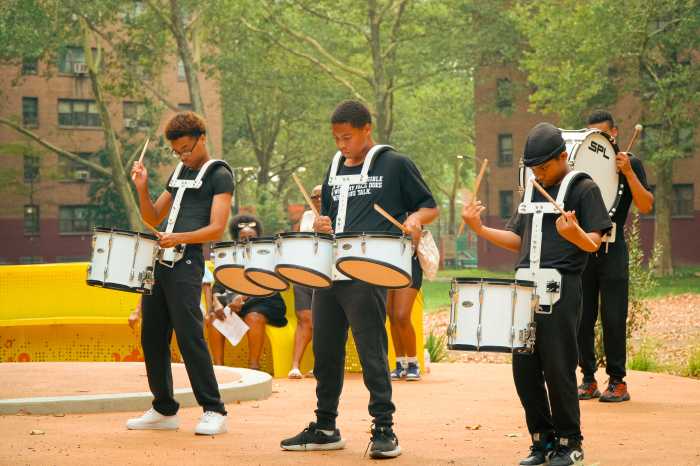 The park is part of the second phase of PHCF’s Green Space Connections, a $3.2 million initiative, in partnership with Center for Justice Innovation, to create community-designed open space in NYCHA communities. Photo courtesy of Tameek Williams
“Accessible green spaces are vital to the health and well-being of our communities, and we’re proud to center residents in the design process while implementing innovative features and sustainable materials,” she said. “We are grateful to the Marlboro Houses Residents Association, the Public Housing Community Fund, and all of our partners for their collaboration in bringing this project to life.”
Lead designers Maeghann Coleman and Ryan Swanson of Brooklyn-based multidisciplinary studio The Urban Conga said the project’s success stemmed from treating residents as collaborators rather than stakeholders.
“The Green Space Connections and Connected Communities programs created a process that genuinely valued community voices and welcomed residents as co-authors. Together, we were able to shape a space that reflects the people, stories, and aspirations of the community it was designed to serve,” they said.
The cork surface itself is the first installation of its kind in New York City. According to project partners, cork offers environmental benefits beyond recycling waste. It diverts the waste from landfills, is non-toxic, offers a 20-30 percent reduction of warm temperatures and is “infinitely recyclable.”
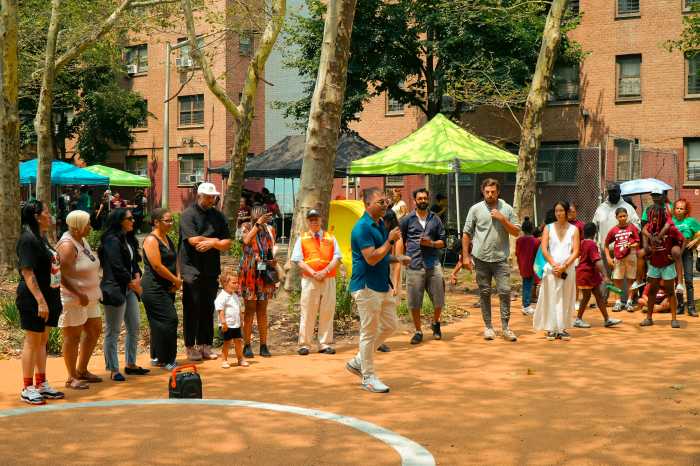 Community leaders gathered at the Marlboro Houses on July 15 for the grand unveiling. Photo courtesy of Tameek Williams
“When we launched the Cork Collective, our dream was to transform cork stoppers into sustainable, beautiful, durable surfaces for public spaces and activities in New York City,” said David Rockwell, co-founder of Cork Collective and founder of the Rockwell Group.
The landscaping strategy also draws inspiration from the area’s historic marshland, using “native plant communities that improve stormwater performance, expand habitat, and demonstrate how vegetation can become critical green infrastructure.”
The Marlboro Houses project was the fourth and final installation in the second phase of Green Space Connections, following similar resident-led improvements at Roosevelt Houses in Brooklyn and Castle Hill Houses and Patterson Houses in the Bronx. The initiative is expected to continue this summer with new projects planned in Staten Island, Manhattan and Queens.