
New York voters on Tuesday elected some new mayors to lead its large upstate cities. Democrats made large inroads in small government offices and a statewide ballot proposal turned into a nailbiter. All this as next year’s congressional, state legislative and gubernatorial races loom large.
Here are a few takeaways from the 2025 election results.
Upstate cities maintain blue identity, with some fresh faces
All four of upstate New York’s largest cities along the Interstate 90 corridor held elections for mayor this year — each continuing a decades-long Democratic streak of leadership.
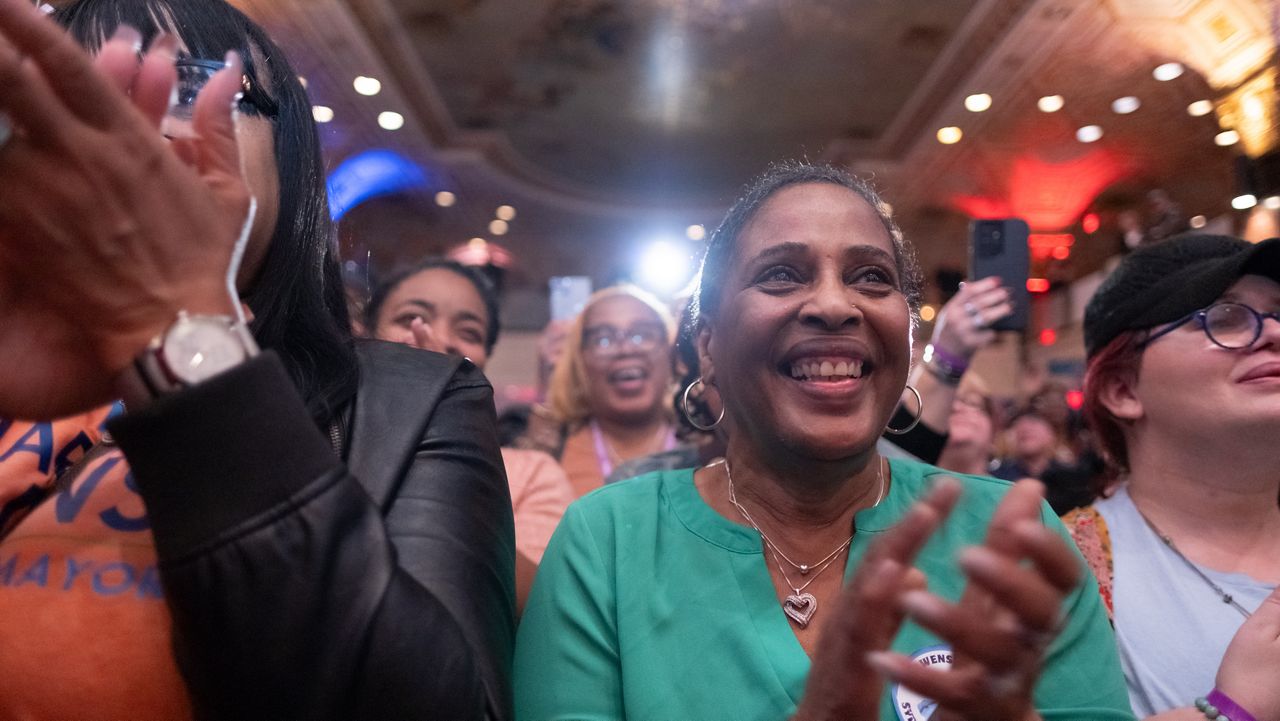
Albany and Syracuse both elected their first Black mayor — both women — in Dorcey Applyrs and Sharon Owens. Buffalo is sending state Sen. Sean Ryan to city hall — the first new mayor in 20 years — while Rochester’s Malik Evans easily cruised to win a second term.
The Democratic victors in Syracuse and Buffalo both received north of 70% of the vote in their respective cities, while those in Albany and Rochester exceeded 80%. With the exception of Syracuse, the other cities have each had Democratic mayors for well over half a century, with the last time Albany elected a Republican mayor being 1917.
Democrats unseat Republicans down ballot
The success of Democrats on Tuesday was not limited to the big-city mayors alone. The party thumped at the local level across the state, defeating Republican incumbents and changing the dynamics of some local politics.
In Onondaga County, Democrats appear to have taken control of the county legislature for the first time in decades. A reliable blue county in presidential and gubernatorial races, Onondaga County is more independent at the local level, where Republicans have had firm control of county government for some time. The turnover may complicate things as the region undergoes several massive infrastructure projects like Micron’s semiconductor project and a county aquarium.
Elsewhere, Democrats flipped seats in at least five towns in Monroe County, including Greece, where Jeffery McCann will become its first Democratic town supervisor in more than 100 years. The city of Canandaigua also saw an upset as Democrat Thomas Lyon defeated Republican incumbent Bob Palumbo for mayor.
To the east, Democrats won every seat on the Troy City Council, flipping four GOP officeholders two years after Carmella Mantello became the first Republican mayor since 2007. Less than 24 hours later, the results are already causing friction there when it comes to the mayor’s controversial plan to relocate city hall.
Republicans did have their upsides. Orange County Executive Steve Neuhaus won a fourth four-year term in a county carried by Democrats such as U.S. Rep. Pat Ryan and state Sen. James Skoufis in recent years. In Nassau County, on Long Island, Bruce Blakeman won a second term. Rensselaer County Executive Steve McLaughlin is holding an eight-point lead after trailing his Democratic challenger when early returns were reported. Binghamton Mayor Jared Kraham won easily while Saratoga Springs Republican Mayor John Safford leads his Democratic challenger after in 2023 he was elected the first Republican mayor in a decade.
Statewide ballot measure narrowly passes
New York doesn’t generally have close statewide races, though sometimes, statewide constitutional amendments can be.
A ballot measure that allows New York’s Olympic Regional Development Authority to continue building on 350 acres of land near the Mount Van Hoevenberg complex near Lake Placid, which is currently protected forest on the Adirondack Forest preserve, is passing, albeit barely.
The “yes” vote for the proposal was leading with 46% of the vote while the “no” vote garnered 42%, with 99% of precincts reporting. More than half a million voters left the question blank.
The motive for the amendment was to allow upgrades deemed essential to the world-class training site while expanding and protecting land. The 6 million-acre Adirondack Forest Preserve is protected by section 1 of article 14 of the state Constitution, known as the “forever wild” clause, adopted in 1894.
A significant amount of the “no” vote came from New York City, with the “no” vote winning in the Bronx by 3 points; in Brooklyn, by 10 points; Queens, by 11 points and Staten Island, by 15 points. The vote was split in Manhattan. In Essex County, where Mount Van Hoevenberg is located, the “yes” vote won by 33 points.
Mamdani becomes a model for some, a target for others
Zohran Mamdani’s win to be the next mayor of New York City comes with pros and cons for the main political parties. For Democrats, it gave them a roadmap to focus on affordability in future elections, as Gov. Kathy Hochul pointed out in her September endorsement of him.
“Zohran Mamdani has relentlessly focused on addressing the affordability crisis,” House Minority Leader Hakeem Jeffries echoed in his own endorsement two weeks ago.
For Republicans, the effort to tie other Democrats to Mamdani’s democratic socialist agenda started long before Tuesday and will likely continue into the midterm elections next year.
Some of the loudest attacks on Mamdani have come from Republican U.S. Rep. Elise Stefanik, who said in a statement Tuesday night that “Kathy Hochul is now owned lock, stock, and barrel by the radical Far Left Socialist takeover of the New York Democrat Party under her abysmal watch.”
Stefanik, who is considering a run for governor against Hochul in 2026 and has said she will make a decision in the coming weeks, also said in her statement “the only way to save our great state and provide a check on this insanity is to elect a Republican Governor in 2026.”
For a party long out of power in the state, Mamdani’s rise gives the GOP a new central target, now that the age of Clintons and Bidens appears to have past, and now that Mamdani himself appears to have helped close the book on a name the state has known for 50 years — Cuomo.