
A federal judge in Brooklyn overturned New York’s “NLRB trigger” law on Monday — a regulation that empowered the state labor board to handle private sector labor disputes if the National Labor Relations Board was unable to do so.
U.S. District Court Judge Eric Komitee of the Eastern District of New York declared the law unconstitutional in his ruling, offering a victory to Amazon, which had sued the New York Public Employee Relations Board last year to block the law’s enforcement.
Komittee had signaled early in the suit that he was likely to rule in Amazon’s favor. He granted the e-commerce giant a temporary restraining order last November that blocked the state labor board from enforcing the law as he considered the case. His latest ruling makes that decision permanent.
In his November decision, Komittee found that the “NLRB trigger bill” amendments were preempted under the U.S. Supreme Court’s 1959 San Diego Building Trades Council v. Garmon ruling, which deems federal employee labor rights to be the exclusive domain of the national labor board — not PERB.
His decision adhered to the same logic.
“No matter how defendants frame their argument, they are ultimately asking the Court to overrule — or invent a new exception to — the preemption doctrine laid out by the Supreme Court in Garmon,” Komitee wrote in his order to grant Amazon injunction against the state law..
Komitee told the New York Attorney General counsel and their co-counsel with Teamsters in a conference in January that “the likelihood of success for the defense is higher at the appellate level than the district court level.”
Neither PERB nor the Teamsters responded to a request for comment about whether they would appeal Komitee’s ruling as of Tuesday.
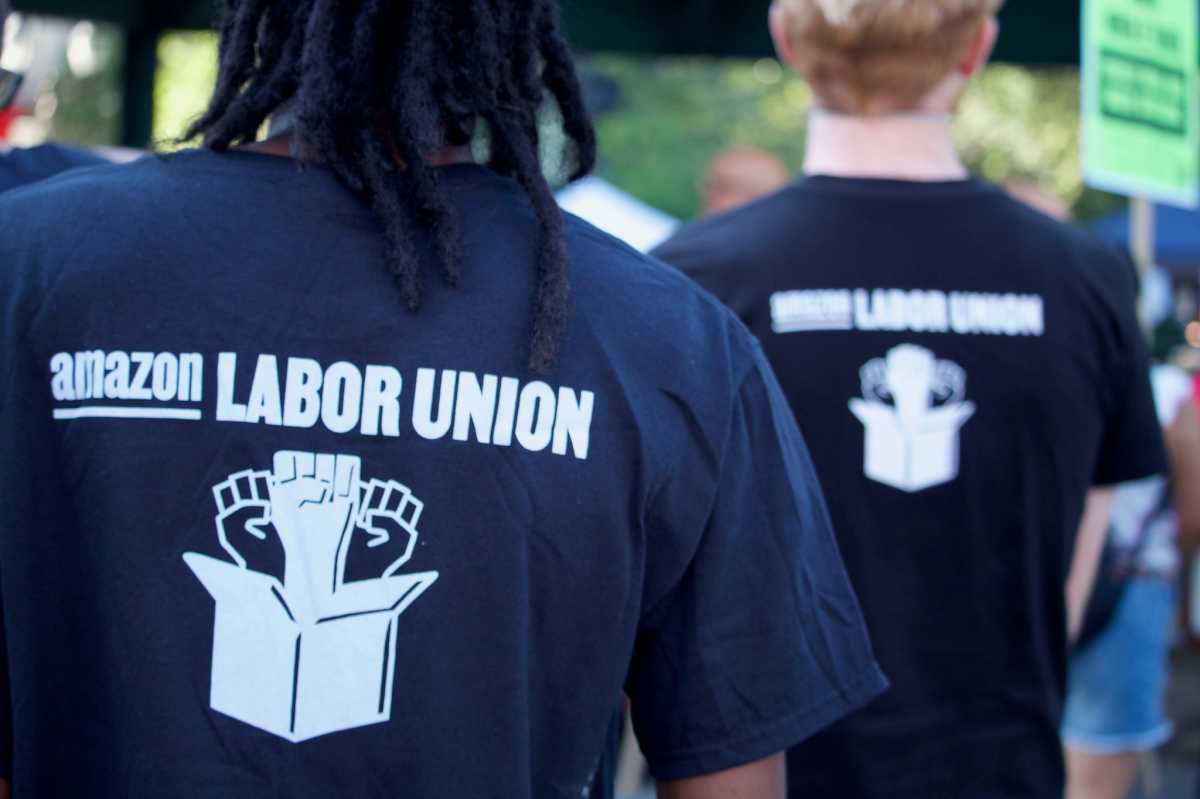
Amazon initially filed the lawsuit to block the law after the PERB took up the Amazon Labor Union’s claim that the e-commerce company had fired the union vice president in retaliation for labor activities.
After Komittee issued the temporary restraining order, state and union lawyers argued that the federal court should dismiss the challenges to the law, which they say takes a step to mitigate the dysfunctional “no man’s land” state of the NLRB as a result of atrophy and political hurdles.
Filings by the union and the state AG made in May documented local NLRB offices’ diminished ability to respond to alleged labor rights violations. One labor violation complaint that one union Amazon employee filed with the NLRB had not advanced past the first step of enforcement over a 29-month period, according to the legal papers that the Teamsters lawyers filed.
The union and AG lawyers argued against Komittee’s reliance on the Garmon decision that such a precedent is no longer applicable to the current state of federal labor law after President Donald Trump fired one of the NLRB members in a move that flouted procedure and left it without a quorum and unable to function for a year.
The NLRB regained its ability to issue decisions in December, when the Senate confirmed two new members, but lawyers argued that in its present state, the NLRB is still not able to operate in the way that its authors intended.
Komittee wrote that he disagreed with the union’s interpretation of a Supreme Court decision that they were citing to justify PERB’s adjudication of federal labor law.