
by Olivia Young
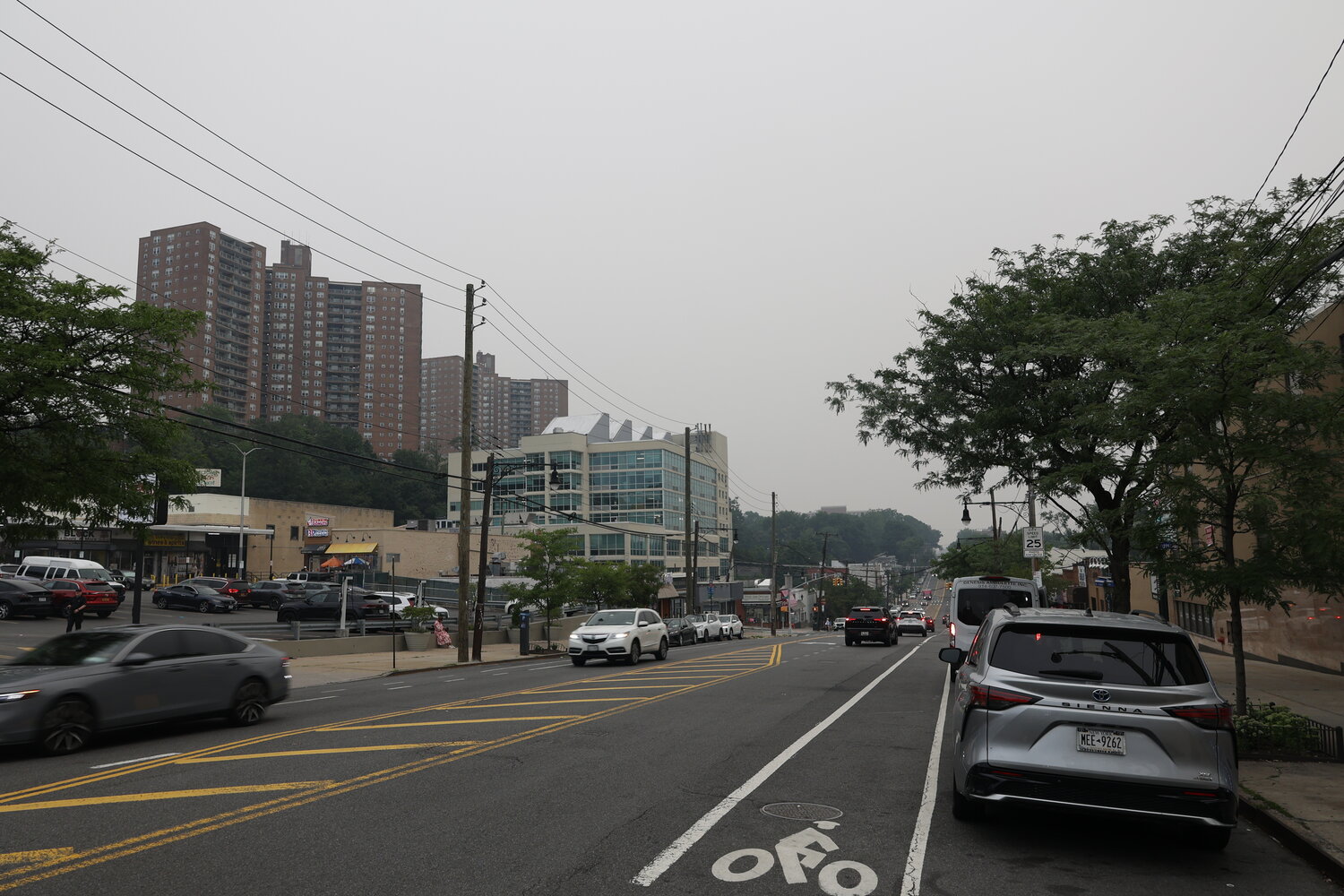
Starting July 15 and lasting about three days, the city was blanketed in unhealthy smoke due to Canadian wildfires.
Amid visible smog and a lingering burning smell, the air quality index, or AQI, peaked on June 16 at “very unhealthy”, then fell throughout the day once it started to rain, according to a July 17 New York City Emergency Management release.
The New York City metropolitan area returned to “moderate” air quality as of June 20, according to the New York State Department of Environmental Conservation’s AQI. This is a step below “good,” and means the air quality is acceptable, but there could be a risk for those sensitive to air pollution, according to the department and the U.S. Environmental Protection Agency.
Here are five things to know about the air quality.
Canadian wildfires
The dangerous heat wave that recently hit the U.S. also created hot and dry conditions in Canada, according to NASA’s Scientific Visualization Studio. Typical for the region, NASA said, lighting strikes hit and ignited wildfires in the “drought-ridden” area of Ontario.
The fires release plumes of smoke containing air pollutants, and can travel hundreds of miles, NASA said. On July 14, high pressure in the atmosphere drove fast-moving, upper-level air flow carrying smoke from Ontario to the northeastern U.S., NASA wrote.
According to the Canadian Wildland Fire Information System, Canada has experienced 3,898 wildfires as of July 20. Of those, 2982 have been put out, and 916 are still active.
Air pollution
AQI measures the amount of pollution in the air, spanning from good to hazardous, according to The Natural Resources Defense Council, a U.S.-based environmental advocacy nonprofit. It measures five major air pollutants, the council said: carbon monoxide, nitrogen dioxide, ozone, particle pollution and sulfur dioxide.
According to an air quality health advisory the state department of environmental conservation released July 15, the pollutant of concern was fine particulate matter, which is a type of particle pollution.
Fine particulate matter consists of tiny solid particles or liquid droplets, the state department said in the advisory. Particles measure 2.5 micrometers in diameter or less, according to the federal environmental protection agency. The average human hair is 30 times larger than the largest fine particle, the agency said.
Health risks
The state department said exposure to fine particulate matter can cause irritation to the eyes, nose and throat, as well as coughing, sneezing, runny nose and shortness of breath. It can also worsen heart disease and asthma, making older adults and children especially vulnerable, the department added.
The city did not publicly report any deaths or hospitalizations due to unhealthy air quality.
City action
Mayor Zohran Mamdani expanded the city’s response, as the worsening air quality overlapped with dangerous heat, according to a July 15 release. Cooling centers remained open citywide, outreach workers intensified canvassing efforts, and KN95 masks were available at libraries, police precincts and transit hubs.
The city also adjusted its operations. New York City Public Schools directed principals to limit outdoor activities and reschedule any outdoor field trips, and the New York City Department of Parks and Recreations cancelled outdoor swim programs for kids and babies, and moved camp activities indoors.
Moving forward
As skies started to clear, New York City Emergency Management issued a statement July 19, lauding the response from residents and city agencies.
“Once again, New Yorkers showed what makes this city extraordinary: we showed up for one another,” Mamdani said in a statement. “To every city worker and New Yorker who stepped up this week: thank you. That’s what solidarity looks like.”
However, the city cautioned, the smoke plumes may return as the fires in Ontario continue to burn.
Keywords
Canadian wildfires,
New York City air quality,
AQI,
wildfire smoke,
Ontario wildfires,
fine particulate matter,
PM2.5,
NYC Emergency Management,
New York State Department of Environmental Conservation,
air pollution,
health advisory,
wildfire smoke health risks,
NASA,
Zohran Mamdani,
NYC weather