
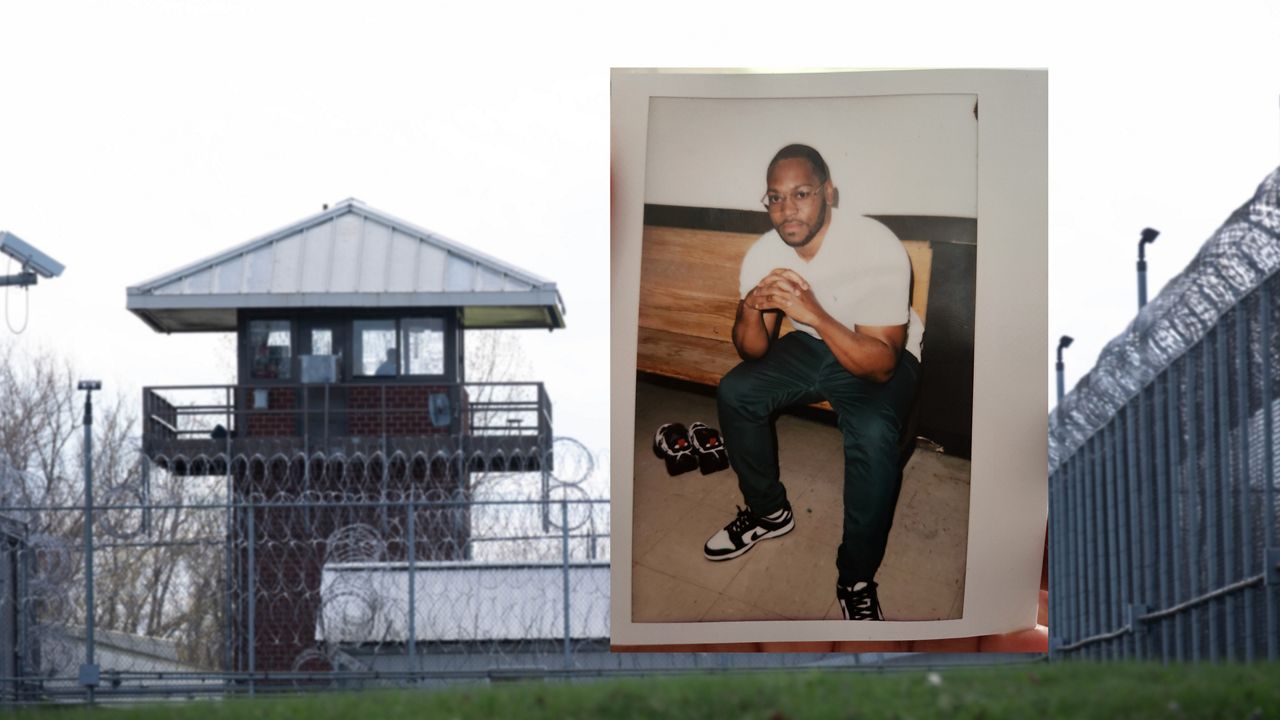
After a Spectrum News 1 report found a delay in medical care for inmates in New York’s prisons, one inmate said he still has yet to receive proper care for his declining condition.
Justus Holmes is currently incarcerated at Coxsackie Correctional Facility. For more than a year, he has experienced gastrointestinal symptoms that caused him to pass out twice. Since February, he has requested to see a doctor 20 times but only saw one for the first time last week.
“I saw the doctor last Friday. He was confused and said they were supposed to run tests on me back around April 14,” Holmes said in an email on July 15.
The doctor ordered blood work, bodily samples and an X-ray, Holmes said. He said he has completed the samples and the X-ray but is still waiting on the blood work.
Holmes said he tries to manage his symptoms through controlling his diet.
“Other than that, I’ve been stable; still eating lightly, rice, tuna, have been keeping my stomach calm. I still have my days when there’s pain and pressure build up,” he said in an email.
On July 2, Holmes said he was taken down for a sick call, but the nurse gave him a laxative, which exacerbated his symptoms. He said he ran into an inmate who used to live a few cells down from him at Auburn Correctional Facility.
“He saw how much weight I lost, asked what was going on and pretty much explained he had the exact symptoms I have right now and was diagnosed with C.Diff, a contagious bacterial infection. They caught his just in time before his body went ‘septic,’ which I fear the most,” Holmes said.
A state Department of Corrections and Community Supervision (DOCCS) spokesperson declined to comment on Holmes’ medical treatment due to HIPAA rules.
Holmes has been told a number of times by officers at the correctional facility that they are too short-staffed to transport him to the medical unit and to his sick calls. A report released by the New York Department of Corrections and Community Supervision said this occurrence happens frequently at Marcy and Mid-State correctional facilities, where they conducted their review of the prison system.
“DOCCS executives, incarcerated individuals, and medical and nursing staff reported that follow-up care related to external specialty or diagnostic care had been rescheduled or missed due to staffing issues at the facility that precluded transportation off-site,” the report said. “In one example, one of these missed appointments resulted in delayed care and a subsequent emergency event that required outside treatment.”
The report highlighted that when there is a large volume of patients, the “routine requirements” can be delayed or omitted.
“This can result in missed clinical encounters, backlogs in routine sick calls, delays in treatment and an increase in grievances,” the report said.
Nicole March, a DOCCS spokesperson, said the department ensures all incarcerated individuals receive the “community standard of care” and have the opportunity to see medical staff through the sick-call procedure. The incarcerated individuals are transported to an outside hospital if their needs cannot be met inside the facility, March said in a statement.
“DOCCS is currently reviewing and developing a path forward to implement many of the recommendations made in the independent reports, including WilmerHale’s. To the extent that there are recommendations for improving our ability to provide medical treatment, DOCCS will continue to evaluate and implement ways to positively impact patient care,” March said.