
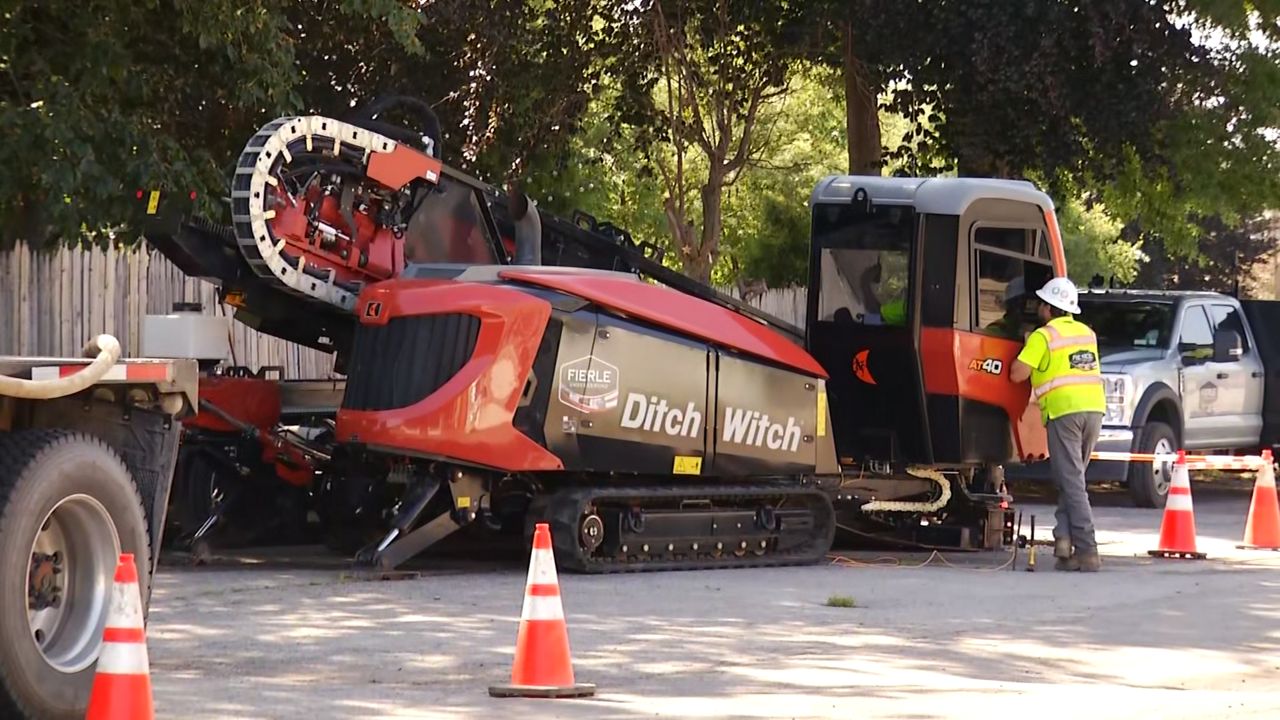
New York state is funding the exploration of renewable energy sources, including geothermal technology, a pursuit officials say could ultimately lower utility bills.
Geothermal energy uses temperatures and heat from inside the earth to cool and warm buildings.
“We see this as a great opportunity to demonstrate geothermal technologies that will reduce costs for consumers in specific sectors of our economy,” NYSERDA President and CEO Doreen Harris said.
NYSERDA is planning to invest more than $1 million over time into a Geocolumn drill, according to Harris.
“This is why we invest in innovation, so that we can help them move forward through commercialization and ultimately deploy at scale so that we can see those cost savings for all consumers across the state. So this is part of really getting to that scale that can allow all consumers to benefit,” said Harris.
According to Buffalo Geothermal, the technology is different because geothermal drills usually go 500 feet vertically into the earth. The company said this drill is only 15 feet deep but extends more than 300 feet horizontally, and can make more than one hole at once.
“We are trying to stay innovative to see if we can reduce the upfront cost and make geothermal more accessible for everybody,” said Johannes Rosemann, vice president of operations of Buffalo Geothermal.
Harris said a home would see savings on their electric bills within five to seven years if it switches from oil or propane. She said the timeline for natural gas is 12 to 15 years.
“Tapping into a source which is otherwise being wasted is really the best case scenario you can come up with,” said Travis Glazier, regional manager of external affairs for National Grid.
Meanwhile, in Syracuse, National Grid is planning a unique project. The company is piloting treated wastewater as a source for heating and cooling because its temperature is steady and uses less energy to heat and cool rooms.
“You have that source of cool air to then help cool your room to 68 degrees where it’s comfortable. As opposed to that, you would be pulling air from the outside. So, you might be using air that’s 10 below zero or 100 degrees. And then you have to pay for that whole distance of cooling or heating,” said Glazier.
It’s a system that could one day be used for homes at the nearby Inner Harbor. National Grid said it has created a design that is awaiting approval by the Public Service Commission.
“Wastewater is all over the place. And so, proving that this is something that can be accessible to residential and commercial properties is a huge value. For us, it really stabilizes our system delivery. Over the next 10, 15, 20, 30 years, there’s going to be increasing use of electricity. And so, our system is going to demand more and more of it,” said Glazier.
National Grid is also designing pilot programs for geothermal in Troy and Brooklyn.
Buffalo Geothermal is hoping to get its test program operational by October. National Grid is planning to start building its wastewater thermal energy network in 2027 and start the system in 2028.