
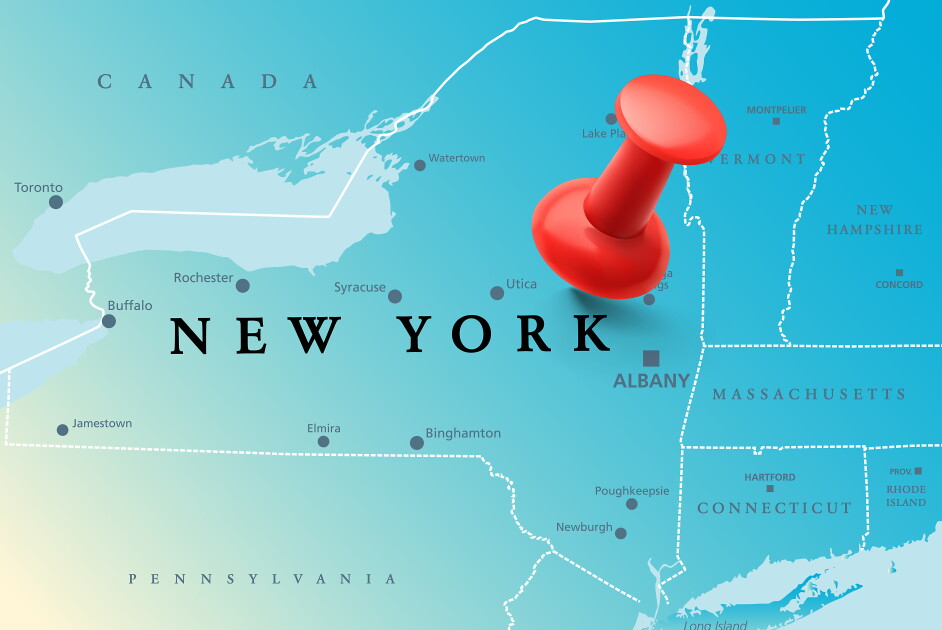
K-12 districts in New York are facing a series of new expectations as they enter into the new school year in September, as the state pushes an ambitious overhaul of key K-12 policies that could put a new squeeze on their financial decision-making.
For 2026-27, state leaders are reworking graduation requirements, pressing schools to adopt evidence-based literacy instruction, and navigating new financial challenges amid rising fixed costs.
The nation’s fourth-most populous state, New York serves roughly 2.4 million students and spends more per pupil than any other state. A little more than 900,000 of those students are part of New York City Public Schools, the country’s largest school district.
As one of the country’s most influential K-12 markets, many of New York’s policy and purchasing decisions are closely watched by districts and education companies nationwide.
Earlier this year, the state legislature advanced several major education priorities. The new fiscal year 2027 budget, effective April 1, included nearly $40 billion in total school aid — a record level for education funding in the state’s history — as well as new investments aimed at improving math instruction and additional funding tied to Foundation Aid, New York’s primary public school funding formula.
Even with those funding increases, district leaders say the reality of rising operating costs, and growing pressure to prove that every investment delivers measurable outcomes, will determine how quickly new directions take hold.
Don’t Miss the Summit Everyone Will Be Talking About
Join the education industry leaders shaping what’s next. Be there LIVE in Nashville, November 11–13, for exclusive insights from district decision-makers, the latest shifts in the K-12 market, and the connections that can drive your organization’s growth.
The result is a K-12 market where districts remain willing to innovate but are becoming far more deliberate about what they buy, how they implement new initiatives, and what they expect from vendors.
“We’re not looking to cut,” said Robert Kravitz, superintendent of the Jericho Union Free School District on Long Island, which has an enrollment of a little more than 3,000 students. “But it’s about using your resources to the fullest. How do we maximize what we have and be successful with it?”
Districts Anticipate New Graduation Requirements, With Questions Still Remaining
One of the biggest changes that looms on New York’s horizon is the state’s effort to redesign high school graduation requirements through its portrait of a graduate framework, part of the broader NY Inspires initiative, which will continue to unfold through 2029.
Through this model, students’ new graduation expectations will include being able to demonstrate they are academically prepared, reflective and future-focused, and show evidence they are also a creative innovator, critical thinker, effective communicator, and a global citizen.
The changes will gradually replace the state’s century-old system built around the standardized, end-of-course Regents exams. The new standards aim for more flexible demonstrations of student learning and competency to better connect high school with college, careers, and real-world skills, proponents say.
The Board of Regents has already approved the broad framework for the graduation redesign, while state education officials are expected to continue releasing regulations and implementation guidance over the coming months.
The Regents have also requested additional state funding to help districts prepare through technical assistance centers and professional development.
School districts in New York are delaying taking too many steps forward as they anticipate further guidance from the state’s education department, leaders said.
“I think the overwhelming majority are in that wait-and-see [mode],” said Jeff Smink, deputy director of EdTrust-New York, a K-12 policy and advocacy organization. “There’s some skepticism, so some districts are reluctant to start down that road unless there’s some concrete details behind it.”
Among his organization’s biggest concerns is ensuring that replacing statewide exit exams does not lead to inconsistent expectations for students across New York’s nearly 700 school districts, Smink said.
“We already have huge issues with students graduating but not being ready for college or entry-level jobs,” he said. “It’s not clear yet how this new plan is going to make that better.”
For Jericho, one of New York’s highest-performing districts that has long posted exceptionally high Regents mastery rates, many parents are wondering how those achievements will be recognized under the new system, said Superintendent Kravitz.
“There are a lot of questions regarding the portrait of a graduate,” Kravitz said. “Any time there’s change, there’s always nervousness.”
Literacy Moves From Adoption to Implementation
Literacy remains one of the state’s top instructional priorities for the new school year, building on several years of encouraging districts to align classroom instruction with the science of reading.
The push follows legislation adopted in recent years requiring districts to attest that their reading instruction aligns with the science of reading.
Advocates say progress has been made, but implementation remains uneven.
According to a recent EdTrust-New York analysis, about 21% of districts in the state still use literacy curriculum that does not align with evidence-based reading instruction. Nearly one-third of districts use materials that could not be classified because they have not been reviewed.
“There’s some progress, but not nearly enough,” Smink said.
One challenge is New York’s longstanding tradition of local control, he said. Unlike some other states, New York has not established an approved list of literacy curricula, leaving districts to evaluate products independently. That creates additional complexity for school systems that are already navigating an increasingly crowded marketplace.
We’re not looking to cut. But it’s about using your resources to the fullest, how do we maximize what we have and be successful with it?
Robert Kravitz, superintendent of the Jericho Union Free School District
New York’s budgeted investments for improving math could be a signal that state leaders may begin to apply the same attention to mathematics that they have given to literacy, said David Albert, chief communications and marketing officer for the New York State School Boards Association.
Districts are likely to focus those dollars first on curriculum development, teacher training, and instructional materials, rather than rushing to adopt new programs, Albert said.
At the same, the state’s practice of local control means districts will expect flexibility in how they implement state priorities, he said.
“It’s really the state’s responsibility to set the standards and provide the funding,” he said. “Let the local school districts, teachers, and curriculum specialists develop the specific content.”
Financial Pressures Are Changing How Districts Spend
Like many districts across the country, financial realities are reshaping purchasing decisions for New York schools.
Unlike many states, New York districts also operate under a property tax cap that generally limits annual tax levy increases to about 2% unless voters approve a higher increase by a 60% supermajority.
That makes districts particularly dependent on state aid to offset rising costs, Albert said.
Greg Berck, director of advocacy and legal counsel for the New York State Council of School Superintendents, said the two issues that dominate nearly every conversation he has with district leaders are rising health insurance premiums and special education costs.
Health insurance continues to rise at double-digit rates in many districts, he said. And special education expenses have climbed along with growing student needs and New York’s extensive legal requirements for serving students with disabilities.
While Gov. Hochul’s fiscal 2027 budget increased total school aid and continued Foundation Aid increases for every district, K-12 leaders worry it might not be enough.
Districts remain under financial pressure because many of their fastest-growing expenses, like health insurance, transportation, utilities, and special education, are increasing far faster than state aid, Albert said.
More than 70% of districts received only the state’s minimum 2% Foundation Aid increase this year, he said, prompting continued calls to revisit the decades-old funding formula.
“Rising costs are exceeding that 2%, so budgeting is becoming a challenge every year,” he said.
Possible future adjustments to Foundation Aid remain a source of uncertainty, leaders said. Although lawmakers updated parts of the formula in recent years, including how student poverty is measured, school board leaders argue it no longer reflects districts’ actual costs.
New York’s “save harmless” provision has also become increasingly important as districts’ contractual obligations and operating costs continue to rise regardless of enrollment trends, Albert said.
The rule guarantees districts will not receive less state aid than they did the previous year, even if enrollment declines or the funding formula would otherwise generate little or no increase.
“There’s always discussion in the legislature and with the governor every year about what that minimum increase will be, or will there even be a minimum increase?” Albert said. “So that obviously is difficult for schools because they are facing a lot of rising costs.”
Districts also are trying to gauge how the new national Education Freedom Tax Credit could affect enrollment patterns as the program aims to support school choice options.
Approved by congress in 2025, the policy goes into effect next year, creating a federal tax credit up to $1,700 for individuals who contribute to scholarship granting organizations. These organizations use the donations to award scholarships that can help eligible students pay for qualified K-12 education expenses. In May, New York became the 30th state to opt in, saying it will allow students to access tax credit-funded gifts.
With these rising financial pressures, districts are being far more selective about products and services they invest in.
Kravitz, the superintendent from the Jericho district, describes himself as “an entrepreneur in education,” who focuses less on cutting programs, and more on maximizing every dollar they already spend.
“I’m a big fan of return on my investment,” he said. “If we’re not going to use it, we’re not going to buy it.”
Kravitz said districts should routinely evaluate everything from instructional software to basic classroom supplies, ensuring resources are fully utilized before buying more.
“I don’t need long sales pitches [from vendors],” he said. “I need short, exact, data-proven products, and I want to know how I’m going to use it and how much it’s going to cost.”
Technology Remains a Priority, As Does Scrutiny
Schools across the state continue to have interest in exploring products with artificial intelligence, even as lawmakers and parents raise broader concerns about student technology use.
The caution around educational technology has become increasingly visible. This summer, New York City Public Schools temporarily paused new software purchases while it reviews existing digital tools and develops a broader strategy for AI instructional technology.
Albert, of the school boards association, said he does not expect districts across the state to mirror New York City’s decision outright, but he believes many boards are becoming more deliberate before approving new technology purchases.
“Districts have to be more cautious than ever before, especially with the advent of AI…and really spend time thinking about whether this is the right application [of the technology],” he said. “So it’s not a bad idea to step back and take a pause.”
Kravitz said the Jericho school district is encouraging educators to use AI to strengthen inquiry and research skills rather than simply generating answers.
“If you could teach a child to ask six questions consecutively so they refine their answers, that’s the ultimate learning,” he said.
Many districts remain open to experimentation while working to teach students both the opportunities and risks associated with AI, Berck said.
The state’s new statewide bell-to-bell cellphone restriction on student smartphone use during the school day, which took effect last school year, has also spurred conversations around students’ use of technology in classrooms.
While the law targets smartphones, rather than instructional devices, district leaders said it reflects broader public concern about screen time and is likely to increase scrutiny of education technology more generally.
Leaders expect oversight of screen time to intensify as lawmakers debate additional restrictions around technology use and AI guidance, in line with the broader national conversation.
“Vendors that have screen time involved with their offerings are going to see more pressure given this current moment,” Berck said. “School leaders are going to have to demonstrate how screen time does not equal bad. It’s more about what is on the kids’ screen and how it’s part of their overall journey.”
Albert said vendors should also expect districts to ask tougher questions about privacy protections, AI compliance, and whether products align with New York’s evolving graduation competencies.
“School boards are really going to be looking to their curriculum folks and their IT professionals to make sure the right applications are there to meet instruction and that it’s going to be effective and worth the investment,” Albert said. “They’re going to be cautious in making big-ticket purchases, but that’s not necessarily different from where they’ve been in the past.”