
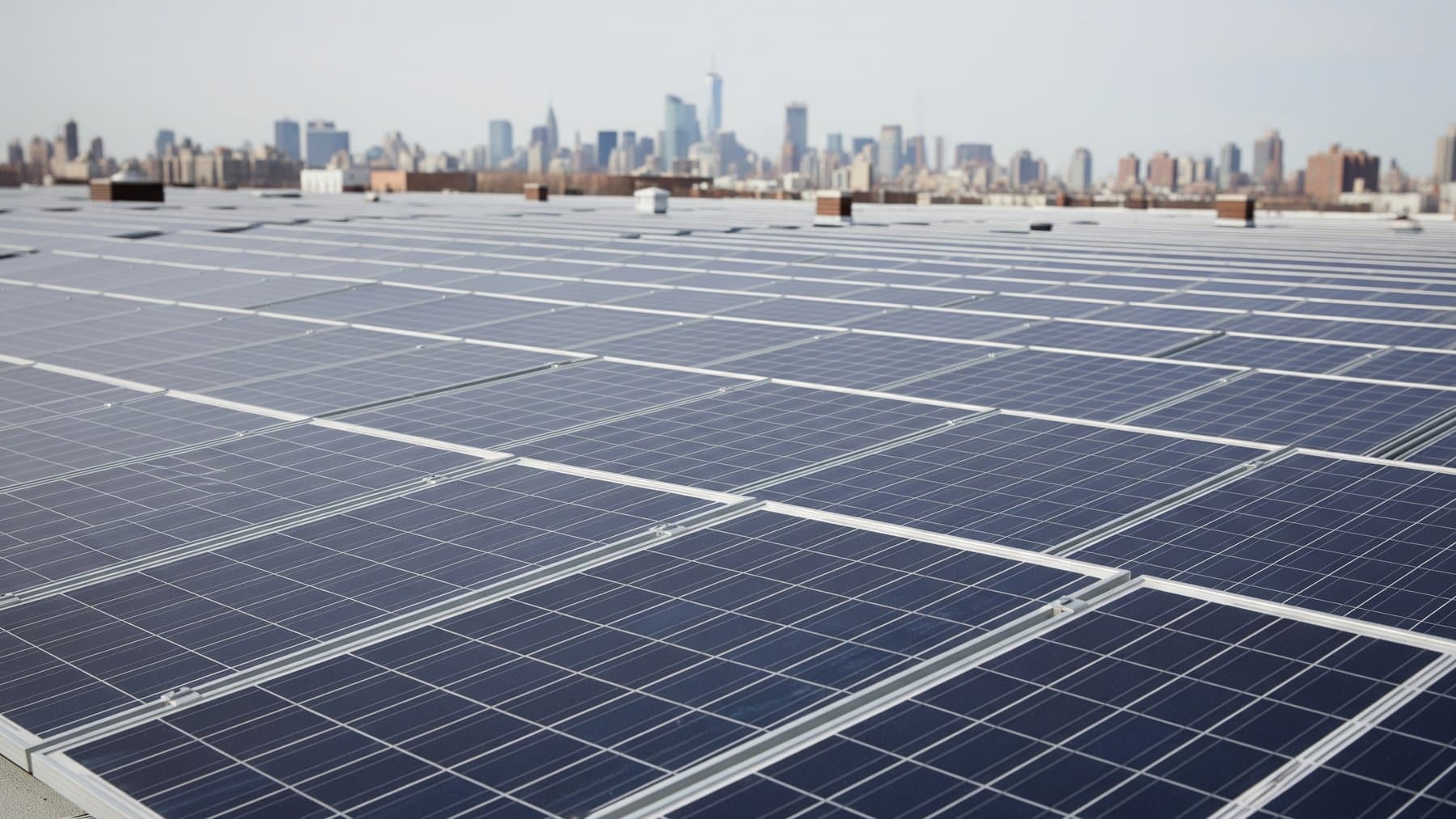
On a June afternoon in 2026, something happened on New York’s power grid that few had expected.
For one hour around noon, the state’s solar panels were covering a huge share of everything it needed.
It was a record.
And it was a signal that a very big number had crossed a line years ahead of schedule.
It was not a new power plant that did it.
And it was not one giant solar farm.
A goal that was supposed to take until 2030
A few years ago, state officials set what felt like an ambitious target.
They wanted 10 gigawatts of distributed solar installed across New York by 2030.
Distributed solar means the panels closest to where people actually live and work.
Rooftops, small ground mounted fields, and community arrays shared between neighbors.
Not the giant remote power stations sitting out in a desert somewhere.
Six gigawatts was meant to be the first checkpoint on the way there.
Officials had expected the state to reach that mark sometime in 2025.
New York passed it a full year early, back in 2024.
So the planners moved the goalposts forward and kept pushing.
Each new gigawatt only raised the bar for the next one.
The number that kept climbing every single year
What makes this story unusual is that the growth never stalled.
Solar generation in the US has posted years of unbroken growth.
New York rode that wave harder than almost any other state in the country.
The state installed a record 1.28 gigawatts of solar in a single year in 2025.
To put that in perspective, one gigawatt is roughly the output of a large nuclear reactor at full power.
New York added more than that in rooftop and community panels alone in one calendar year.
More than 276,000 separate projects are already running statewide.
Another 2.7 gigawatts sit somewhere in development behind them.
The pace held steady even as other states saw their projects stall.
That is not one big farm in a field.
It is a city of small decisions, one roof at a time.
A machine built from 276,000 small pieces
Most people picture a solar milestone as one giant array in the desert.
This one is the exact opposite of that.
It is a patchwork of hundreds of thousands of smaller systems.
They stretch all the way from Buffalo to Brooklyn.
New York holds 35 percent of the entire nation’s community solar capacity.
Community solar lets renters and low income residents buy into a nearby array.
They see the savings show up on their own monthly bill.
No panels are ever required on their own roof.
Every rooftop and parking canopy adds a little more to the total.
Nationally, solar and wind reached a record share of US electricity in 2025.
New York’s bet on community access may explain why it keeps beating its own forecasts.
The June afternoon that rewrote what a grid can do
Now for the number that genuinely surprised the planners.
On June 3, 2026, solar supplied about 29 percent of statewide electricity demand during the noon hour.
That is more than one in every four watts the state was using.
All of it came from rooftops, community arrays, and shared fields.
Not a gas plant, and not a single nuclear station.
According to the state announcement, solar had already saved New Yorkers about 90 million dollars the summer before by easing peak demand.
The boom has also drawn 12.2 billion dollars in private investment across the state.
It has supported more than 16,000 jobs along the way.
The same tug between clean power and daily life shows up elsewhere, from a solar farm fox to the seals near an offshore wind farm.
Those numbers explain why rival states are already watching closely.
Eight gigawatts now, and the number keeps moving
Then came the headline figure the whole state had been building toward.
Governor Kathy Hochul announced eight gigawatts of distributed solar installed across New York.
That puts the state ahead of schedule for reaching 10 gigawatts by 2030.
Eight gigawatts is enough to power more than 1.3 million homes and businesses.
That is a lot of kitchens and air conditioners humming on a hot afternoon.
According to one account, New York now leads the entire nation in community solar.
The honest caveat is that 10 gigawatts by 2030 still needs sustained investment.
It needs grid upgrades and a permitting system that keeps pace with demand.
None of that is automatic, and solar still faces real headwinds from tax policy and supply costs.
But 29 percent of a whole state’s power is the kind of proof that changes minds.
The goal moved once already when New York beat it, and it may move again.