
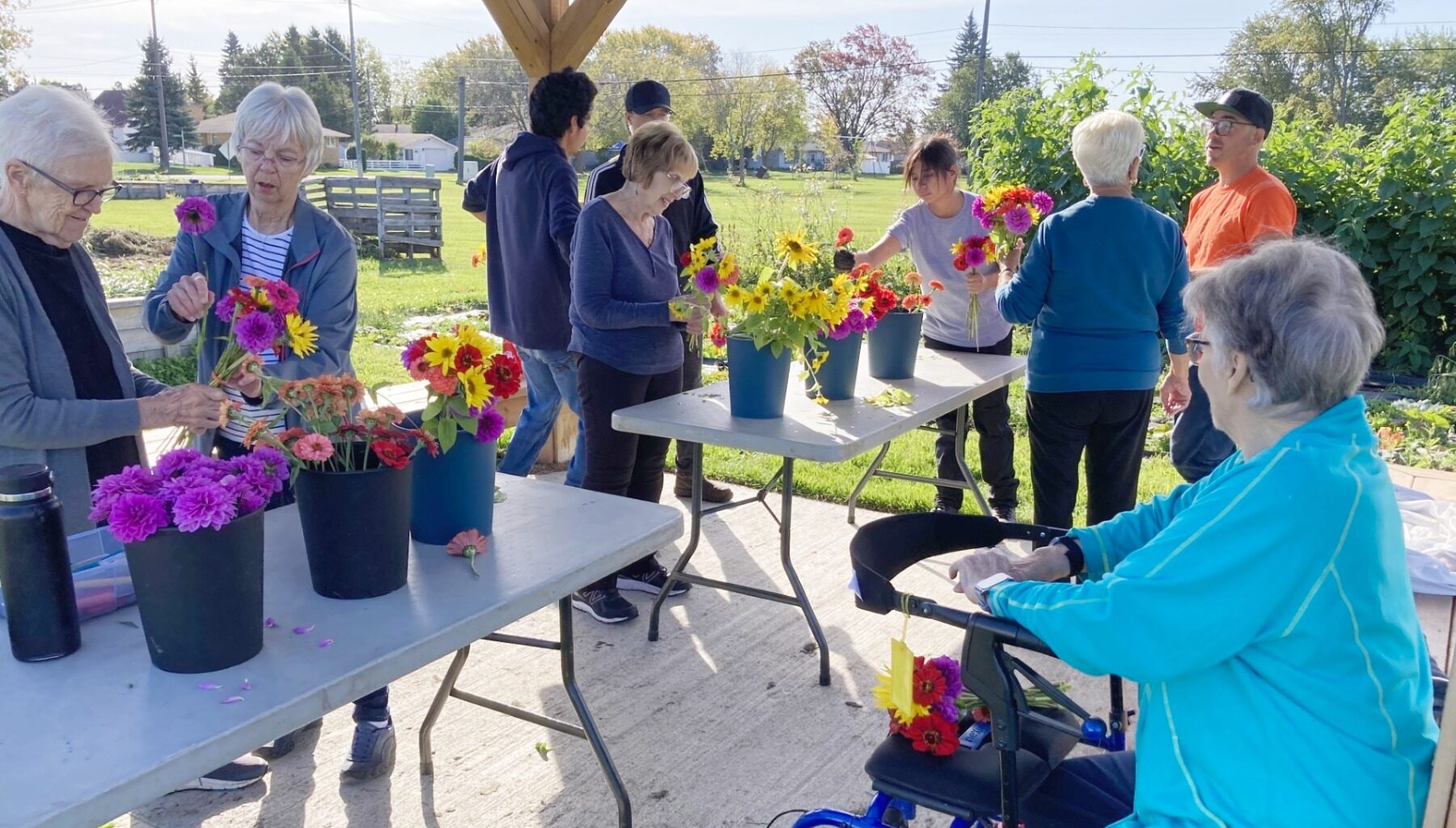
“Supporting people to age in their communities requires a multi-sectoral and interdisciplinary approach,” says Dr. Donnelly, Director of Queen’s Health Services and Policy Research Institute. “This national Partnership will create the first coordinated pan-Canadian network focused on understanding NORCs and strengthening Oasis and related models, allowing us to co-create solutions, learn from one another, and build the collective knowledge needed to support older adults to stay connected in their communities.”
Research with national impact
The Partnership Grant will strengthen and expand the Oasis network while bringing together researchers, older adults, housing providers, municipalities, community organizations, and advocacy groups to co-create research that can inform policy and practice. The partnership includes researchers from seven Canadian universities, international collaborators in Manchester, U.K., Scotland and dozens of community partners. Together, they will examine how communities can better support diverse older adults to age in place and generate evidence to guide neighbourhood, municipal, and provincial strategies.
“Working directly with communities is fundamental to our approach,” says Dr. DePaul. “This ensures that the research reflects real-world priorities and produces practical solutions that matter to the people most affected. This collaborative approach also helps build trust, relevance, and sustainability, increasing the likelihood that research findings will lead to meaningful improvements in everyday life.”
Building capacity for the future
The partnership will also help to build the next generation of leaders in healthy aging. The team aims to provide interdisciplinary and practice-based training opportunities for undergraduate and graduate students, postdoctoral fellows, and early-career researchers in the fields of aging, gerontology, housing, planning, and community development. At the same time, older adults, housing providers, municipalities, and community organizations will co-create the knowledge and resources needed to co-lead, implement, and evaluate NORC-based programs.
“Ultimately, our goal is to help create a future where aging in community is not the exception, but the expectation, for older adults across Canada,” says Dr. Donnelly.
To learn more about Oasis, visit its website. To read about other Queen’s researchers receiving SSHRC funding, read “$8.3M to advance Queen’s research exploring social, economic, and societal challenges” in the Queen’s Gazette.
Queen’s researchers will be contributing to the advancement of other nationally focused Partnership Grant projects funded in this latest announcement:
L.F. Carver (Biomedical and Molecular Sciences) is the co-director of “Establishing a Network for Human-Animal Connections Research and Collaboration” led at the University of Saskatchewan ($2.5 million).
Stéfanie von Hlatky (Political Studies) is the co-director of “Civil-Military Relations Network” led at Carleton University ($2,499,219).