
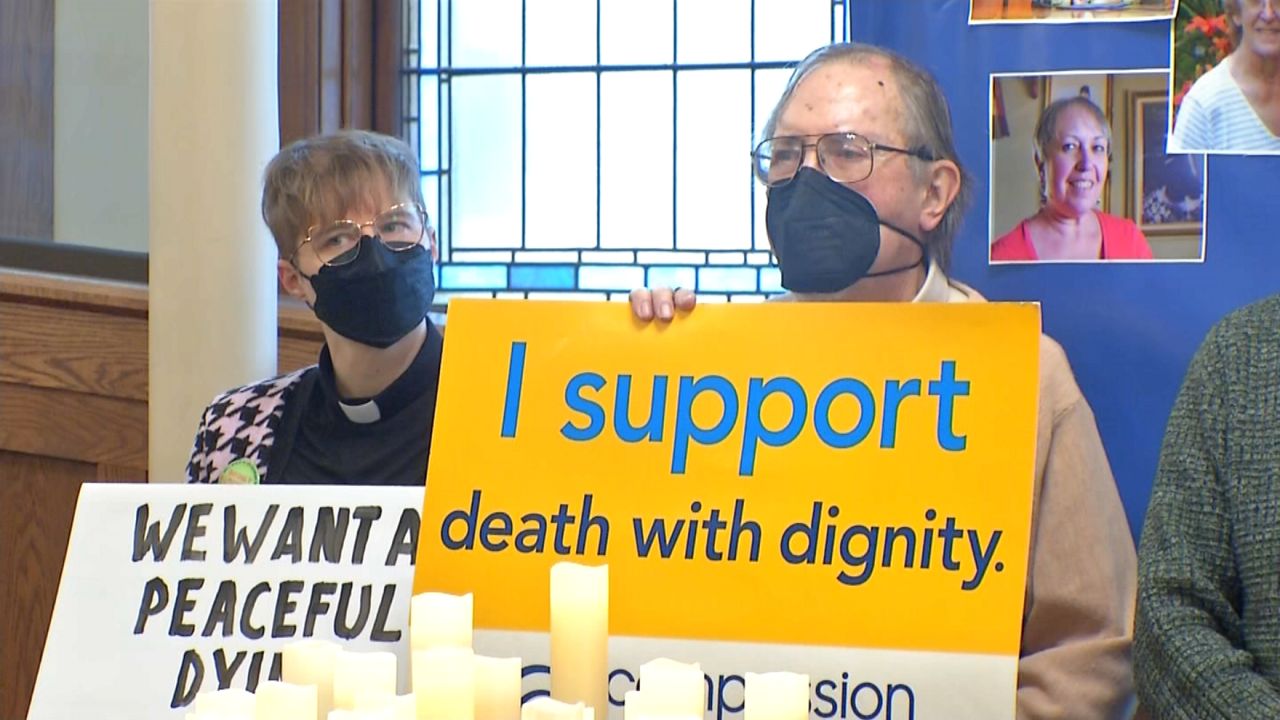
New York is set to become the 13th jurisdiction, joining a dozen states and Washington, D.C., to allow terminally ill patients to request medication to end their lives, with the state’s Medical Aid in Dying Act taking effect in just over a week.
Geoff Sugerman, a national legislative consultant with the advocacy group Death with Dignity, helped write the nation’s first law in Oregon back in 1994. He says New York’s version closely follows that original model.
“I would say 95% of New York’s law is similar to the other states,” Sugerman said. “I think the biggest change in there is that the patient actually, under the New York law, has to record their request to use the medication, and that record, either audio or video, has to be a part of their medical record.”
With the law already in place in other states for decades, Sugerman says the track record speaks for itself. Across more than 100 combined years of experience among states with similar laws, he says there hasn’t been a single confirmed case of fraud or coercion. Use of the law also remains rare, with less than 1% of deaths in those states attributed to medical aid in dying.
“I think it’s really rare that you see a law that has worked as flawlessly as the death with dignity law,” Sugerman said. “The law really has worked to protect patients and give them the right to make their own end-of-life decisions.”
Still, the law hasn’t stayed static. Sugerman says states have made adjustments over time based on what has and hasn’t worked. Some have expanded who can participate, allowing advanced practice nurses and nurse practitioners to work with patients seeking the option. Oregon and Vermont have dropped their residency requirements altogether, letting out-of-state patients use the law, though Sugerman notes that’s rarely invoked, since most patients are “too close to death to relocate.”
States have also shortened waiting periods. The original 1994 Oregon law required 15 days between a patient qualifying and receiving the prescription, but Sugerman says that timeline proved to be more of a barrier than a protection. New York’s law reflects that lesson, setting a five-day waiting period.