
The Gallery at Forstmann Castle, Frost Valley YMCA
May 9–August 29, 2026
Claryville, NY
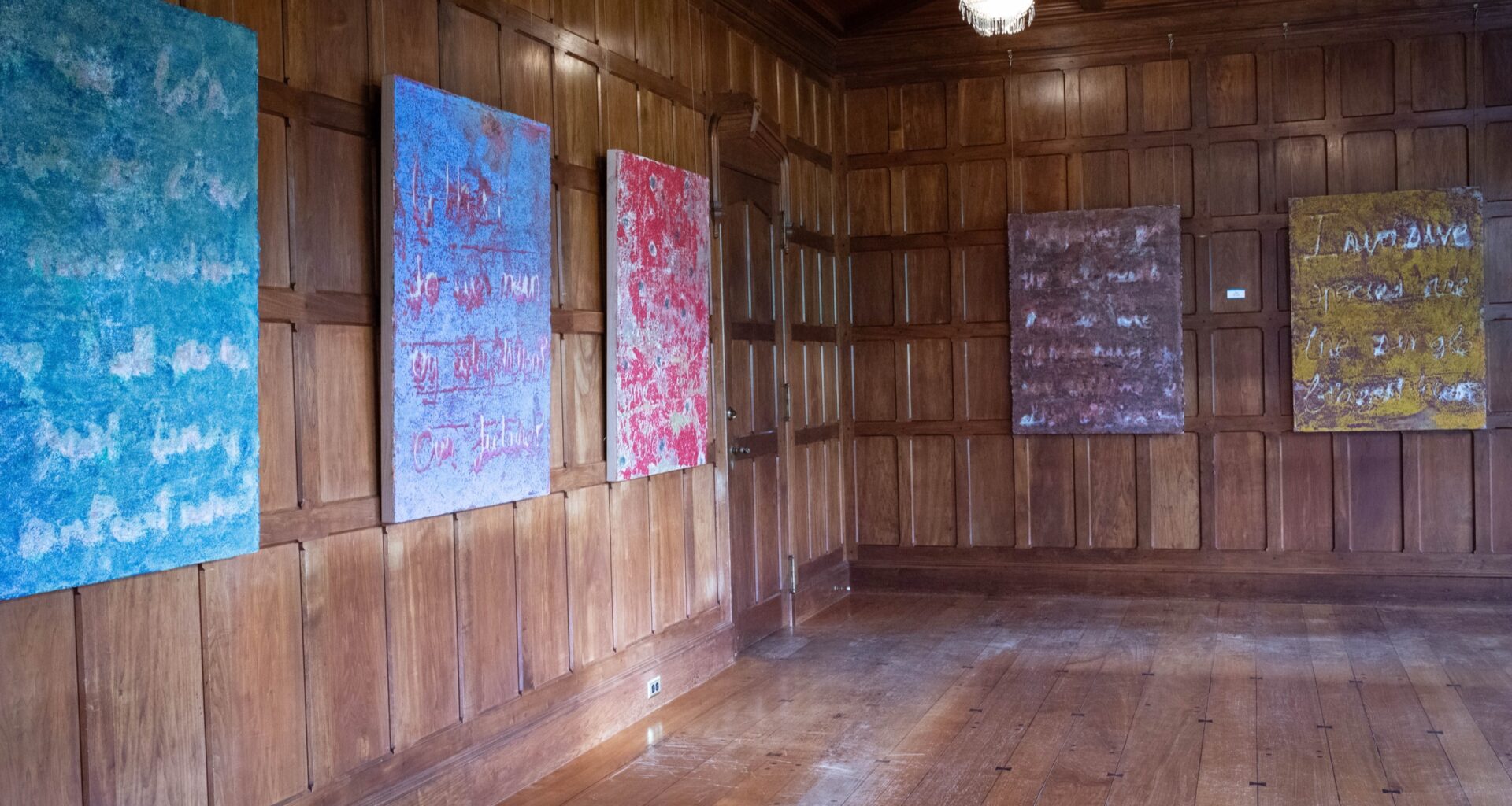
A bucolic stretch of land in the western Catskills, bordered by the West Branch of the Neversink River, is home to Frost Valley, where the primordial motion of insects, raging waterways, and unfurling flora adjoining “forever wild” land coexist in a correspondence relatively free of human interference. This landscape is both the scene of artist Hovey Brock’s childhood and the site of the Frost Valley YMCA’s Forstmann Castle, where Brock’s work is currently on view in the stately manor’s inaugural exhibition.
The opulent material backdrop of the exhibition—Tiffany crystal chandeliers, cherry- and maple-paneled walls, teak parquet floors—built with early-twentieth-century Forstmann Woolen Company wealth, adds both a historic context and an eerie, almost premonitory staging for Brock’s work. It’s an architecture borne of materialism that has devolved into contemporary culture’s hungry ghost: the insatiable appetite slowly eating away at the natural world and distorting our human role.
Where eco-art often opts for the macrocosmic scale of devastation, Brock’s work focuses on the land he’s known since childhood and his firsthand encounters with the tension between human intervention and environmental change. One of the first regional environmental catastrophes that caught his attention was a series of back-to-back floods where the shifting water cycle caused the Neversink to overflow, washing out the road and nearly causing the car he was riding in with his family to careen into the flood waters. This instability is codified in his “Crazy River” series (2021– ), a title that honors a translation of the river’s original Lenape name while subtly invoking the “crazy wisdom” of Tibetan Buddhism, of which Brock is a longtime student.
Brock deftly utilizes language within his acrylic motifs. Upending traditional relationships between fore and ground, he interrogates the interdependent exchange of information between humans and the environment, his work undulating between inner and outer terrains and weaving questions of the physical, philosophical, and spiritual.
Painting phrases from stenciled templates, several of Brock’s ten paintings on view speak directly to what’s considered one of the single largest ecological threats to the Northeast: invasive species. Hidden within the pattern of Spotted Lanternfly (2023), for example, based on the insect of the same name that derives nourishment from another invader, the Tree of Heaven, is a cryptic question, worn down until barely visible: “When will the spotted lantern fly come to Frost Valley?” In Emerald Ash Borer (2021), the text mimics the undulating, destructive tracks of beetles boring into the bark, leaving behind an indecipherable language and kindling ripe for combustion, packaged with the iridescent green sheen of the beetle’s exoskeleton.