
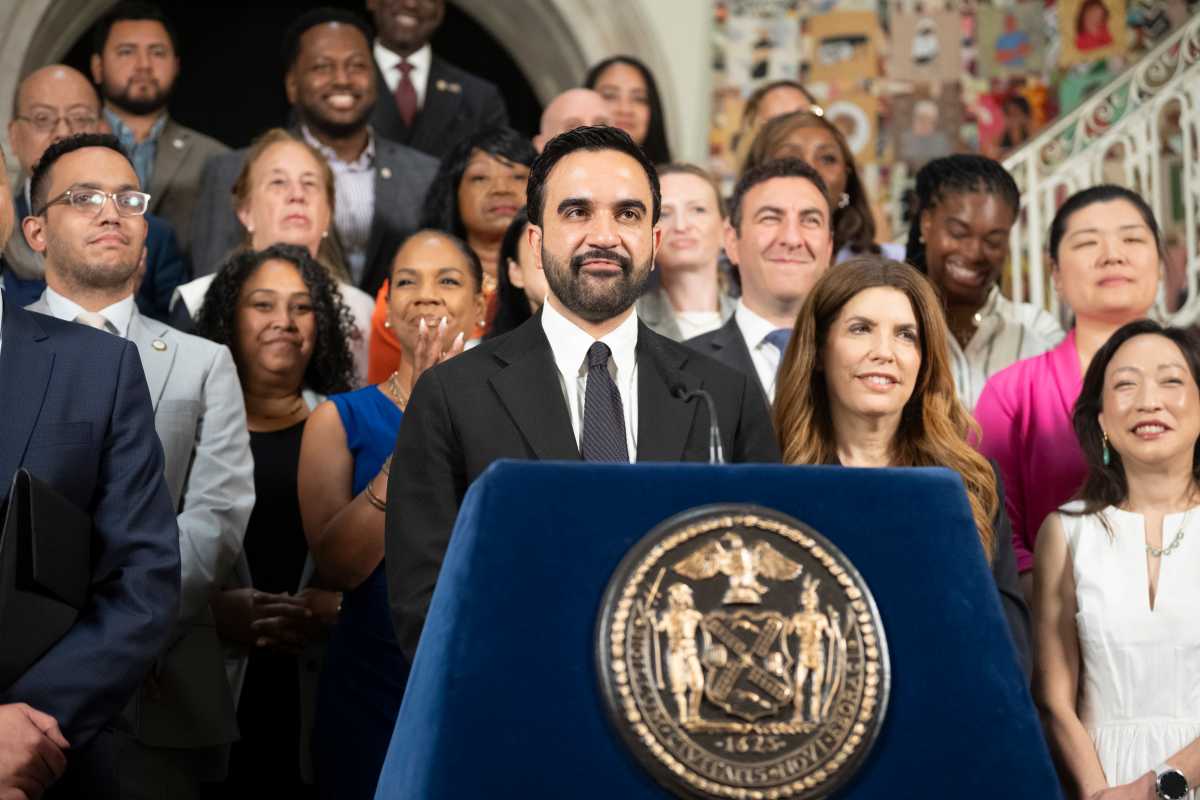
Mayor Zohran Mamdani speaks about the FY2027 NYC budget inside the City Hall Rotunda on June 30, 2026.
Photo by Lloyd Mitchell
That didn’t take too long.
The new fiscal year 2027 budget for New York City became law a month ago today, but Mayor Zohran Mamdani is already talking about belt-tightening for the next fiscal year to come. The FY2028 budget is due on June 30, 2027, but as Mamdani and City Comptroller Mark Levine reminded this week, the city already needs to begin work to close a massive deficit in that year of between $6 and $8 billion.
Just as he did shortly after taking office in January, Mamdani directed all city agencies on Tuesday to slash their budgets by 2.5% through savings initiatives. It’s the first step of many more that will be needed to close the next big budget hole, and it is good that City Hall is not wasting time by looking within at what it can do more efficiently and save taxpayers money.
Considering his campaign promises to spend big, there’s a touch of irony to the fact that Mamdani will have cut agency spending by 5% over two consecutive budget years. But it still won’t be enough to close the next big budget hole.
The biggest dilemma is where the additional resources to do that will be found. In the most recent budget cycle, the city benefited from a benevolent Albany — as Gov. Kathy Hochul delivered billions of dollars toward the city to fund the universal childcare initiative and other programs. Hochul is up for re-election in November, and if she wins office, will she continue to be as generous to the city in 2027?
State lawmakers declined to embrace Mamdani’s “tax the rich” vision to the letter, but did approve a pied-a-terre tax on the superwealthy who own second homes in New York City worth $5 million or more. After threading that very thin needle, it only delivered $500 million in revenue to the city to help close the previous budget deficit; will pied-a-terre remain in place next year?
Even if Mamdani and the city receives next year the same kind of assistance from Albany this year, the fact is that more will need to be done to close the next big budget hole. There’s two primary ways to do that: manage expenses more efficiently or levy new tax increases that will undermine the economic health of businesses and residents who are already suffering from years of persistent inflation.
But if the mayor and City Hall are savvy enough, they will look to a third way: Stimulating the economy through new business opportunities.
Mamdani has already done that in part by cutting red tape regulations on small businesses to help spur growth. But he can do more to attract investors to come to New York, set up offices, and create new homes and jobs. He can build upon previous zoning reform efforts to encourage rapid, yet responsible, new development more quickly — and seek out new public-private partnerships to invest in areas where the city lacks the full resources to make improvements.
Every new building, business, investment and job created in New York, and kept in New York, strengthens and stabilizes this city’s finances. If City Hall and Mamdani embrace that vision, not only will they close the next big budget hole, but they will make future ones obsolete.