
The union representing horse carriage drivers in Central Park believes that a jolt of electricity may have caused the deadly mishap that claimed a teenager’s life and evoked a new push to ban the equine industry from the city.
According to Transport Workers Union (TWU) Local 100, stray voltage was found in the Cherry Hill section of Central Park where a carriage horse took off on June 17, killing 18-year-old tourist Romanch Mahajan. They believe the electrical issue may have sparked the horse, Samson, to suddenly bolt from his carriage driver, overturning the carriage and hurtling Mahajan to his death.
A Con Edison worker notified Cornelius Byrne, owner of one of the carriage horse stables, on July 21 that the electrical company “found the problem and cut the power,” according to a TWU Local 100 statement on July 29. The stray voltage was discovered days after Byrne requested that Con Edison check underground electrical cables at Cherry Hill for stray voltage that may have caused the horse to bolt.
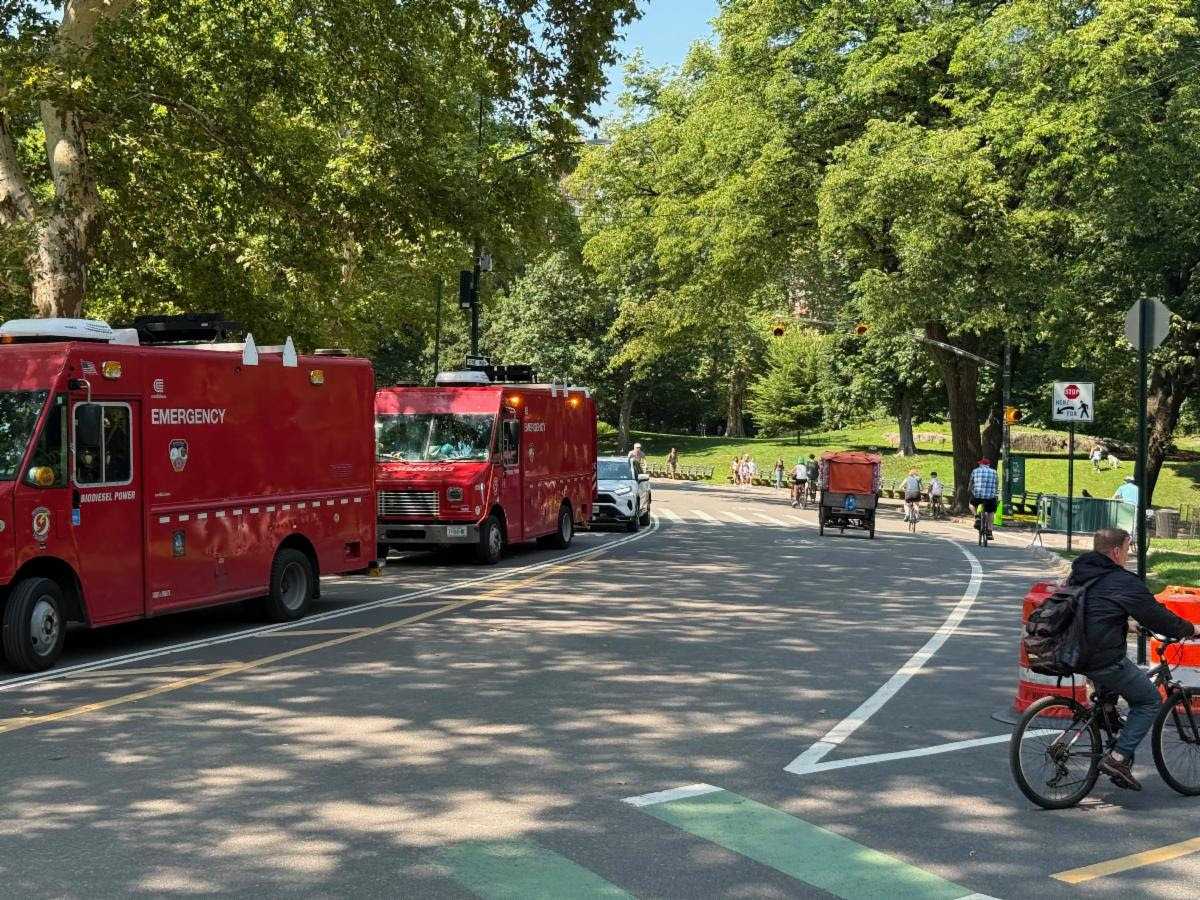
Power to the Cherry Hill fountain and surrounding lampposts has been cut off, with Con Edison, Parks Department, and Transportation Department officials on scene working to correct the electrical issue. Some lampposts and utility boxes have been marked with caution tape and signs stating “WARNING: DO NOT ENTER. Possible electrical condition.”
Byrne stated at a July 15 City Council hearing on a proposal to ban carriage rides that Samson “acted as if he was electrocuted.” Samson was near the Cherry Hill turnaround when he suddenly took off from the driver, who had been holding on to the horse’s reins.
 Transport Workers Union (TWU) Local 100 says that stray voltage is to blame in the deadly mishap that claimed the life of a teen last month.Photo courtesy of Transport Workers Union (TWU) Local 100
TWU Local 100 stated that some carriage drivers noticed their horses acting “uneasy” at Cherry Hill in the weeks leading up to the fatal crash. The union added that drivers have filed complaints to the Central Park Conservancy that wrong surface materials was placed on the turnaround, which was built for carriage horses, last year.
“Wet sand and soil conduct electricity, and Samson was wearing metal shoes,” the union wrote.
Alexander Kemp, administrative vice president of TWU Local 100, stated in the release that “there was a rush to judgment” to place blame on carriage drivers as the City Council considers “Romanch’s Law,” legislation introduced by District 1 Council-member Christopher Marte that calls for a total ban on horse-drawn carriages effective as of June 1, 2028.
Kemp called on the council to allow for a “full investigation” into the accident before enacting a ban, which would eliminate jobs for horse carriage drivers.
The proposed legislation has been backed by key city officials, including Julie Menin, speaker of the City Council. A spokesperson for Menin told amNewYork that the speaker is committed to phasing out horse carriages from Central Park while also ensuring protections for workers in the industry.
 The overturned horse carriage that teenager Romanch Mahajan died from falling out of. Wednesday, June 17, 2026.Photo By Dean Moses
Worker protections have been a concern for local leaders, including Kemp, who noted that horse carriage drivers are “overwhelmingly immigrant workers.”
“Blue collar carriage drivers should not be punished for an unforseeable hazard caused by flaws in the city’s power grid,” Kemp said.
Menin voiced her support for the law in the aftermath of the accident and the June 9 collapse and death of a carriage horse, Deniz, in Central Park, likely from eating a toxic plant.
The Central Park Conservancy wrote in a June 16 statement on Deniz’s death that TWU “demonstrated how their own negligence has resulted in this incident” as NYC Parks rules prohibit horses from eating park vegetation. The conservancy renewed its call for a ban on horse carriages in Central Park the next day following Mahajan’s death, writing that “we hope today’s injuries are the last we ever see.”
Edita Birnkrant, executive director of the nonprofit New Yorkers for Clean, Livable, and Safe Streets, told amNewYork that the horse carriage business is “inherently dangerous” and that “flimsy” carriages don’t belong in dense, traffic-heavy areas.
“The carriage cartel blames everything other than the industry’s unsafe nature and irresponsible behavior,” she added.