
by Michelle Mullen
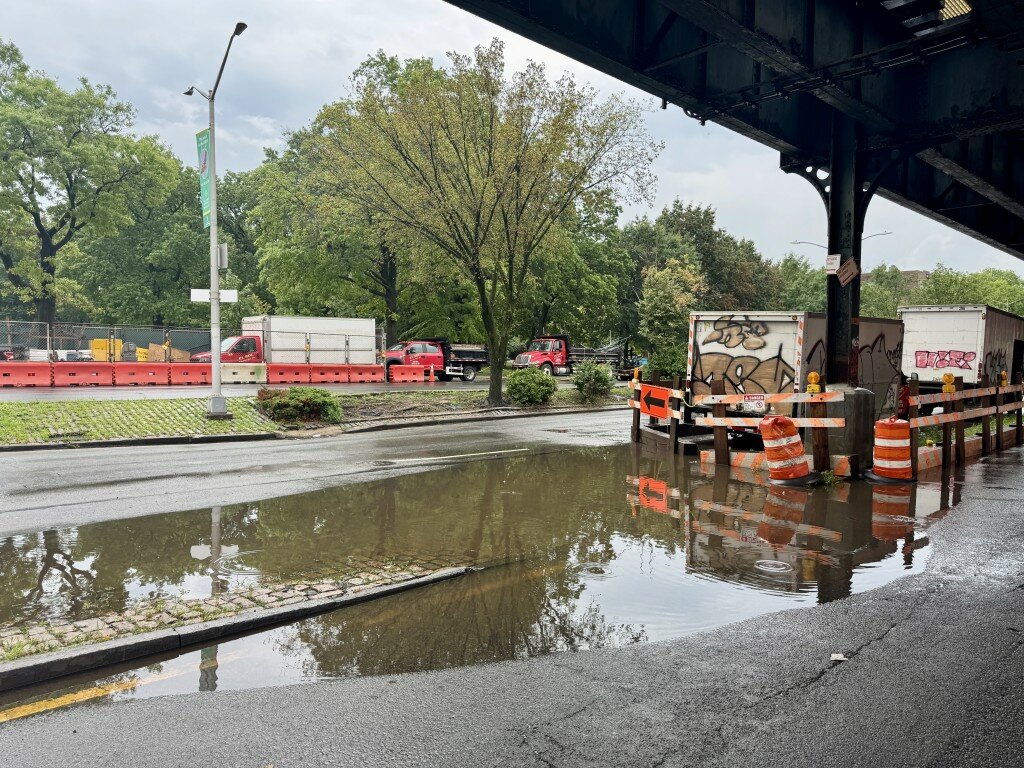
A deluge of rain has fallen across New York City in recent weeks, prompting repeated flash flood warnings and leaving standing water in parts of greater Riverdale, particularly in low-lying neighborhoods.
The latest flash flood warning as of press time was issued July 22 for the Bronx, Brooklyn and Queens as heavy thunderstorms moved through the region. The warning, originally set to expire at 7:15 p.m., was extended until 7:45 a.m. the next day for the Bronx. According to the National Oceanic and Atmospheric Administration, nearly an inch of rain fell near Fordham during the storm.
The New York City Mayor’s Office of Climate and Environmental Justice reports climate change is expected to bring heavier and more frequent rainstorms to the city. By the end of the century, annual rainfall could increase by as much as 30 percent, while the number of days with more than an inch of rain could rise by 150 percent.
With heavy rainfall becoming more common, here’s what residents should know.
Know how to stay safe
Flash flooding can develop quickly, especially in urban areas where pavement prevents rainwater from soaking into the ground. The city advises residents living in basement apartments to know their exits and be prepared to move to a higher floor if water begins entering their home. Emergency officials also recommend identifying a safe location in advance, preferably an interior room away from windows, keeping emergency alerts enabled on mobile phones and monitoring weather conditions before and during storms. Residents can also visit FloodHelpNY.org for information about flood risks, insurance and recovery resources.
Sign up for emergency alerts
Notify NYC is the city’s official emergency communications system and provides real-time updates on flooding, severe weather, transportation disruptions and other emergencies. Residents can receive free text alerts by texting NOTIFYNYC to 692-692 and replying with their ZIP code for localized notifications. Alerts are also available through email, phone calls, the Notify NYC mobile app, the program’s website, RSS feeds, X and American Sign Language videos. During major emergencies, Notify NYC can also activate the federal Emergency Alert System and Wireless Emergency Alerts, which send notifications directly to televisions, radios and cell phones within affected areas.
Flood damage
Residents with flood insurance should document any damage through photo or video before beginning cleanup, and contact their insurance provider as soon as possible to begin the claims process. When surveying flood damage in a building, the city urges homeowners and renters to look out for mold, any newly formed cracks along the wall and signs of foundation damage, such as bulging walls. Wet features should be dried quickly to reduce the risk of mold, and damaged electrical systems should be inspected before being used again. City officials also recommend avoiding contact with floodwater whenever possible because it may contain sewage, chemicals or other contaminants.
Some areas hit worse than others
The Bronx’s geography plays a significant role in where flooding occurs. Rainwater naturally flows downhill from the higher elevations of Riverdale and Spuyten Duyvil into the lower-lying neighborhoods of Kingsbridge and Marble Hill. During intense storms, nonpermeable paved streets and sidewalks prevent much of that water from soaking into the ground, sending runoff flowing downhill and into storm drains that can quickly become overwhelmed. Many portions of the city’s stormwater and sewer infrastructure were built decades ago, before today’s increasingly intense rainfall events. When the system exceeds capacity, water collects on streets and highways, the city said.
Drivers should avoid flooded underpasses and should never attempt to cross water-covered roads.The National Weather Service warns that low-lying roadways are especially vulnerable — such as the Major Deegan Expressway, which has a long history of flooding.
Greater risks
Flooding does not affect everyone equally. According to the New York City Mayor’s Office of Climate and Environmental Justice, older adults, people with disabilities and residents with limited mobility may face greater challenges evacuating during flash floods. People with limited English proficiency may also have difficulty receiving emergency information if alerts are not available in their preferred language. Officials encourage residents to check on vulnerable neighbors before and after severe weather, particularly those living alone or in basement apartments, and to have an emergency plan in place before the next storm arrives.
Keywords
NYC Flooding,
NYC things to know,
Riverdale things to know,
Bronx weather,
Bronx flooding,
NYC emergency alerts