
Alysa Nahmias trained as an architect and made three movies about architecture, art and design: “Unfinished Spaces,” “The New Bauhaus” and the Emmy-winning “Art & Krimes by Krimes.”
So naturally, for her latest film Nahmias turned her attention to… Girl Scout cookies.

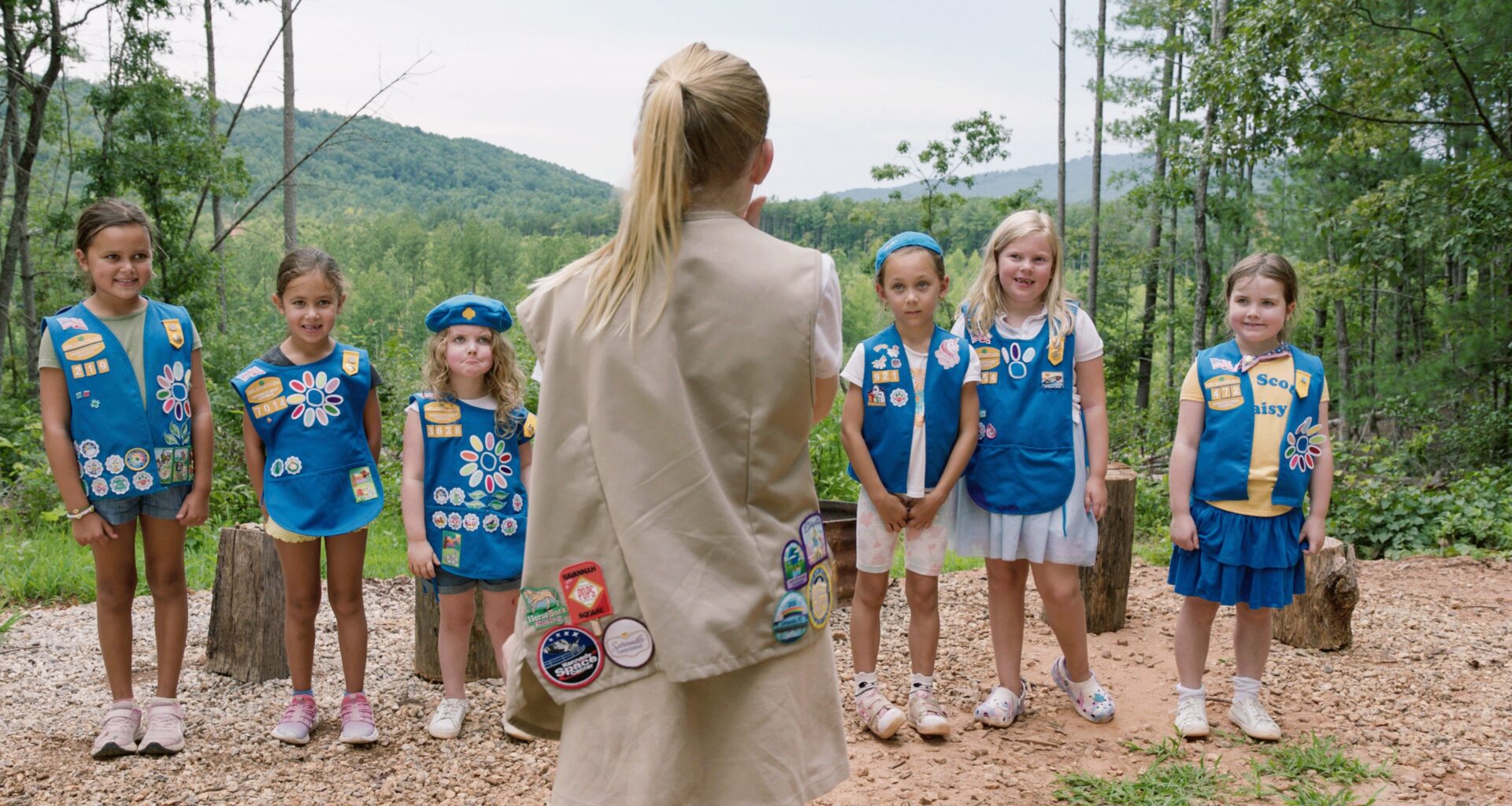
Olive and Celia in “Cookie Queens.” (Courtesy of Roadside Attractions)

Nikki in “Cookie Queens.” (Courtesy of Roadside Attractions)

Shannon Elizabeth in “Cookie Queens.” (Courtesy of Roadside Attractions)

Ara in “Cookie Queens.” (Courtesy of Roadside Attractions)

“Cookie Queens.” (Courtesy of Roadside Attractions)
Show Caption
1 of 5
Olive and Celia in “Cookie Queens.” (Courtesy of Roadside Attractions)
Nahmias, who was never a Girl Scout herself, has made “Cookie Queens,” a buoyant, colorful documentary that follows four girls on their journey through cookie-selling season, but she also raises serious questions about the relentlessness of capitalism, the peddling of products fueled by Big Sugar, and the weaponizing of cuteness to sell, sell, sell.
Two of the four girls are from California:
Nikki, age 9, from Chino, is desperately eager to keep up with her two teen sisters who are aging out of Girl Scouts but who want to earn a trip to France first.
Five-year-old Ara is from San Diego. She’s diabetic so when she wants to taste the merchandise, she shares cookies with her stuffed elephant, Ellie.
Olive, an elite seller, is from North Carolina, and Shannon Elizabeth, who wants a trip to Girl Scout camp even though buying so many cookie boxes upfront threatens her parents’ finances, is from Texas.
Nahmias follows the girls to etiquette class, karate and other activities, and explores their dynamics with their parents. There are no talking head interviews, and the camera is often kept at kid-level, so we get to know them better.
Speaking by video from her Los Angeles home, Nahmias emphasizes that while she wants to foster discussion about serious issues, the movie is “not a takedown.”
“Girl Scouts can be such a powerful positive experience, and I’m celebrating the girls and their communities,” she says.
This interview has been edited for length and clarity.
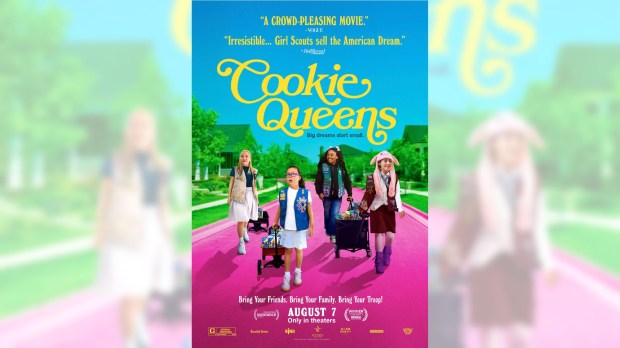 “Cookie Queens” documentary poster. (Courtesy of Roadside Attractions Publicity)
Q. You’ve said your films about art explore self-invention and the dynamic between individuals and institutions. It feels like this fits those themes. Was that conscious?
It’s not like I set out saying, I’m going to do work about X, Y, Z. But we do work that is close to our own community and interests. For me, art and design is where I had come from, but I found those bigger themes compelling and then my kids challenged me to make a film that would appeal to young people as well as adults. When my producer talked about a Girl Scout selling him so many cookies, it was a story about how these girls are engaging with the economy and with the institution of Girl Scouts.
It’s also about how young girls are taught about value, our identity, what we can and can’t do, and the way our bodies and our intellect operate within that. Our culture often tells us that we should do more, be more, have more, without us understanding how much is enough and what we need to take care of ourselves. And our economy can be cutthroat and merciless — if you don’t sell enough, you can’t afford to do the things that you want to do or pay your bills. That’s not just about Girl Scout cookies.
We see these girls question what is fair and ask questions about their relationship with the organization and how their labor and how their efforts are compensated. We should take kids seriously when they ask really good questions about how the world works.
Q. These pre-teen girls are acutely aware that cuteness sells cookies, but doesn’t that form an approach that can get dicey when they’re 15 or 16?
I love that the film is making you think about these things, because I definitely want the film to open up that conversation about the way we’re conditioning girls at a young age and the challenges that girls and women face.
Also, when they’re taught to be cute, then what happens when they need to stand up for something or express frustration or anger? There needs to be space for them to push back and be fierce.
I want to show the challenges that they go through, but also to feel the joys and the triumphs.
Q. The girls definitely learn how to upsell. How did your view of Girl Scout cookies evolve while making the film?
The cookie program started [more than 100 years ago] when women couldn’t even open a bank account and many jobs weren’t open to them. Baking and selling cookies was a subversive act to get resources to do activities and to have more equity in their lives. Some of these girls want the Girl Scouts to continue to connect with its more radical roots.
Girl Scouts cookies are an $800 million business now. But those cookies allow kids to travel and go to camp, things some wouldn’t otherwise afford.
I have mixed feelings about upselling, but my mixed feelings aren’t about Girl Scouts and upselling. It’s about capitalism and upselling. These are life skills that are part of the world we live in. These girls are being exposed to it quite young. But it’s an individual choice for girls and for families how early they want to engage. It’s interesting how each family talks with their kids about the conditions of the capitalist economy and how to operate within it and how to challenge the status quo.
Q. Are you saying this isn’t the best way to raise our kids or run a country, or do you think the film is showing that there are tradeoffs, but there are also so many benefits for these girls?
You’re asking the right question. It’s not that I don’t have my own answers, so I’m not being evasive, but that is very intentionally one of the things I want people to think about.
It isn’t just about Girl Scout cookies; it’s about our broader culture and economy. With any institution or government or system, I do think we can do better. Not because it’s villainous, but can we conceive of better worlds and try to create systems where kids and families don’t have to worry about basic needs like housing, healthcare, childcare, and education the way they do now? I hope people will feel the girls’ joy but also the questioning and complexity around what it’s like to participate in the American economy and how kids are taught about it.
We can teach our kids that people invented this system so people can also change it, and it’s OK to ask questions, and it’s OK to push back.
Q. This question needs a definitive answer: What’s your favorite cookie?
When it comes to the classics, I have been and always will be a Thin Mint gal. But if you branch out, I’d suggest the Lemonades, a big lemon cookie with icing on it.
Q. One of the girls mentions the Adventureful. Is that as good as it sounds?
That’s a brownie cookie with caramel filling and chocolate drizzle on top. It’s not my favorite, but it’s my 12-year-old son’s favorite.
Q. Well, I’m a 12-year-old boy at heart.
Then you’ll dig it.