
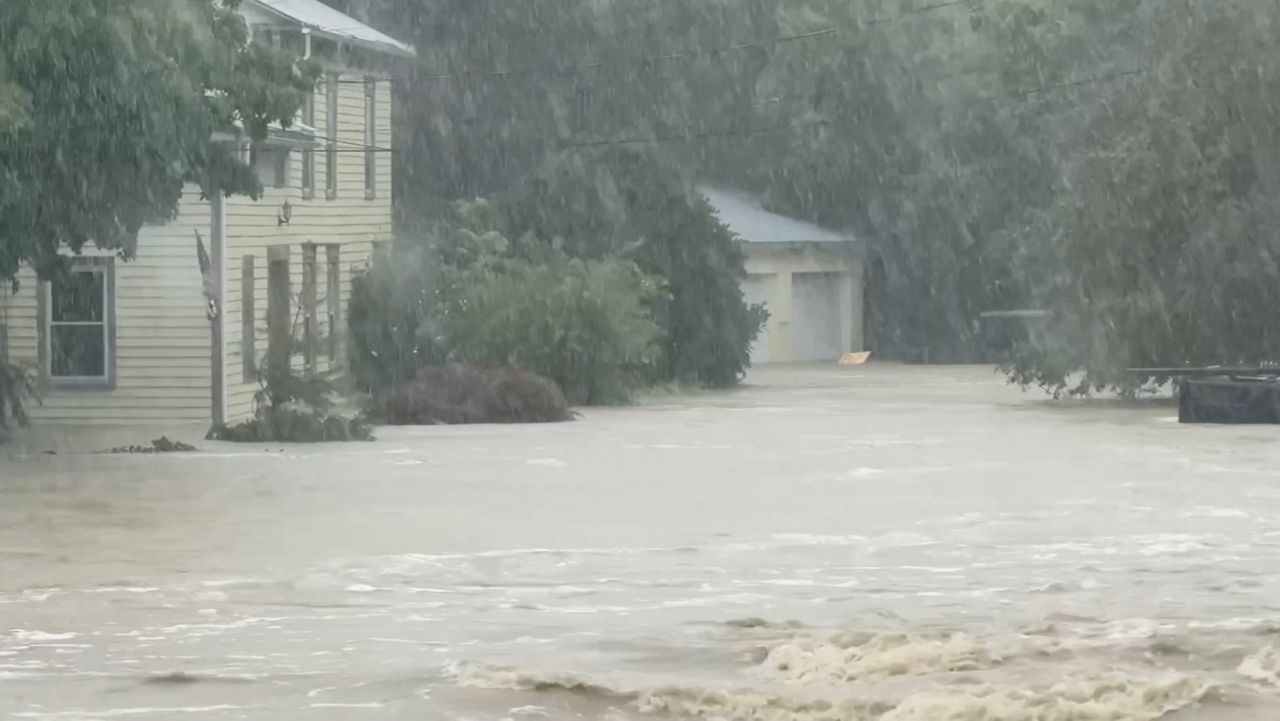
Nearly a week after flash floods tore through parts of the Capital Region and Hudson Valley, insurance experts say the damage is exposing a widespread gap: Most homeowners and business owners in the state aren’t covered for flooding.
According to Bruce Lant, managing director of insurance at AAA Northway, flood damage is excluded from most standard homeowner policies.
“It’s excluded on all, most major standard insurance policies. They exclude water damage,” Lant said.
Statewide, only about 18% of at-risk properties carry flood insurance, Lant said. And coverage is heavily concentrated in one part of the state — 87% of all flood policies in New York are written downstate around New York City. In the Capital Region and Hudson Valley communities hit hardest by last week’s flooding, he said there were only 37 policies in place.
Flood insurance is a separate policy that can cover the structure itself, its contents, or both — up to $250,000 for a home and $100,000 for belongings, according to Lant. He said the coverage isn’t reserved for major, headline-making events like last week’s flooding.
“Everyone is in a flood zone. You don’t have to be next to a creek or a pond. It could be something as simple as a water main break. That’s classified as a flood event,” Lant said.
The gap in coverage is playing out in Schodack, where artist Laura Lee Ross lost years of work when floodwaters swept through her studio. Ross didn’t have flood insurance and is now relying on friends to help her recover.
“Get insurance on your art no matter what you think it’s worth,” Ross said.
Beyond individual coverage, state officials are trying to capture the full scope of the damage. New York’s Division of Homeland Security and Emergency Services is urging residents to report flood damage through an online reporting tool. Commissioner Terry O’Leary said that step is critical to securing federal assistance.
“By using that tool, it will give us the most accurate view on the scope of damage to homeowners,” O’Leary said. “We’ll then use that information to put forward an application to the federal government for assistance.”
Residents looking to learn more about flood insurance can visit floodsmart.gov.