
 5 min read
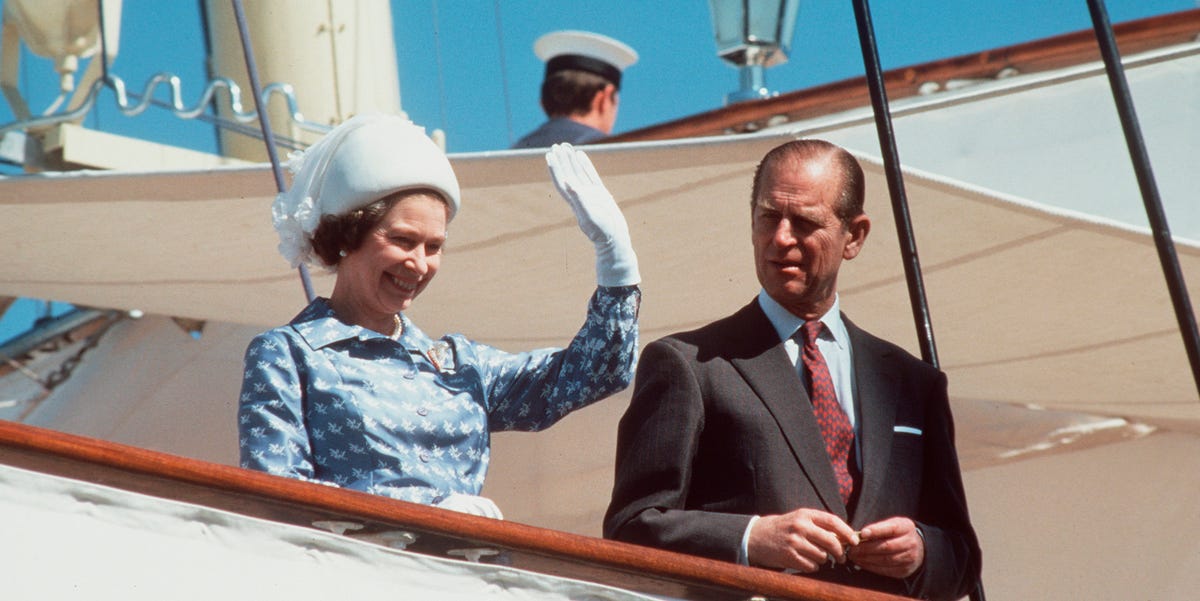
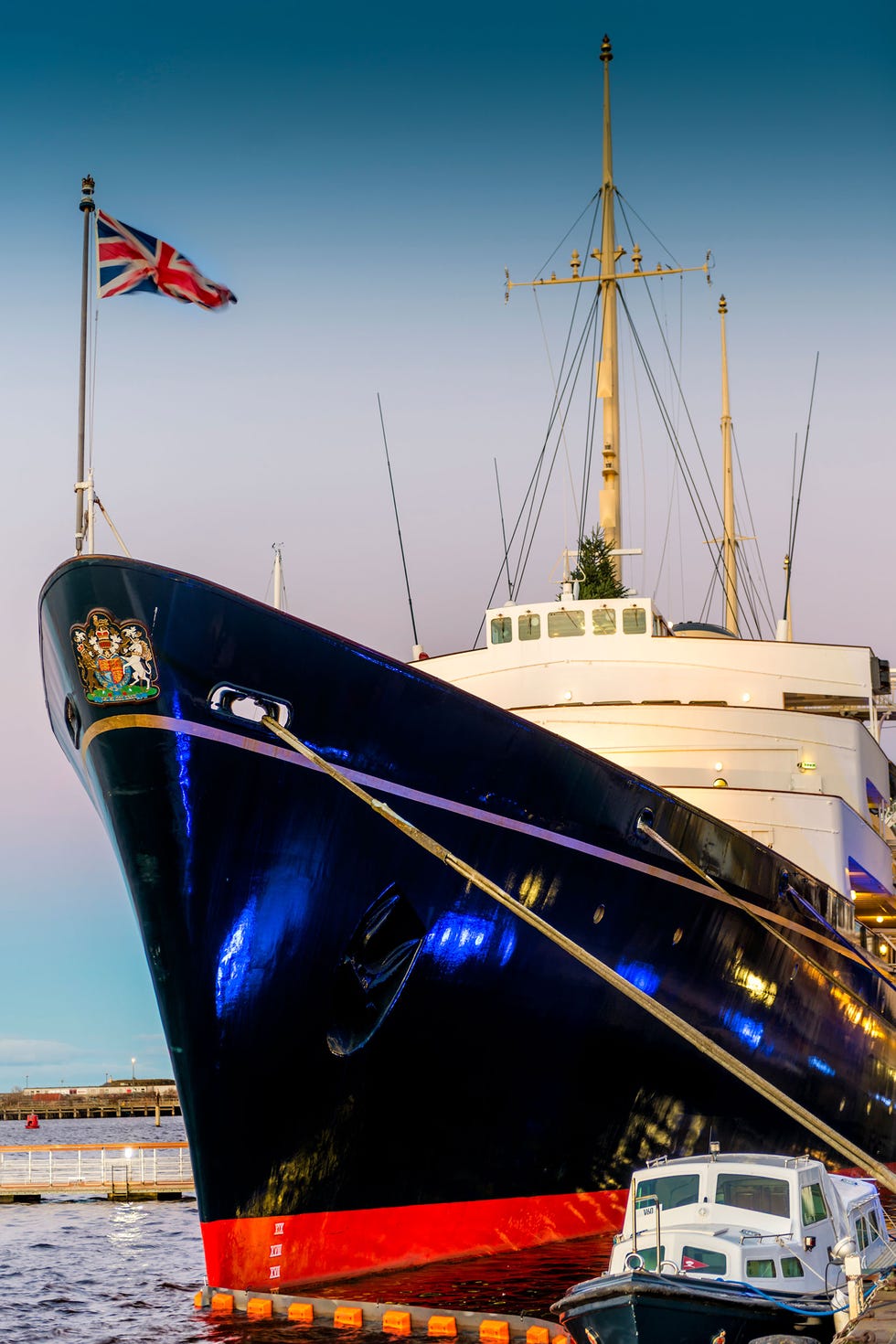
The late Queen Elizabeth II had many royal residences, but it was the Royal Yacht Britannia, a 400-foot-long floating palace, that was closest to her heart. It was there, amid her family and the salty ocean air, that she could find quiet between royal engagements (staff wore rubber shoes and shouting was prohibited to keep noise at a minimum) and enjoy the sun on her private deck. “Britannia is the one place where I can truly relax,” she once said.
 Tim Graham//Getty Images
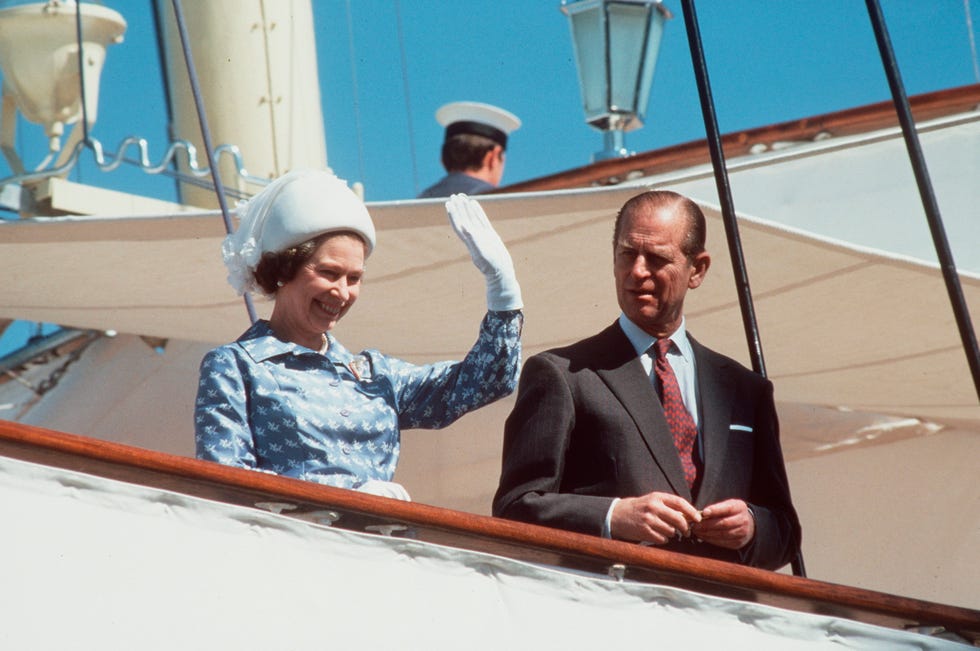
Queen Elizabeth II and Prince Philip aboard the Royal Yacht Britannia in 1979.
But Britannia was far more than a posh royal cruise liner. She was a showcase for cutting-edge naval engineering and the first royal yacht that could do double duty as a floating hospital in wartime, if necessary. In 1986, for instance, she rescued more than 1,000 refugees from South Yemen. Over the course of her 44 years in service, Britannia facilitated 968 official visits and traveled over one million nautical miles.
Marc Millar Photography
She was also, of course, a time capsule of the best British design of the time, in terms of both technological prowess and decoration. Read on for more about the ship’s history, and where the Royal Yacht Britannia is now (hint: You can visit!).
What’s the backstory of Britannia?
This history of royal liners goes back centuries. In fact, Britannia was the 83rd royal yacht; the first, HMY Mary, was constructed in 1660 by the Dutch East India Company and given as a gift to Charles II. Britannia’s predecessor, Victoria & Albert III, was completed in 1901 and used by Edward II up through George VI, but was decommissioned in 1939 and eventually broken up as scrap. A new yacht was commissioned on February 4, 1952, in an effort to help King George VI’s health, according to the Royal Yacht Britannia museum, but the king died just two days later. The task to oversee the construction of the new yacht, then, fell on the young Queen Elizabeth II.
 Tim Graham//Getty Images
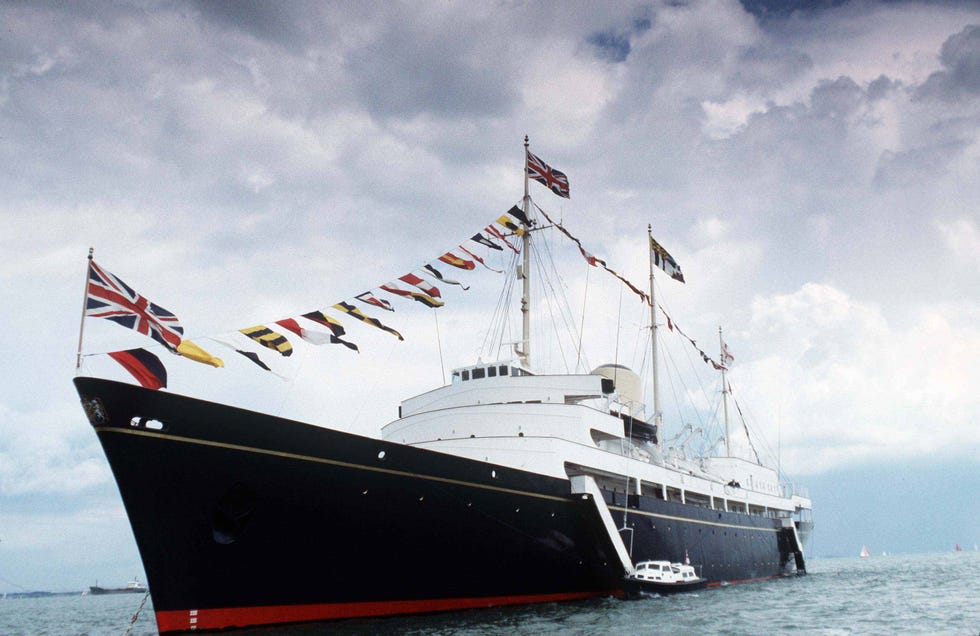
The Royal Yacht Britannia at sea, sometime in the 1990s.
Who built the Royal Yacht Britannia?
Britannia was designed by John Brown & Co., the same marine engineering firm that built the RMS Lusitania and the Queen Mary. Construction on Britannia began in June 1952, and she was launched in a ceremony on April 16, 1953. The young queen didn’t reveal the name of the liner until her televised address in which she proudly stated before roaring crowds, “I name this ship Britannia.” Notably, a bottle of wine, as opposed to the more traditional champagne, was smashed across the ship’s bow during the christening—Champagne would have been much too ostentatious amid postwar austerity.
Who designed the Royal Yacht Britannia’s interiors?
According to a technical paper presented to the Institution of Naval Architects in the spring of 1954, the royal and state apartments were to be on par with those of a first-class ocean liner. “The suitability of the decorative design and the furnishing of the Royal and State apartments has, of course, been very important,” the paper noted.
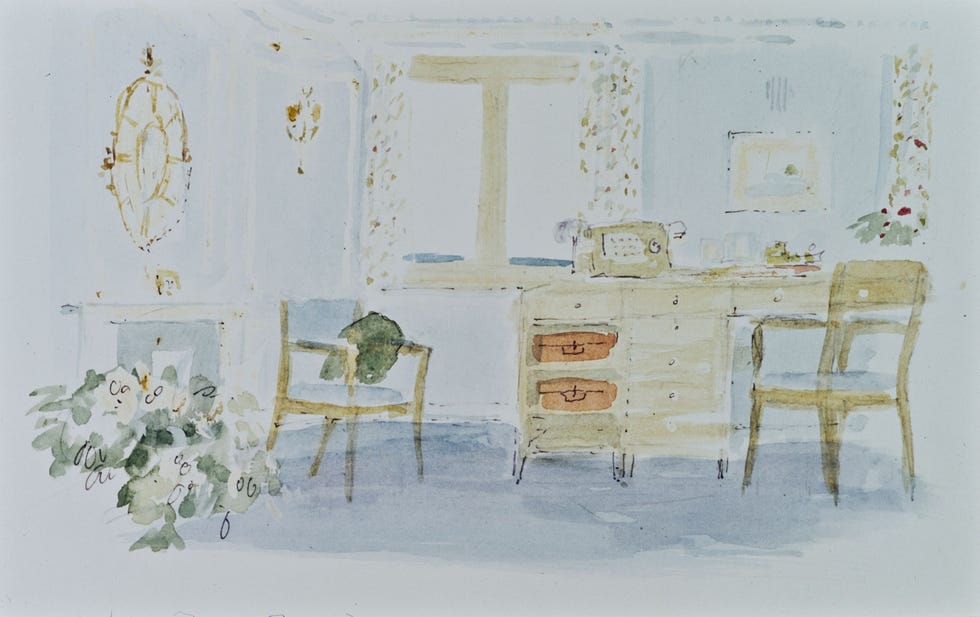 Courtesy the Estate of Sir Hugh Casson
An original watercolor rendering of the Queen’s sitting room, designed by Sir Hugh Casson. The architect’s designs favored pared-back elegance over extravagance.
At first, Patrick McBride of the Glasgow, Scotland–based firm, McInnes Gardner & Partners, was selected to design the interiors, but the Queen and Duke of Edinburgh rejected those plans, deeming them too lavish, according to the Royal Yacht Britannia museum. Sir Hugh Casson, the director of architecture at the 1951 Festival of Britain, was the perfect candidate, with his modern eye and lack of ostentation. The design, the architect later wrote in his diary, “was really running a lawn mower over the Louis XVIl adornments. I was going to concentrate on one-color carpet throughout, which was sort of lilac/gray, and all the walls would be white. The only enrichments would be a bit of gilding in grand places.”
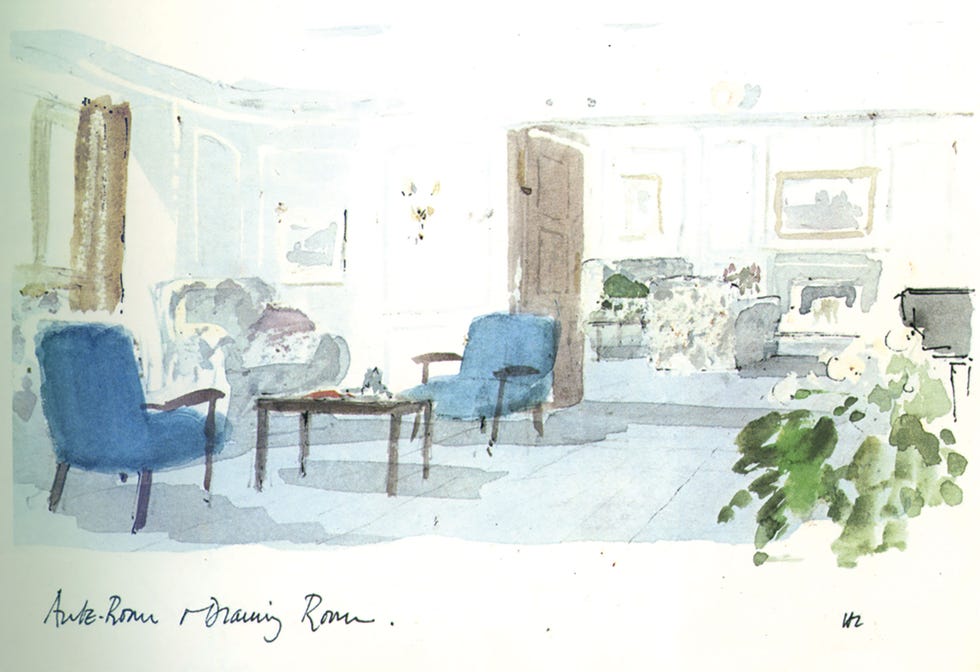 Courtesy the Estate of Sir Hugh Casson
One of Casson’s original sketches of the ante room of the State Drawing Room. The drawing room (as shown through the open doors in the drawing), remains remarkably preserved today, as demonstrated below.
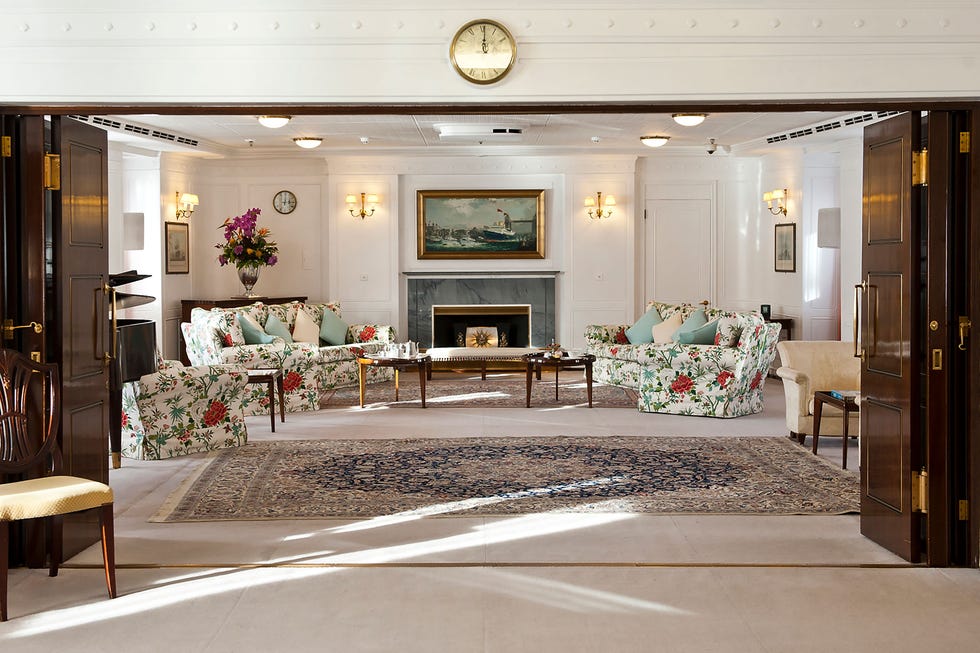
Marc Millar Photography
Working with Casson, Queen Elizabeth and Prince Philip were highly involved, giving input for everything ranging from the furniture (much of it salvaged from the vessel’s predecessor, Victoria & Albert III, as another way to appear thrifty) to the ship’s blue exterior paint, inspired by the Duke of Edinburgh’s racing yacht, Bluebottle. Apartments featured a design like an elegant-yet-muted English country house, filled with floral sofas and antiques. The state drawing room could accommodate up to 250 guests. The Queen’s favorite room was the sun lounge, with its warm teak walls and rattan furnishings, and views across the veranda deck.
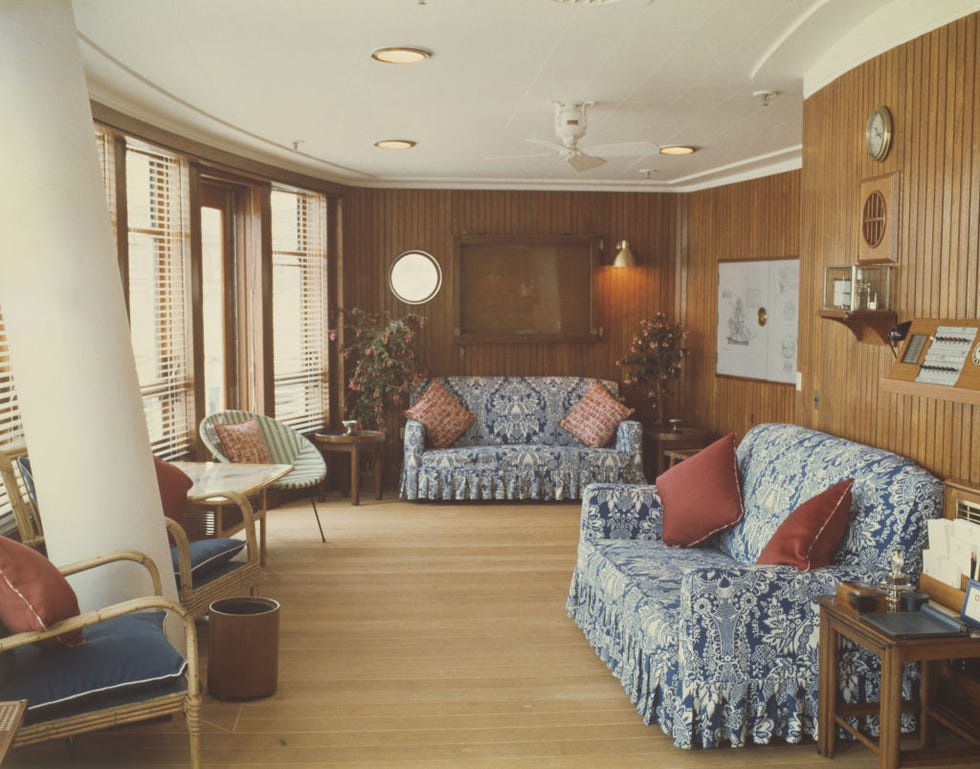 Central Press//Getty Images
The teak-clad sun lounge, the Queen’s favorite room.
“I suppose Britannia was rather special as far as we were concerned because we were involved from the very beginning in organizing the design and furnishing and equipping and hanging the pictures and everything else,” Prince Philip said in a 1995 documentary film about the yacht. “For us it was rather special because all the other places we live in have been built by our predecessors. They started building Windsor 1,000 years ago, and they built Balmoral 100 years ago, and they built Sandringham 70 or 90 years ago. So we, in a sense, had our own.”
So successful was the partnership that Casson would go on to become a dear friend of the royal family and design interiors for Buckingham Palace, Balmoral, and Windsor Castle.
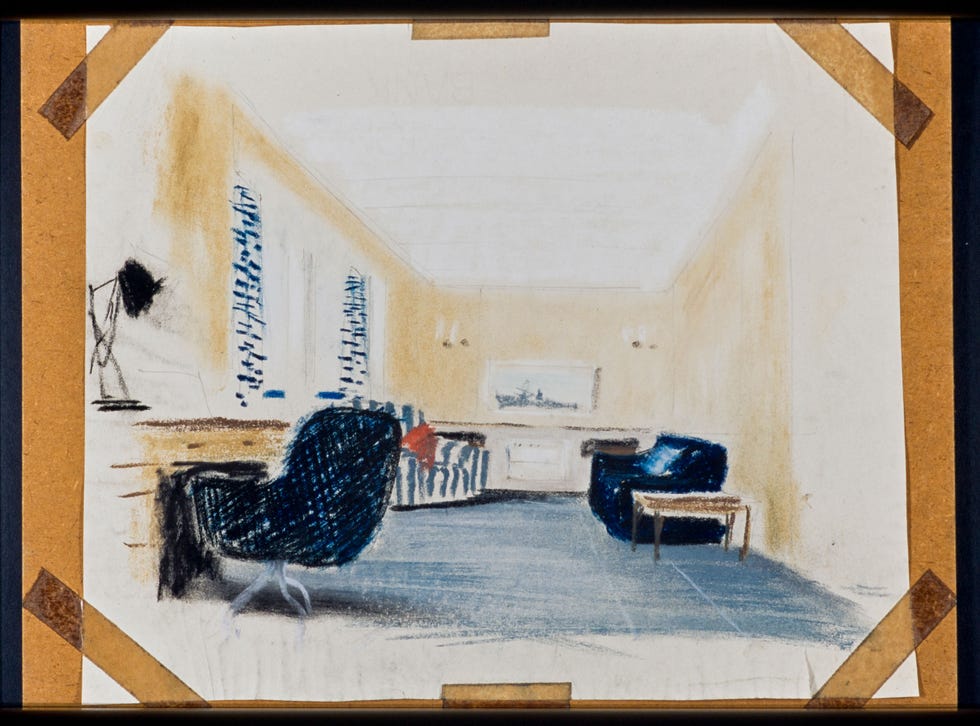 Courtesy the Estate of Sir Hugh Casson
Casson’s original watercolor rendering of Prince Philip’s sitting room. The current one (below) remains virtually the same as it was half a century ago.
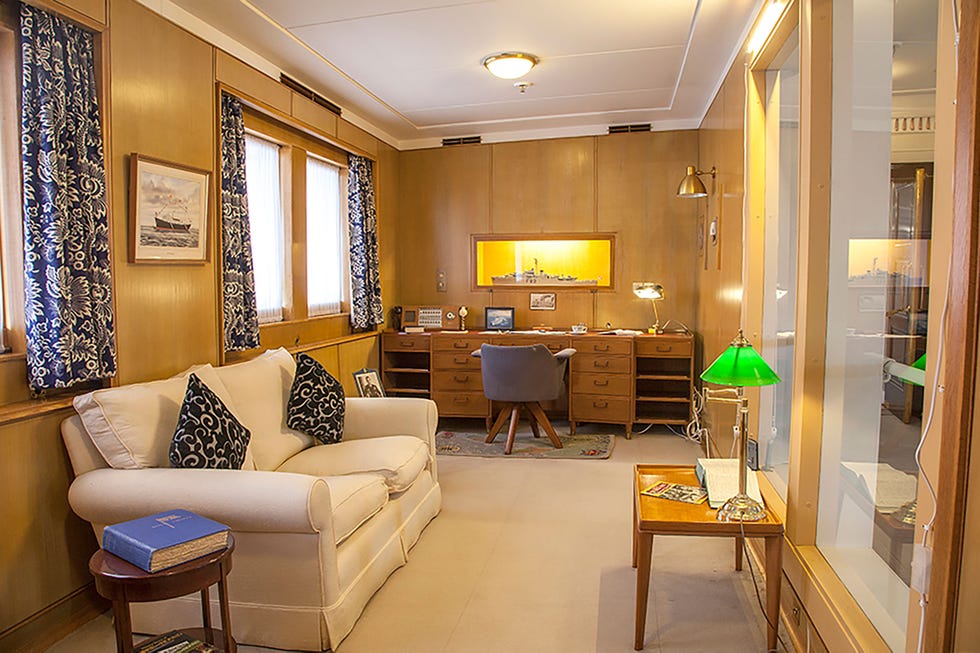
Ruth Armstrong
Britannia was also a second home for the royal children. Each was given a member of the crew or “sea daddy” to look after them. “We found as children that there was so much to do, we expended so much energy that we couldn’t describe our time on the yacht as a rest,” Princess Anne said. Milk was delivered fresh from a farmer each day for the royal children, according to letters from the ship’s Acting Captain J. S. Dalglish. Later, the yacht would become the venue for numerous royal honeymoons and vacations, including Princess Diana and Prince Charles’s infamous 1981 Mediterranean cruise.
Where is the Royal Yacht Britannia now?
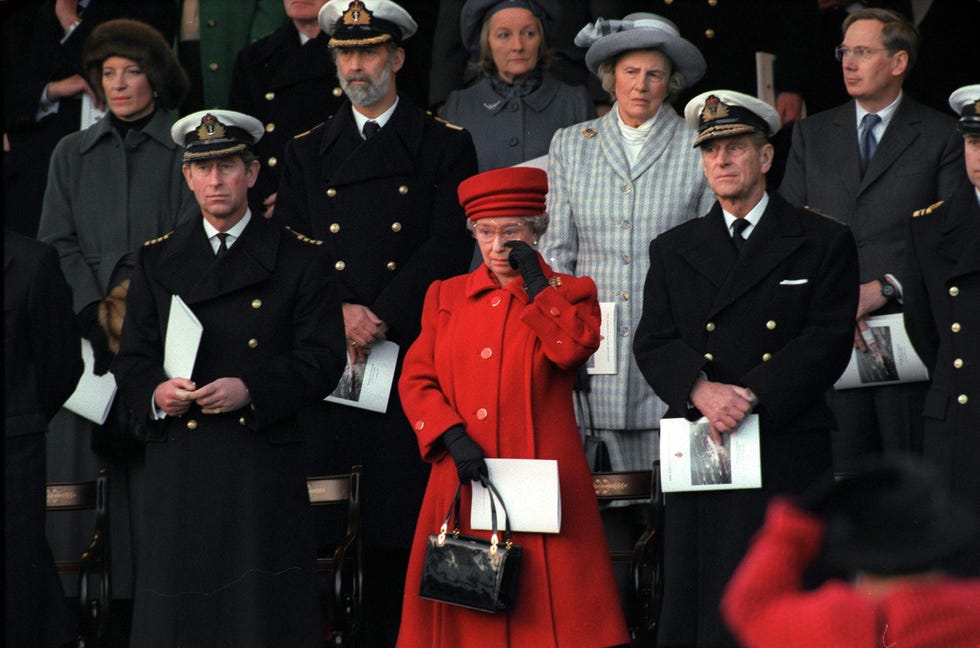
The Royal Yacht was decommissioned on December 11, 1997, at a ceremony in Portsmouth, U.K., after nearly half a century in service and having traveled more than one million nautical miles. In addition to Queen Elizabeth II and the Duke of Edinburgh, Prince Charles, Princess Anne, Prince Andrew, and Prince Edward all attended the ceremony. As the British ensign was lowered to the tune of a navy band, Her Majesty was photographed blinking back tears.
 Tim Graham//Getty Images
Queen Elizabeth II, Prince Philip, and Prince Charles attend the decommissioning ceremony of the Royal Yacht Britannia.
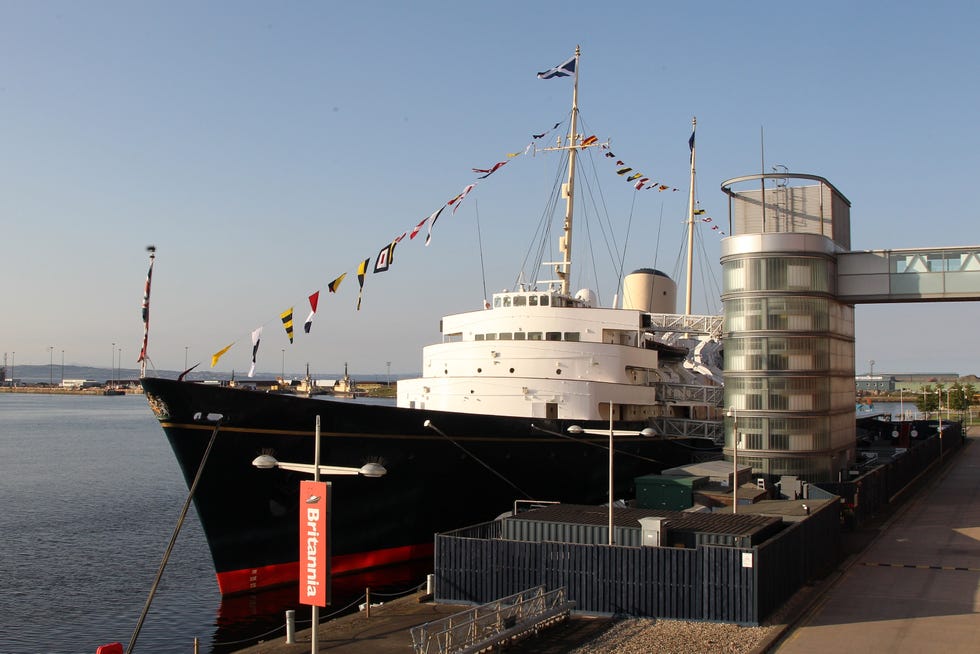
Britannia was retired to Port of Leith in Edinburgh. Today, as one of the most popular tourist sites in the U.K., she serves as a museum and receives some 350,000 visitors per year who can tour the State dining room, the Queen’s bedroom, and sun lounge, as well as view the engine room and crew’s cabins. Visitors can even have tea and scones on the royal deck. The majority of the items on display are original to the yacht and are on loan from the Royal Collection.
 Chris Jackson//Getty Images
The Royal Yacht in its current home in Edinburgh. The ship is open to the public as a museum.

Anna Fixsen is the deputy digital editor of ELLE DECOR, where she oversees all facets of ELLEDECOR.com. In addition to editing articles and developing digital strategy, she writes about the world’s most beautiful homes, reviews the chicest products (from the best cocktail tables to cute but practical gifts), and reports on the most exciting trends in design and architecture. Since graduating from Columbia Journalism School, she’s spent the past decade as an editor at Architectural Digest, Metropolis, and Architectural Record and has written for outlets including the New York Times, Dwell, and more.