
ALBANY, N.Y. (CN) — A New York law took effect Wednesday allowing terminally ill patients to request medication to end their lives on their own terms, marking the 14th district in the country to implement such a policy.
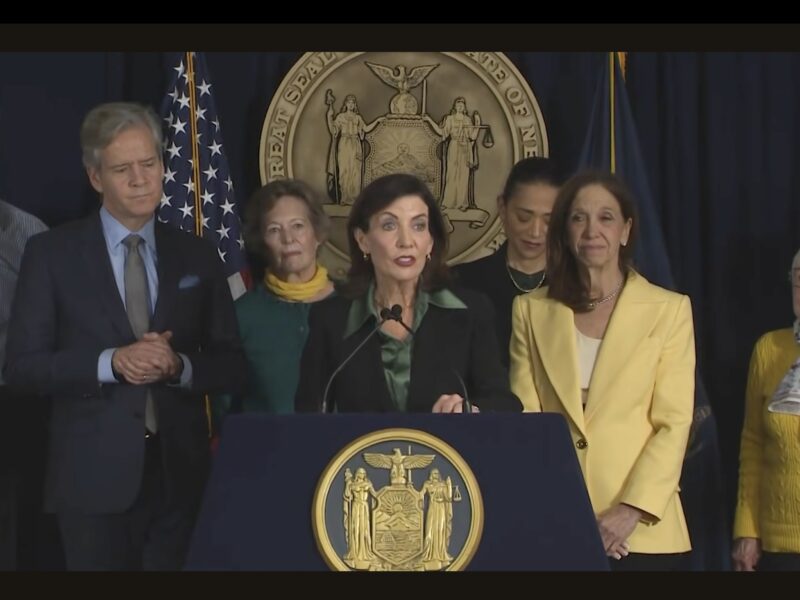
Patients with six months or less to live may now request lethal drugs from their physician under the Medical Aid in Dying Act, which Governor Kathy Hochul signed on Feb. 6. While the act is now state law for most qualifying facilities, a legal challenge led by a congregation of nuns in upstate New York remains pending.
The MAID Act requires that patients, who must be adult New York residents, record the request with an audio or video device, to be “permanently stored in the patient’s medical record.” A doctor must ensure the patient is making an informed, independent decision. Patients also have to undergo a mental health evaluation — a provision that isn’t common in other states with similar laws.
“It allows people to die with dignity. They can choose a passing that aligns with their personal values,” said Adrienne Borschuk, an assistant professor of bioethics and humanities at SUNY Upstate Medical Center, who has worked as a pediatric palliative care psychologist since 2016.
Only patients themselves can apply, not surrogate decisionmakers like family members or court-appointed guardians, and the patient can cancel the request at any time. Once someone goes through the evaluation process, and a doctor writes a prescription, there’s a five-day waiting period before the patient can fill the prescription and self-administer the legal dose.
Patients are supported at every step, Borschuk explained, with check-ins to ensure: “Is this the right thing for the patient? Is this patient allowed to make this decision? Is this person meeting criteria? Are there other things that would better serve this patient?”
“This isn’t just a patient-led decision. This really is shared decisionmaking with a lot of stops along the way to make sure that everyone’s staying safe — that this is, you know, the ethically and morally right choice for this patient, and that they continue to meet criteria,” Borschuk said.
Oregon was the first state to legalize medical aid in dying, in 1994, passing its Death with Dignity Act, which surmounted legal challenges including in the 2006 U.S. Supreme Court ruling in Gonzales v. Oregon. The high court said the federal Controlled Substances Act doesn’t bar doctors from prescribing medications under a valid state MAID law.
The Supreme Court held in 1997, in Washington v. Glucksberg and Vacco v. Quill, that there is no constitutional right to assisted dying, and it’s up to states to pass such legislation. Thirteen states and the District of Columbia have done so.
In the Empire State, a nonprofit called End of Life Choices New York will manage the MAID process.
Leaders in the Catholic Church have fiercely opposed New York’s implementation of the law, which underwent amendments in its journey to the governor’s desk that make it one of the strictest in the country: It’s the first state to require an evaluation by a mental health professional, in addition to the physician’s assessment, determining a patient’s capacity to make an informed decision.
“It’s just kind of an extra layer of, ‘Yes, we’re sure that this person has the capacity to make this decision’” said Borschuk, who co-authored an article for the New York State Bar Association that calls for additional guidance around what that evaluation should entail.
The checks in place are not sufficient for the act’s harshest critics, however, prompting a now-dismissed lawsuit in the Eastern District of New York and one pending in the Northern District of New York.
Lead plaintiffs Carmelite Sisters for the Aged and Infirm, a convent in Germantown, are joined in the latter suit by the Dominican Sisters of Hawthorne, the Missionary Sisters of St. Benedict, the Little Sisters of the Poor and several skilled nursing and senior living facilities in the Catholic Health system.
“New York has put the sisters to a stark choice: Either abandon their religious beliefs regarding the sanctity of life or face significant fines and penalties,” write the plaintiffs, who are represented by attorneys from the Becket Fund for Religious Liberty.
Before the MAID Act, New York’s Palliative Care Information Act only required that health care providers inform patients of their options for treatments or managing pain. The plaintiff nuns, who consider the measure to be assisted suicide, say requiring them to offer patients an option that contravenes their beliefs is a First Amendment violation.
 The Dominican Sisters of Hawthorne care for a patient at Rosary Hill Home, the sisters’ apostolate in Hawthorne, New York. (U.S. District Court)
“We’re fighting to ensure that Catholic healthcare ministries can continue caring for sick and dying New Yorkers without being forced to participate in assisted suicide. New York is threatening them with fines and even jail time for refusing, putting the very survival of their ministries — and the vulnerable patients who depend on them — at risk,” said Adele Keim, senior counsel at Becket and attorney for the healthcare ministries, in an email to Courthouse News.
Religious facilities are permitted to opt out of MAID, and refer patients who wish to take advantage of it to another facility. But the nuns filing suit say that provision is too narrow compared to other states.
“It still forces objecting ministries to counsel patients about assisted suicide, actively connect them with doctors willing to provide it, and, in some cases, permit the practice on their own premises,” Keim said. “A genuine exemption would let them continue to do what they’ve always done — offer their patients the best possible care and a loving personal presence.”
Last week, with the law’s enactment days away, New York state agreed to a voluntary temporary restraining order as the law pertains to the plaintiffs, to give the parties time to file motion papers and the judge time to make a ruling.

Follow @NinaPullano

Follow @ninapullano.bsky.socialSubscribe to our free newsletters
Our weekly newsletter Closing Arguments offers the latest about ongoing
trials, major litigation and rulings in courthouses around the U.S. and the world,
while the monthly Under the Lights dishes the legal dirt from Hollywood,
sports, Big Tech and the arts.