We traveled to central Italy to learn about an empire that once encompassed Asia Minor, where our roots lie. We also explored the story of a Hellenistic queen who believed she was carrying on the legacy of Cleopatra of the Ptolemaic dynasty of Egypt. Our family has had four or more generations of women named Cleopatra, a tradition that reflects the importance of remembering where we come from. One should never forget one’s roots.
The people, foundations of Italy, together with UNESCO, have preserved much of our shared Greek and Roman heritage—history that has too often been damaged or destroyed by war. Visiting these places was a powerful reminder of the enduring legacy of our ancestors and the importance of protecting it for future generations.
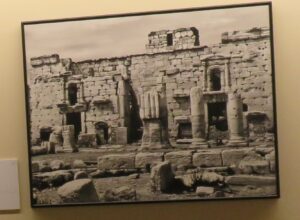
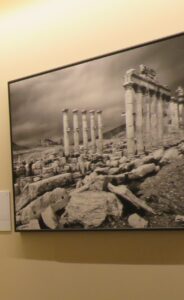
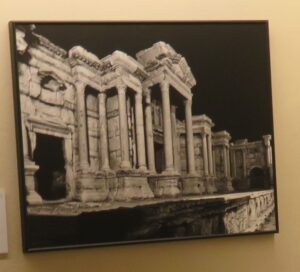
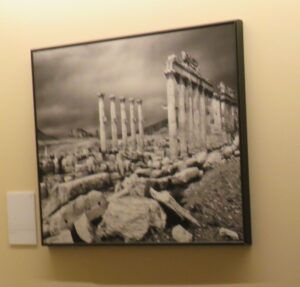
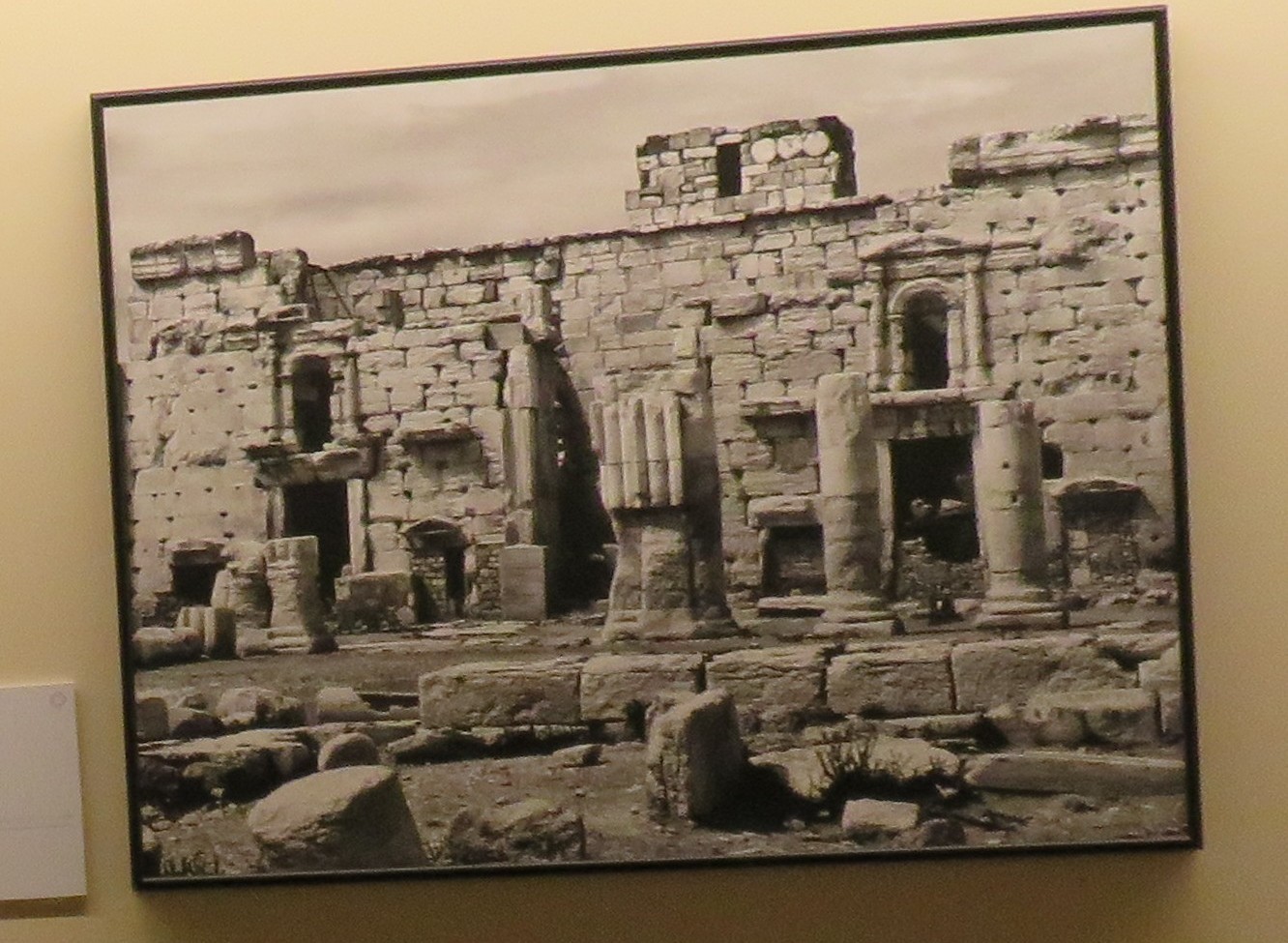
“The Archaeological Museum of Aquileia is closed today. The Palmyra photo exhibit is open,” said our guide Giovanna Stringher. The photography exhibition, “Insights into Palmyra – Photographs by Elio Ciol, Taken on 29 March 1996,” will be presented at the newly excavated archaeological site of the Domus and Bishop’s Palace in Piazza Capitolo. The exhibition featured twenty remarkable, previously unpublished photographs captured by the renowned photographer before the recent destruction of Palmyra’s cultural heritage.
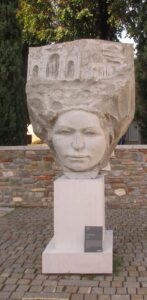
Piazza Capitolo also hosted “Zenobia’s Memories,” a sculpture by contemporary Syrian artist Elias Naman, generously loaned by Gruppo Danieli. The sculpture’s gaze evokes the tragedy of the present day while honoring the enduring legacy of Queen Zenobia and the ancient city of Palmyra. By bringing together artifacts from the ancient world, the exhibition sought to demonstrate cultural continuity and the shared human experience across vast geographical regions and historical periods.
The pairing of Aquileia and Palmyra was especially meaningful, as both cities were major hubs of the Roman Empire that connected diverse cultures through commerce, diplomacy, and exchange. Located in present-day northeastern Italy, Aquileia was one of the empire’s most important commercial, administrative, and military centers, serving as a gateway between the Mediterranean and Central Europe. Palmyra, an oasis city in the Syrian Desert, flourished as a vital crossroads linking the Roman Empire with Persia, Mesopotamia, and the East. Its strategic location made it one of antiquity’s most significant centers for long-distance trade and cultural exchange.
Together, Aquileia and Palmyra illustrate how the Roman world was sustained by interconnected cities that fostered economic prosperity, cultural interaction, and the exchange of ideas across continents. By presenting these two remarkable cities side by side, the exhibition highlighted their shared historical significance and underscored the enduring legacy of cultural connections that transcended borders and civilizations.
The exhibition honored the memory of Khaled al-Asaad, the longtime head of antiquities at Palmyra, who was murdered by ISIS in 2015 after refusing to reveal the location of hidden artifacts. His unwavering dedication to protecting Palmyra’s cultural heritage has become a powerful symbol of courage and the enduring importance of preserving the ancient world’s legacy.
In The History of the Decline and Fall of the Roman Empire, Edward Gibbon famously praised Zenobia, writing: “Zenobia is perhaps the only female whose superior genius broke through the servile indolence imposed on her sex by the climate and manners of Asia. She equaled in beauty her ancestor Cleopatra, and far surpassed that princess in chastity and valour.”
The exhibition also celebrated the legacy of Queen Zenobia, the legendary warrior queen of Palmyra. In A.D. 269, she seized Egypt and, by A.D. 270, had extended her rule across much of Asia Minor, asserting Palmyra’s independence from Rome and bringing several of the empire’s eastern provinces under her control. Her remarkable expansion prompted the Roman Emperor Aurelian (ruled A.D. 270–275) to march east to restore imperial authority. Following a series of military campaigns, Zenobia was ultimately defeated, and Palmyra was reintegrated into the Roman Empire.