
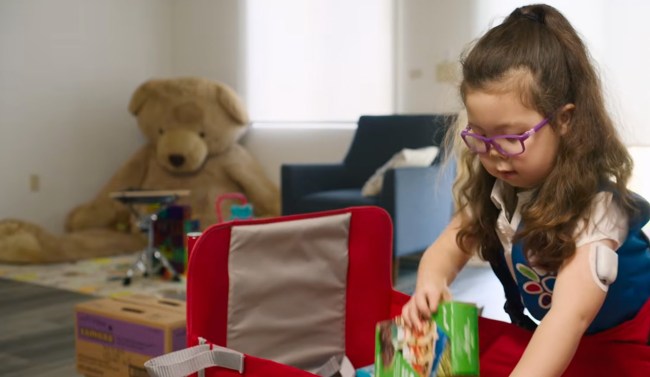
Five-year-old Ara’s Girl Scout cookie goal was 55 boxes. To hit it, she decided she needed to get stronger — so she started taking Pilates, specifically to build up the muscle to pull her loaded wagon door to door. It wasn’t the film crew’s idea. It wasn’t even her parents’ idea. Director Alysa Nahmias learned about it the way she learned about most of the best material in Cookie Queens: by simply checking in.
“I said to Ara’s mom, ‘What is she up to?’ She goes, ‘Well, she’s been doing Pilates,'” Nahmias tells Gold Derby. “I was like, ‘Well, that’s in the movie. Tell me more about that.’ That’s kids leading — when we just pay attention to what they’re actually doing, it can be extremely interesting and hilarious.”

Every year, Girl Scouts sell more than $800 million worth of cookies in a six-week season, earning money and prizes for their troops along the way. In Cookie Queens, Nahmias turns that annual ritual into something much bigger: a portrait of four girls — Ara, Nikki, Olive, and Shannon Elizabeth — navigating ambition, identity, and the economics of being a kid who sells things for a living, six weeks at a time.
The idea began at Nahmias’s own dinner table. Her children had watched her previous films, including Art & Krimes by Krimes, and issued a challenge: could she make something they’d actually want to share with their friends? “That was a challenge, an interesting one, both as a mom and as a filmmaker,” Nahmias says. Girl Scout cookies, she realized, offered “this visual world, incredible characters, interactions between customers and girls” — and a way into questions she’d been circling in her work all along, about “the ways that girls and women are taught about our value in the economy and in the broader culture,” and about girlhood and capitalism more directly than she’d ever approached them before.
What emerged is an entirely observational film — no interviews, no narration, shot from the girls’ point of view. Across its six weeks with each family, the film catches its subjects in the kind of unguarded, funny, and occasionally profound moments that only come from sustained access: 12-year-old Olive, mid-business crisis, slurping ramen with her best friend; Shannon Elizabeth’s mother calling the family’s cookie debt “terrifying” if the boxes don’t sell.
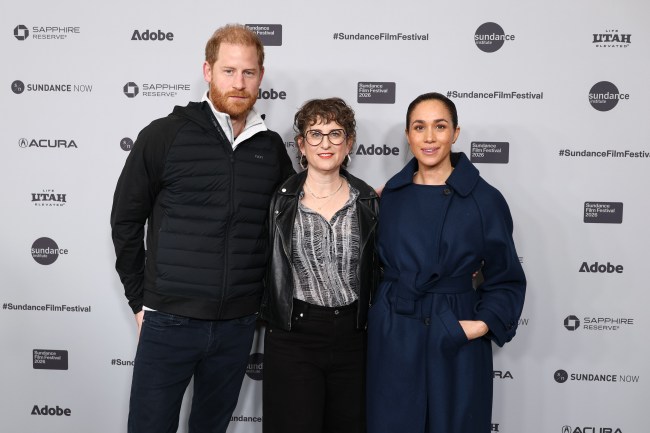 Prince Harry, Alysa Nahmias, and Meghan Markle attend ‘Cookie Queens’ premiere at 2026 Sundance Film FestivalCindy Ord/Getty Images
The film has an unusually personal connection to two of its highest-profile executive producers, Meghan Markle and Prince Harry. Markle was a Girl Scout herself, troop-led by her own mother — in Los Angeles, in the very same council as Nikki and her sisters, who appear in the film. “Once I knew that, I was like, ‘Oh, of course,'” Nahmias says. “There is a genuine personal connection that made it feel super organic and real.” Markle and Harry made a rare joint appearance at the film’s Sundance premiere, part of the festival’s Family Matinee section.
Cookie Queens carries a 100% score on Rotten Tomatoes as it opens in theaters nationwide on Aug. 7 via Roadside Attractions. Gold Derby spoke with Nahmias about assembling a single crew to chase four girls across the country in one cookie season, the moments that surprised even her, and how her stars’ EPs actually got involved.
Gold Derby: I understand this all took shape because your own kids were like, “Can we get a break from the drama a little bit?” Can you talk about how this story came to be and why you wanted to focus on Girl Scout cookie sales?
Alysa Nahmias: My kids had seen my last films, and they liked them, but they were like, “Next time, could you please make one that we really want to share with our friends?” That was a challenge, an interesting one, both as a mom and as a filmmaker — how do I find something that I think kids do like drama, but they want maybe a different kind of drama than most documentaries bring to the table.
With Girl Scout cookies, you have this visual world, incredible characters, interactions between customers and girls, and there’s a kind of way that girls are practicing their pitches all the time and turning it on and turning it off. I was interested in that, and interested in the ways that girls and women are taught about our value in the economy and in the broader culture — looking at girlhood and capitalism.
That was a way in to say: we can have a story that is about kids and wildly entertaining, and also have a lot of layers where I can explore, as a filmmaker, the relationship — the ways that individuals shape institutions and vice versa, which are ongoing themes in my work. But this time in the context of this microcosm of the Girl Scout cookie sale, and how it might say something about labor rights, what’s fair and what’s not fair, the constructedness of the economy, women’s place in that, and the ways that cuteness can sell or not.
Speaking of cuteness and selling — this couldn’t have been more perfectly cast. How difficult was it to narrow the field to the four girls we see featured? And what’s the crew setup like, following four girls who are all over the country?
We actually filmed with seven girls to get these four stories. The casting process was very grassroots — working with an awesome casting consultant, interviewing countless families and girls. I interviewed dozens, and I actually visited without a camera before I chose the final seven we filmed with. Then in the edit, it was really looking for stories that made for a whole that’s greater than the sum of the parts, where the bigger themes around ambition and childhood could come out most clearly.
Aesthetically, I achieved it by having a single crew — myself, my producer Jen Sims, my cinematographer Antonio Cisneros, and an assistant camera and sound person. The five of us traveled to all of the different cities. For five months, it was like touring.
It’s rare for a documentary to shoot in such a compressed amount of time, because cookie season is only six weeks in each region, and the regions were staggered. I did a little pre-season and post-season with each family — it’s almost like a sports doc that way. The reason I didn’t just send separate crews to different places is I wanted it to be cohesive aesthetically. We shot everything with the same Leica Prime lenses, on the same camera, with Antonio shooting it. I wanted emotional consistency and a consistency of intention and story that we found in the edit — we polished it there — but during production, it was already clear where the overlaps were, how you could see one girl reflected in another, and that this story was going to be very much in the kids’ POV, but speak to adults as much as children.
What’s it like prepping them to be filmed? Do you have to coach them, or is there time to get used to the cameras — or are kids these days just used to being on camera all the time?
I do think kids these days are used to being filmed more than we were as children. It’s very normalized, and Zoom especially is normal. But still, having a big camera and six adults in your space is different. The girls talk about how we really did become family — we spent at least as much time off camera as on camera with them. Over time, more and more comes out, especially as they were getting tired during the cookie season.
I wanted to make an entirely observational documentary, which is a challenge. There are no interviews here, no exposition or narrator — it’s all in present tense, with the girls from their POV, and sort of framing the adults out a lot of the time. They did get used to it, and they did open up in ways that sometimes surprise you as a documentarian. But if you stick with it and let people show you who they are, they often do.
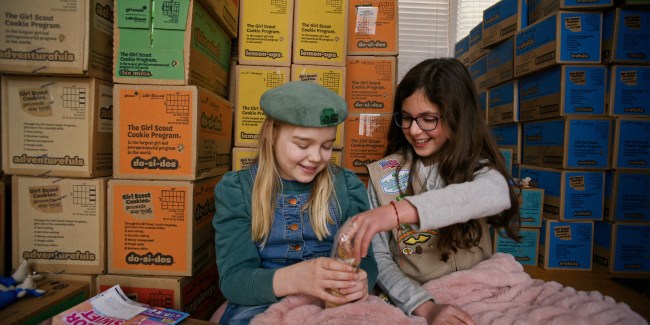 Olive and Celia in ‘Cookie Queens’ Roadside Attractions
Olive comes to mind — she’s something else. The deep conversations she initiates with her mother, and with her friend, questioning her own identity — “If I wasn’t the top seller, what would I be?” — at the age of 12.
I have a daughter about the same age as Olive, so I do think we don’t give girls and kids enough credit for how wise they can be. I think if we actually sit back and listen, we might have ears to hear what they have to say. It’s not that Olive alone has a knack for verbal expression — I think a lot of kids feel those things. I know when I was 12, I definitely felt like the world didn’t understand me as much as I wanted it to. I think that’s a common feeling for girls.
I wanted to allow girls to be represented as three-dimensional — where they can be little kids and innocent and naive sometimes, and also be little adults, wise beyond their years. Both of those things are true, and Olive is like that too. There’s a moment where she’s talking with her best friend Celia, telling her she was on the news and it wasn’t great — they didn’t put up her website, which wasn’t great for business — but she’s slurping ramen like the 12-year-old she is. It’s this business summit between two 12-year-olds slurping ramen. I really love those moments when the girls can be both little kids and wise beyond their years, because that’s my experience with my own kids when I really listen to them — and it’s something we don’t see represented in mainstream media very much.
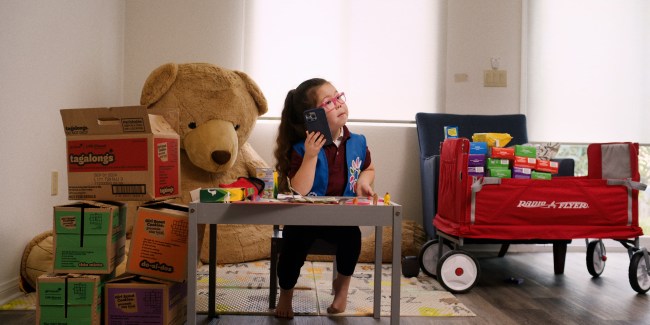 Ara in ‘Cookie Queens’ Roadside Attractions
Whose idea was it to put Ara in a Pilates class? That was so funny.
That was Ara’s idea. My producer Jennifer Sims and I checked in with the families all the time — multiple times a week, asking what they were up to, how sales were going. I asked Ara’s mom what Ara had been up to lately, and she said, “Well, she’s been doing Pilates.” I said, “That’s in the movie — tell me more.” That’s kids leading. When you pay attention to what they’re actually doing, it can be extremely interesting and hilarious. She was serious about it — she wanted to get stronger so she could pull that wagon.
I didn’t realize the stress that comes with this — that the girls are responsible for their own order, and how difficult that can be for a family. We see that mostly with Shannon Elizabeth’s family. How hard is it to stand back and just watch, instead of saying, “We’ll buy your cookies, we’ll sell them to all our friends”?
I did forbid my crew from buying cookies from Ara because her goal was only 55 boxes — we would have cleaned her out and she’d have met her goal right away. But we did buy some boxes from all the girls, because why not?
It’s not that it was difficult exactly, because I wasn’t in a position where I could just fix things for them. But you also start to know people well enough. I knew Shannon Elizabeth and her family, and I trusted that whatever happened, no matter what they went through, they were going to be OK — they were going to have each other, they have a really strong community. Even if she didn’t make her goal, I thought they’d find a way.
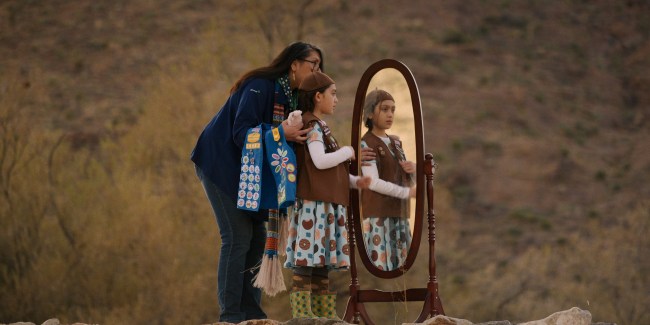 Shannon Elizabeth in ‘Cookie Queens’ Roadside Attractions
It’s interesting to see how people do find a way, when you’re working with people who can do that. There are situations in documentary where you do get involved, I think — I come from an arts perspective, not journalism. I consider myself an artist, so I’m not someone who believes I can never touch or interfere. I believe people are affected by a camera being there, and that’s OK. Sometimes it makes them open up more, feel like they could say something they might not say with the camera off. Sometimes it doesn’t — sometimes they get inhibited. I’m interested in the choices they’re going to make, and I want to watch those unfold. I don’t think we’re there to interfere, unless someone’s in danger.
How much does it impact you to have people like Meghan Markle and Prince Harry come along and say, “We want to take part in this”?
It’s awesome to have executive producers who genuinely understand the message of a film and its universal appeal, and want to use their platform to shine a light on it. Sometimes even when EPs get involved, they’re not always able or willing to put themselves out there to support the project — and we have really extraordinary support from ours.
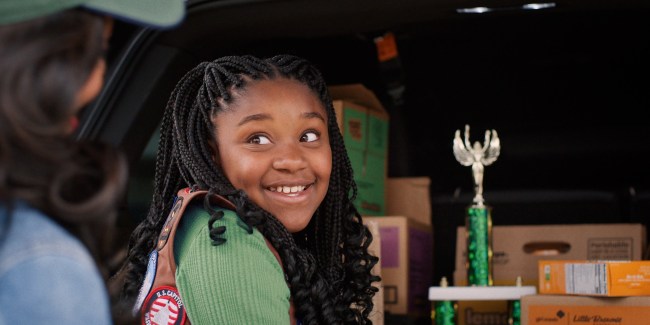 Nikki in ‘Cookie Queens’Roadside Attractions
Meghan was a Girl Scout herself, and once I knew that, I understood immediately why she connected with it. Her mom was her troop leader, here in L.A. — the same city, the same Girl Scout council as Nikki and her sisters, who are in the film. There’s a genuine personal connection that makes it feel super organic and real. And beyond that, they also really appreciate the aesthetic vision, and the ways the film is layered and making a statement about valuing girls, about labor rights — that’s powerful.
This interview has been edited for clarity and length.