
Photo-Illustration: by The Cut; Photos: Silivia Poch; Farrar, Straus and Giroux
It’s been a decade since my first postpartum experience, and I’m still processing it. Chatting with a few friends recently, reminiscing about those early days of parenting, I was taken aback by my own recollections of that time. “It sounds like you were depressed,” my friend Julia, who had only just identified her own postpartum depression a decade after the fact, insisted. “Oh, no,” I countered. “I was just afraid to leave the house, lonely down to my bones, and completely detached from my baby, who I viewed with suspicion.”
Why do we do this? Well, mental-health challenges still carry stigma, and for mothers? Don’t get me started. Plus, the months after a baby is born are often ones of survival, hard to piece together in the moment or even retrospectively. And, of course, despite how often we are gaslit about our complaints, women always, always minimize their pain. But there’s something else — some collective, subconscious idea that the deep sadness, anxiety, psychosis, even, that comes after a baby is born is simply a normal reaction to the absolute insanity of birth in a medical system that cares little about the birthing parent, who is often doing it alone. It’s “normal.”
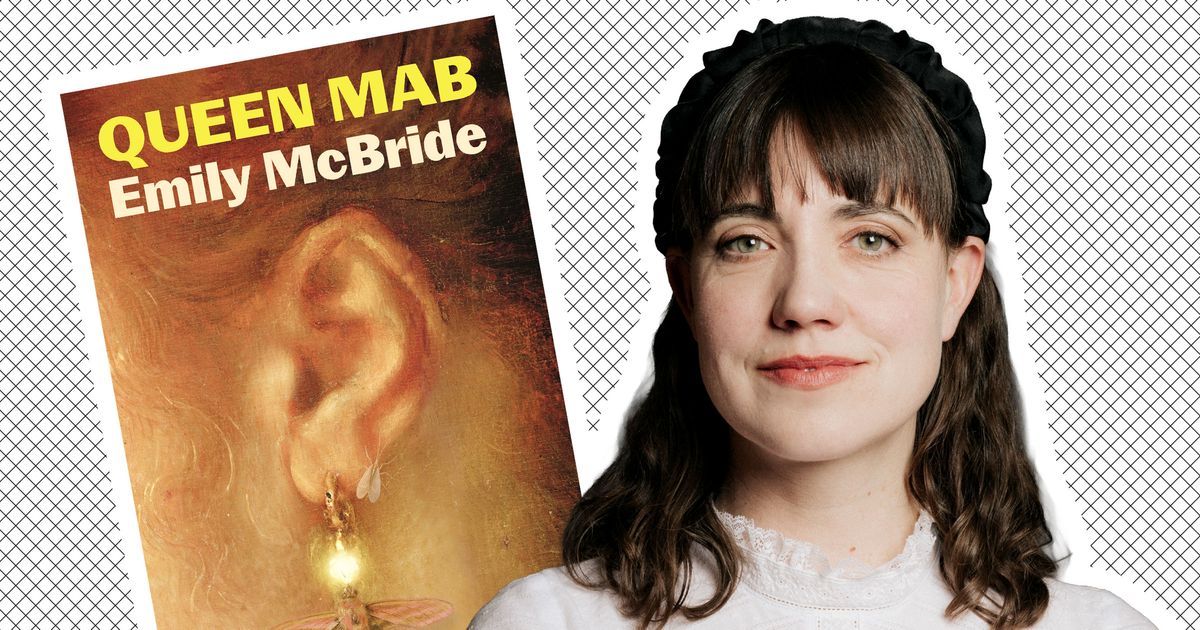
In Queen Mab, Emily McBride’s excellent debut novel, all of this tension is brought to a head. When protagonist Maddie, a 20-something grad student in an unnamed English city, becomes pregnant, she is full of hope. But after the baby comes, something sinister grips her daily life — the feedings and naps, collapsing and uncollapsing the stroller, being simultaneously desperate for company and uncomfortable around others — with a mythical, impending edge.
“In retrospect, I definitely had postpartum depression,” McBride says. “But because I was right in the middle of it, I wasn’t really writing a story about depression. I was writing a story about ambivalence.”
I read Queen Mab with the same uneasy thrill I’d felt staring at my first sonogram. I didn’t want to know whether Maddie’s fixations, that her perfect baby had been stolen by the bad kind of fairies and replaced by a ne’er-do-well changeling, were real or imagined — I wanted that ambivalence, a reminder of all that unease.
McBride’s main character stays completely relatable even as she becomes more unhinged. As a result, my experience of reading Queen Mab was almost like attending a two- (or three-?) person therapy group for survivors of maternal angst. I was Maddie’s sister in sleep deprivation, loneliness, and a sense of deep wrongness that is imperceptible to others. If I could empathize with her, I could empathize with myself.
McBride, as Maddie, writes, “What kind of person didn’t love her own child? She didn’t want to answer that question.” Well, I did. Or, at least, I wanted to try.
Where did this incredible book begin?
Emily McBride: I had my first kid in the summer of 2016, around the time you were having yours. She was not a bad kid, but she was one of those ones that only sleeps when they’re sleeping on you. I had a lot of writing ambition: The baby will nap, and I’ll just do it! Impossible. I wrote a completely incomprehensible 3,000-word short story that nobody understood, including me, with the baby on my lap the whole time.
There’s this line in your book that really hit me — it’s basically about not loving your own baby. It’s the one thing you can’t say: “I just don’t love this, I’m not feeling what other people describe as love.”
Before having children, I was never particularly into them. I had always been assured by my mother that she was never into children, but that it felt completely different when it was your own child. So when I was presented with my own child, it wasn’t an immediate bonding, which I now understand is fairly normal, but I didn’t know about that at the time. I wouldn’t even say I felt bad or sad or angry; I just kind of felt quite neutral about things and kind of ripped off about maternal feelings. I think one of the things I wanted to do in the book is just be as honest as possible, because I found in the few books I was reading on these topics that people kind of stopped short of that.
It’s also maybe unreasonable to assume that you know you’re going to go through this horrific physical experience, be handed this thing you’ve never met, and have all these feelings. Obviously, it happens to people, but it can also not happen, and that is normal too.
I remember taking the postpartum-depression questionnaire every time I went in for a doctor’s visit and essentially lying on it because I thought, Oh, come on, it’s not that bad! And also so they wouldn’t lock me up.
I don’t think either depression or even psychosis is necessarily always obvious when it’s happening, and I tried to toe that line in the novel — where there’s a medical explanation for things, there’s also maybe more of a psychological explanation for things, a slightly mythical explanation for things. Even when you know perfectly what the risks are, and in theory what it might look like, you can still miss all the signs.
In my case, I Googled, “What does postpartum depression look like?,” and whatever I read convinced me I didn’t have it.
I want to talk about the paradox of Theseus’ ship, from the Ancient Greek myths, which you refer to in the book quite a bit. How does it relate to motherhood for you?
So the ship of Theseus is the idea that if you take this ship and all the parts are replaced one by one, are you still on the same ship at the end of it? And it occurred to me that this was a great metaphor for motherhood. I think I just wanted to show that there’s so much instability at these times when everything is changing; you don’t quite know what form you yourself are taking, even though you still look the same on the outside.
Your birth scenes are so powerful — really visceral. I remember taking several days to read the birth from Meaghan O’Connell’s And Now We Have Everything, and this felt like that. But hers was a memoir; why did you choose to make your novel’s scene so intense?
First, I found that in a lot of written birth scenes, you come in right at the end. Maddie’s experience is worse than mine — it’s kind of a mash-up of everybody’s worst experience that I talked to. Here in Spain, there’s a lot of talk about preparing your body and preparing your muscles and endurance and prenatal yoga and this and that, and then when I got there, I was just like, What the hell?! How are you supposed to prepare for this?!
People like to say lots of platitudes, like, “The most important thing is a healthy baby,” which is obviously true, but it’s not the only thing. And then you’re kind of packed off into a room and then sent home, and nothing is really done about it. Maybe in another time, we would be less shocked by it, because we would have attended other births of our older sisters, or even our mothers or aunts. But I found the whole thing very sort of shrouded in mystery, and then just intensely violent and mechanized. And I felt because I couldn’t find very many examples of that that I should try to provide that example.
You grew up in Canada and raised your kids in Spain. Why did you choose to set this novel in the U.K.?
I have friends from the U.K., and I remember going to visit one of them when my kid was a year and a half and thinking how much more hostile the urban environment was. I have another friend who lives in New York, and there you were obliged to fold your stroller every time you got on a bus, which meant if you had a sleeping baby, you had to wake them up and pick them up and do everything with one hand, and I just remember thinking, Wow, they make it so difficult. None of this is true in Barcelona. It’s just so much easier to get around, and people are more forgiving.
Cultural oppression as a menacing literary element.
When we went to the U.K. on vacation and got off the bus from the airport in an absolute downpour, we sort of ran with various suitcases and backpacks and children through the streets, barreled into this pub, and they’re just like, “No, you can’t come in here with children,” and I was like, “But we’re all sort of drowning out here, we won’t be any trouble, could we not just sit in the back room?” There’s regulations in lots of places, which are designed to protect children in some ways, but they end up isolating people, usually the mother, from public life.
What do you make of the proliferation in the last five or ten years of not just more books about motherhood, but writers using some element of fantasy to try to capture aspects of motherhood that, like you said, maybe other people have gone right to the edge of before but not named?
When the first couple of the newer ones started coming out, I remember writing to a friend in a vague panic. I’m on the third draft of my book, and now this book has come out, and now nobody’s gonna want it, and she said, “Relax, how many stories have you read about a middle-age academic having a midlife crisis and sleeping with a student?” So I do feel there’s room for more, and I’m a little bit impatient with the idea that motherhood is done now. Chouette, by Claire Oshetsky, was one that I thought was really well done. Nightbitch, by Rachel Yoder, too.
In addition to fantasy, I feel like animals are invoked a lot in talking about motherhood. You take a person at sort of the height of their freedom, of womanhood and intellectual development. Especially now that we’re having kids in our 30s, for the most part, I felt like I was at the height of my everything. And then suddenly, you kind of collapse inward into being more, well, an animal body. A body that has to serve another thing.
You do tend to get pushback sometimes that stories about mothers or stories about babies are very domestic and not very interesting for the public at large, and so maybe we’re all trying to kind of inject them with this thing that will make them bigger. Or maybe it’s just that our generation is narcissistic, and we got here, and we’re like, What happened to me?! And we’ve decided to write books about it.
Stay in touch.
The latest in style, self, culture, and power in your inbox.
Vox Media, LLC Terms and Privacy Notice
Related