
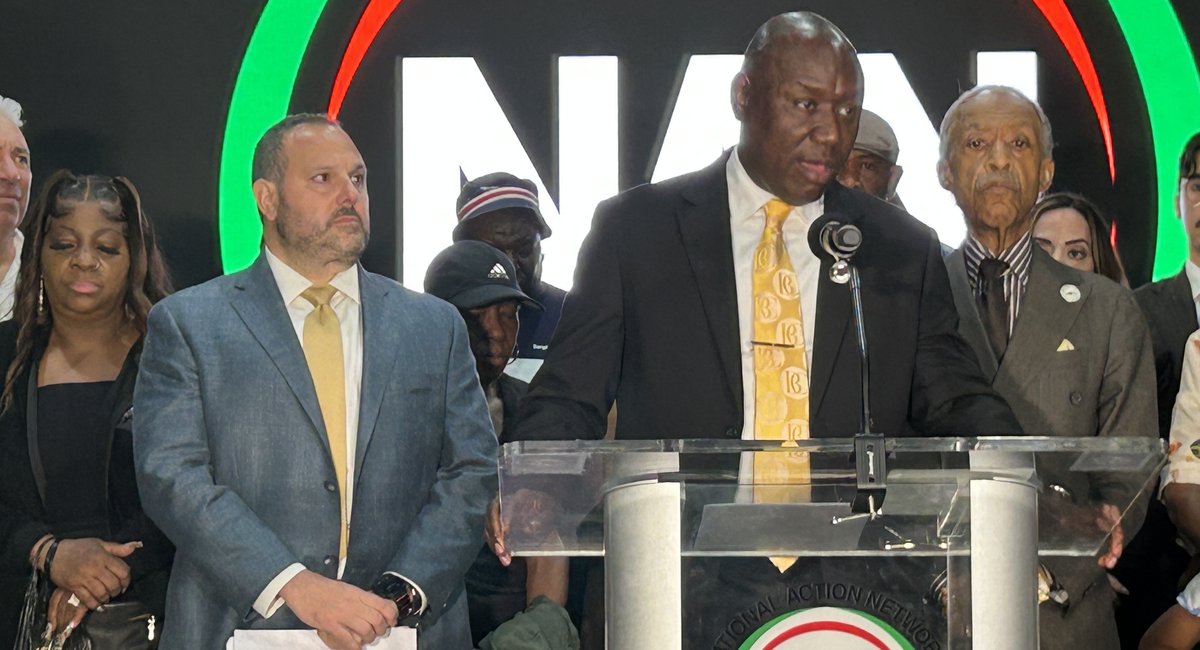
More than 50 Harlem residents are suing New York City, its health department and several city contractors, claiming their negligence led to severe illness and death during last summer’s outbreak of Legionnaires’ disease in the neighborhood.
The public health crisis began in late July last year. It sickened over 100 people, hospitalized 92 and killed seven. City health officials said they had contained the outbreak by late August. The plaintiffs, who include residents who fell ill and the families of those who died, filed three separate complaints Thursday, including a wrongful death suit.
”These are people who were injured or killed as a result of this negligence,” said Ben Crump, one of the plaintiffs’ lead attorneys. “The survivors and the families of the deceased deserve to have this matter resolved.”
The lawsuits come at the end of another outbreak on the Upper East Side. The death toll this year matched that of last year’s cluster, with seven reported dead as of Thursday.
A spokesperson for the city’s Department of Health and Mental Hygiene did not respond to questions about the litigation.
Legionnaires’ disease is a type of pneumonia caused by the bacterium Legionella. It can’t be spread from person to person. Instead, it spreads through water vapor. In New York City, the main culprits behind larger outbreaks are cooling towers, which help cool large buildings by circulating water through their air conditioning systems.
If the water is not regularly disinfected and monitored, Legionella bacteria can grow and aerosolize into the air.
The Rev. Al Sharpton, who spoke at a press conference on Thursday alongside some of the plaintiffs and lawyers overseeing the case, said victims of the Harlem outbreak had not received the same level of attention as this year’s outbreak on the Upper East Side.
“ They worked in Harlem. Many of their families live in Harlem,” he said. “And we are not going to allow them to be forgotten.”
Jared Scott, one of the lawyers for the plaintiffs, also criticized what he said was a disparate response to the two outbreaks.
“The lives here in Harlem are no less or no more precious than the lives on the Upper East Side,” Scott said.
At the same time, Sharpton and Crump praised Mayor Zohran Mamdani’s administration for its handling of this year’s outbreak.
“While we applaud Mayor Mamdani’s expeditious efforts to address and stop the Legionnaires’ outbreak in the Upper East Side just last month, we urge Mayor Mamdani and the city to properly resolve this matter with these families,” Crump said.
June Cooley, who fell ill along with her mother Gloria during last year’s outbreak, said her mother is still taking medication for the long-term effects of Legionnaires’ disease.
“She had to go to rehab because she couldn’t walk,” Cooley said.
Lakisha Plowden said she lost her fiancé Bruce Scott to the outbreak. She was accompanied by their daughter Brooke.
“I’m a single mother now,” Plowden said. “We don’t have her best friend and we don’t have my soulmate.”
An investigation by city health officials last year found that the likely sources of the Harlem outbreak were a cooling tower at a construction site operated by the company Skanska and another at the adjacent Harlem Hospital. The tower at the construction site had not been registered with the city as required by the health code, nor had it undergone regular cleaning and inspections by Skanska employees.
Earlier this year, a Gothamist investigation found that Harlem Hospital staff had not followed their own protocols for maintaining the facility’s cooling towers, although NYC Health and Hospitals, the agency that operates Harlem Hospital, maintained that it went “above and beyond” in maintaining its towers.
An outbreak in the Bronx that killed 16 people in 2015 led to the current regulations for inspecting and maintaining cooling towers. Building owners are required to regularly test their systems for bacteria and report the results to the city.
The city’s Department of Health and Mental Hygiene makes an effort to inspect every cooling tower in the city once a year. But a Gothamist analysis of city data found that the city’s inspection numbers hit a record low in the months leading up to last year’s outbreak. The city health department attributed the drop to short-staffing and budget cuts.
After last year’s outbreak, the city passed a new law requiring building owners to test more frequently for Legionella bacteria in their cooling towers. The city budget also provided the health department with new funding to hire more cooling-tower inspectors.
But a subsequent Gothamist analysis earlier this summer found that inspection rates increased only slightly in the months leading up to this year’s outbreak on the Upper East Side. More than half of cooling towers had not received a city inspection in the past year as of April, and 20% had fallen behind on their bacterial testing as of May.