
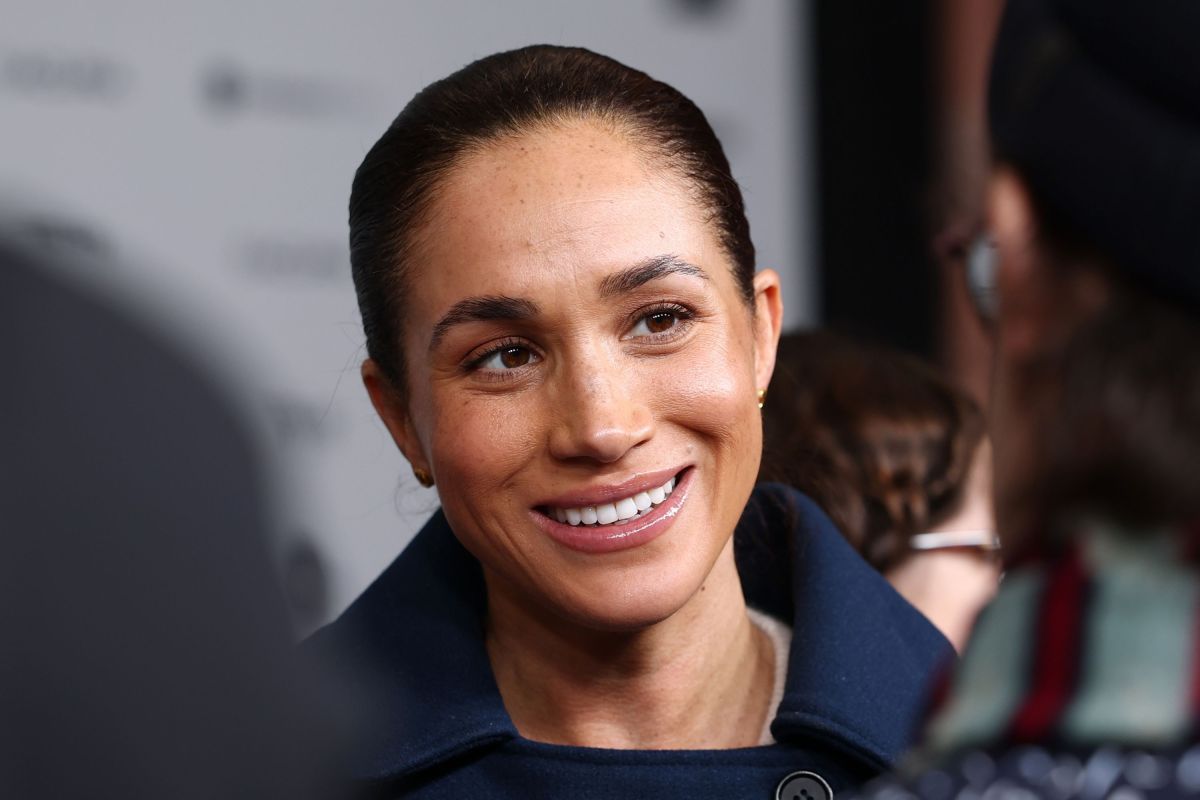
Meghan Markle and Prince Harry’s new documentary Cookie Queens will be released in theaters on Friday, after a journey that began with its Sundance Film Festival premiere earlier this year.
The film, directed by Alysa Nahmias, follows a group of Girl Scouts as they navigate the annual cookie-selling season while learning lessons about entrepreneurship, leadership and resilience.
While the Sussexes executive-produced the film together, Meghan has spoken about the project’s personal significance, drawing on her own experiences as a former Girl Scout and as a mother to Princess Lilibet.
Read More on Analysis
“It’s a huge moment for them. It’s such a cute film. Lots of people will be looking to see how well it does, or does not, do. The ratings will be all important. It’s an incredible moment,” Afua Hagan, a U.K.-based royal commentator, told Newsweek.
 Why It Matters
Cookie Queens is Meghan and Harry’s first theatrical release as movie producers through Archewell Productions and comes as their Netflix TV deal has been on a downward trajectory, with more recent projects not gaining the viewer numbers achieved by their debut docuseries Harry & Meghan.
If the project proves a commercial success then the Sussexes will have demonstrated their ability to secure an audience outside the Netflix ecosystem. However, if the film struggles at the box office, critics may seize on it as further evidence that Sussex-backed screen projects have struggled to replicate the success of Harry & Meghan.
Cookie Queens
Much of what Harry and Meghan do generates criticism as well as praise so some negative commentary is likely after the release but Cookie Queens is unlikely to be as divisive as some of their biggest projects, such as their Oprah Winfrey interview or Netflix docuseries about their royal exit.
“Anyone who’s got a problem with girl scouts selling cookies really has a problem,” Hagan said. “I think it could do well. It’s a feel-good film. I don’t know how much more feel-good you can really get. It will be quite sweet.”
Cookie Queens follows four Girl Scouts from different parts of America as they compete in the annual cookie-selling season, a six-week period that has become one of the largest youth fundraising efforts in the country.
Rather than focusing solely on cookie sales, director Alysa Nahmias uses the competition as a window into modern childhood, family life and the pressures facing young girls.
Among the participants is Olive, a 12-year-old from North Carolina who has previously sold more than 8,000 boxes in a season, Variety reported. Nikki is a 9-year-old hoping to become her area’s “cookie queen” just like her older sister.
Shannon Elizabeth, 8, from Texas, is trying to earn enough money to attend cookie camp and Ara, 5, from California, is taking her first steps into the competition.
The film follows the girls and their families as they set goals, canvass neighborhoods, pitch customers and cope with the successes and disappointments that come with the campaign. Along the way, it examines how children are learning business skills, financial literacy and confidence at a young age.
Meghan recently told People: “Funny enough, on Lili’s first day of pre-K, one of the moms came up to me at drop-off, and I realized we were in our troop together. It was so sweet and nostalgic.”
“I don’t want to give anything away, but there’s a very special moment when one of the girls accomplishes something she never thought possible,” she added. “I get misty-eyed every time I watch that scene. She did it. I feel so proud of her.”
The Struggle to Sell Documentaries
The film arrives at a challenging moment for the documentary sector as a whole. In recent years, factual filmmakers have faced a tougher commercial environment, with broadcasters and streaming services commissioning fewer documentaries and becoming more selective about acquisitions.
Against that backdrop, the film’s theatrical release represents a notable achievement in itself. While documentaries can still break through culturally and commercially, the market has become increasingly competitive, making audience engagement more important than ever for projects that do not come attached to major franchise brands.
An article by the International Documentary Association recently spoke of “decimation at Sundance 2026,” noting that Cookie Queens, at the time of publication in February, had not yet secured a distributor.
At the time, Nahmias told the IDA that “the market is really awful right now and it’s been so hard for so many of us. We can choose to feel powerless—or maybe we are powerless—but I do want to believe that things can change.”
Roadside Attractions bought the rights a month later. For Meghan, the release is an opportunity to demonstrate that Archewell can identify, back and market projects capable of drawing paying audiences into theaters.
A strong box office performance would give Meghan and Harry valuable evidence that audiences are willing to pay to see projects carrying the Archewell name. It could also strengthen the company’s position when pursuing future documentary acquisitions and partnerships.
The stakes are heightened by the fact that Meghan has become one of the film’s most visible champions. In interviews, she has spoken passionately about the story’s focus on young female entrepreneurs and the lessons it offers viewers.
Whether Cookie Queens becomes a breakout documentary or simply a modest theatrical performer remains to be seen, but its release marks an important test of the Sussexes’ ambitions as film producers.