
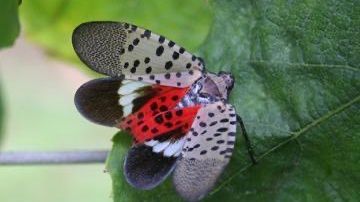
If you’ve seen trees changing in your neighborhood, it’s not a sign that fall is on its way; it’s a sign those trees are thirsty. Lack of water isn’t the only issue they’re dealing with either, because there’s a pest that has made its way into upstate this year, and it’s prompting new warnings and efforts at the federal level to stop its spread.
The spotted lanternfly was first seen on Staten Island in August 2020.
Per the DEC and Cornell University’s tracking map, it’s in the lower Hudson Valley, Albany, Seneca, Ithaca, Schenectady, Ontario, Buffalo and Binghamton. The spotted lanternfly can’t fly long distances, so it hitches a ride on things like trucks, trains, cars, etc.
The problem is not only is it an invasive plant hopper, but there’s also concern it could wreak havoc on New York’s wineries and apple orchards. The spotted lanternfly has a little snout that pierces into the soft material of plants and trees, causing devastation.
“What they do is they suck sap out of the plant, which weakens the plant and reduces their overall health,” said Tom Anderson with Davey Tree. “And they excrete a sticky substance which mold grows on, which can ruin crops and destroy outdoor surfaces.”
If you see one, Anderson says squash it, take a photo and call the DEC or your local agricultural department.
Sen. Kirsten Gillibrand has introduced a bipartisan bill aimed at stopping the spread of lanternflies and designate it as an invasive species that “poses a significant threat to our nation’s agricultural economy.” It’s called the Spotted Lanternfly Research and Development Act.
“The spotted lanternfly has proven to be a destructive pest that threatens New York state’s specialty crops, especially vineyards throughout Western New York, the Finger Lakes, Long Island and the Hudson Valley,” said Gillibrand. “If not contained, this pest will have devastating economic consequences at a time when New York farmers are already having their profits destroyed by rising diesel and fertilizer costs. Congress must immediately prioritize spotted lanternfly research to prevent further spread.”
Gillibrand cites 2025 research from Cornell University that found if nothing is done, the lanternfly could cost state’s grape industry more than $14 million over the first three years of invasion.
Additionally, experts say they are watching closely for the Box Tree Moth Beech Leaf Disease.
As for those thirsty trees, Anderson says the proper way to water trees is deep and infrequent. You don’t want to water shallow; instead, go a minimum of six inches down, and allow the soil to dry out in between watering, which will help encourage tree roots to grow deeper. He says a soaker hose for about 45 minutes will do the trick.