
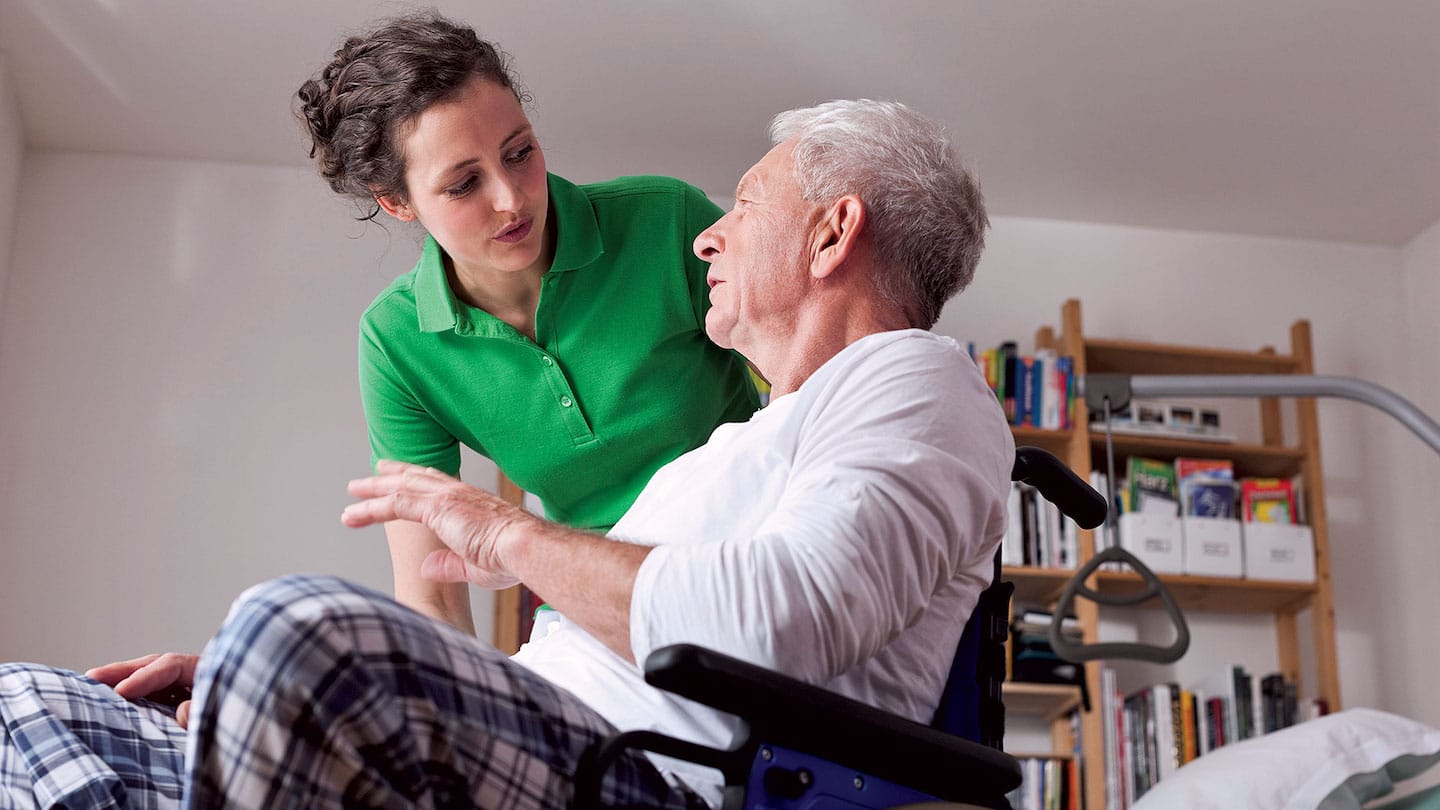
NYC Health + Hospitals has launched a program to provide home care to formerly homeless patients transitioning to permanent housing.
“You have people who are medically frail, who often have a lot of co-occurring physical conditions,” says Leora Jontef, Senior Assistant Vice President for Housing and Real Estate at New York City Health and Hospitals. “So the idea with the Bridge to Care is to go, ‘OK, what do you need to transition seamlessly into housing?’”
One of the transitional clinical services that the program, Bridge to Care, offers is home health aides. Once a patient is in permanent housing, they will be given a home health aide until Medicare benefits are approved, a period of time that can span anywhere from a month and a half to three months.
“The idea is that this would move someone into housing quicker, and so that they would stabilize faster and not languish in other places, whether it’s shelter or language in the hospital, or be at our medical respite program,” Jontef told McKnight’s Home Care Daily Pulse. “We want to move people into housing more quickly, and this is a tool to do it.”
Edward Johnson, a NYC Health + Hospitals patient who was part of Bridge to Care’s pilot, said that the program is about more than just housing.
“It’s not just about having your own place. It’s about having professional help; having people help you get your medicine, help you make appointments, help you get Meals on Wheels, help you get benefits,” Johnson said in a statement. “I don’t think I would have been able to do this on my own. This is the greatest thing since sliced bread for me.”
While the pilot used a cluster care model, Jontef said they hope to expand the program and meet people where they are. She added that they also hope to increase the variety of transitional services offered.
Housing = focus
The aim is to help any patient experiencing homelessness and is referred to Housing for Health for assistance, Jontef said.
“Our goal would be to help them to get stably housed, get housed in the best apartment that meets their needs, and if meeting their needs means providing this supplemental service, we are ready to do it,” Jontef said.
Bridge to Care is under Housing for Health, an NYC Health + Hospitals initiative that creates housing supports and opportunities for patients experiencing homelessness, Jontef said. She added that NYC Health + Hospitals is the largest public healthcare system in the nation and about 70,000 patients — 7% of the population served — are experiencing homelessness.
“We know that where you live really impacts your health outcomes, your mental health, your physical health, and we have created a suite of services to help our patients get housed,” Jontef said.
Housing for Health acts “as a universal point of access for housing” at NYC Health + Hospitals and other services include housing navigation and medical respite, Jontef said.
The housing navigation program helps about 500 people find housing each year and the medical respite program gives patients who are medically cleared to leave the hospital a place to stay and recover, Jontef said.
Having housing allows people to focus on their medical and mental health rather than worrying about day to day needs, Jontef said.
“Let’s meet the moment. Let’s meet the patient where they are,” said Jontef. “These patients that we’re helping are our most vulnerable New Yorkers. They cycle through a lot of institutions. They cycle through jail, they cycle on the street, they cycle to shelter. We want to take advantage of the moment that they’re with us, and if they’ve found someone that cares about them, let’s take it to the finish line and get them out.”