
It has been five years since former Gov. Andrew Cuomo resigned amid a sexual harassment scandal and left Albany to contemplate a myriad of issues, from sexual harassment in the workplace to executive power.
Cuomo’s resignation essentially created multiple parallel tracks for that reckoning: the immediate fallout from the scandal itself; unrelated issues, such as questions around the handling of nursing homes during the COVID-19 pandemic and a pandemic-era book deal; and rhetoric around change in Albany fueled by a style of leadership that rubbed many in the state Capitol the wrong way.
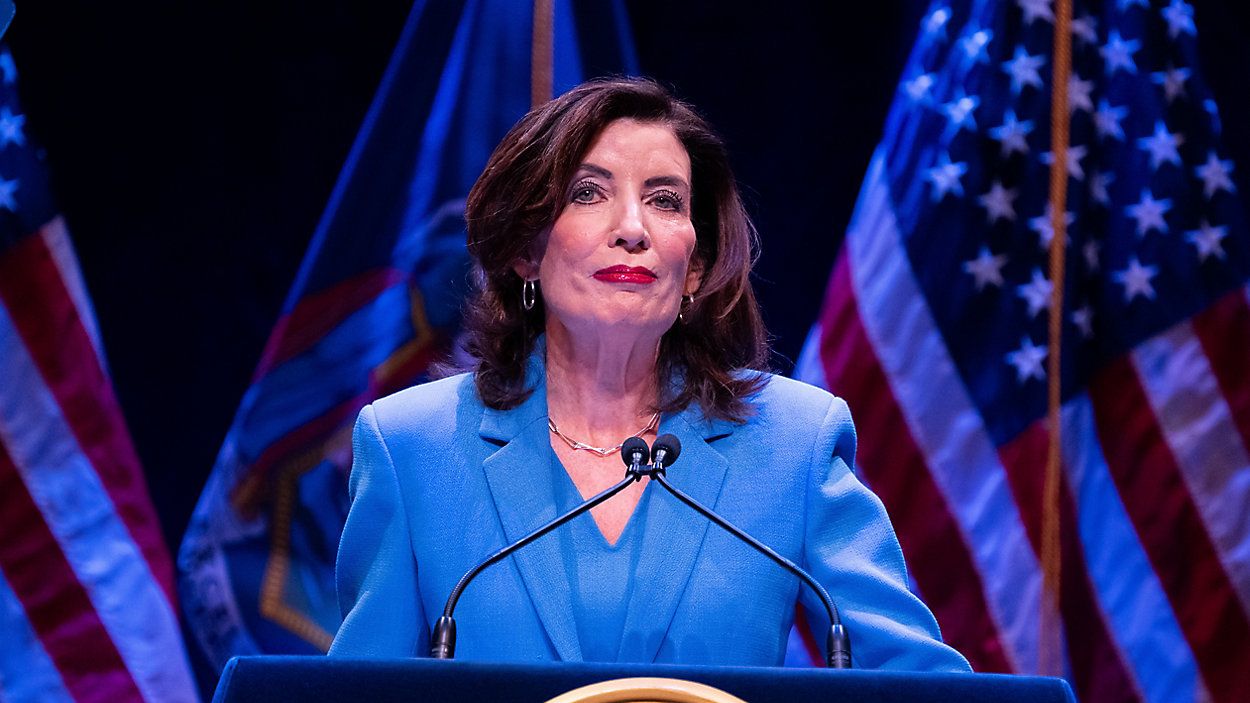
Two weeks after Cuomo’s announcement, then-Lt. Gov. Kathy Hochul took the reins and promised a new era of transparency in Albany.
On the workplace front, Hochul created a dedicated human resources department within the Executive Chamber and in the fall of 2021 retained an independent outside law firm to investigate harassment and discrimination complaints, changes aimed at creating greater separation between the handling of workplace complaints and the governor’s political operation.
On Monday’s “Capital Tonight,” Blair Horner, senior policy adviser for NYPIRG, told Spectrum News 1 that the most tangible thing to come out of Hochul’s promise was reform of the state’s ethics watchdog.
The former Joint Commission on Public Ethics, or JCOPE, was widely critcized for being too open to meddling from the executive branch when investigations regarding the governor or his team took place.
Under Hochul, JCOPE was replaced with the Commission on Ethics and Lobbying in Government, or COELIG, which Horner said is imperfect but addresses some of the most significant issues with JCOPE.
“She said she was going to blow up JCOPE and so that institutionally changed and there is more of a structural ability to insulate the members of that commission from political pressure,” he said.
Cuomo was also criticized for how he used the state’s extensive executive power, and those who work closely with Hochul in the state Legislature largely say their working relationship with her is smoother than it was with Cuomo, even if she also quickly reaches for those levers offered when you live in the Governor’s mansion on Eagle Street.
“There was a lot of resentment among the legislative branch and to some extent reporters and advocacy organizations that then-Gov. Cuomo’s rough-and-tumble approach to politics left a lot of people bruised and unhappy,” he said. “The new governor wanted to behave differently either by personal choice, which I’m sure was part of it, but also to show that there was a difference.”
Horner said Hochul seems to have smoothed out some of the edges that come with New York’s inherently executive-leaning power structure, but her record isn’t perfect.
“Politics ain’t beanbag, but it’s not quite the same level,” he said.
He told Spectrum News 1 that Hochul’s use of the executive budget process raises transparency concerns, particularly this year’s rollback of the state’s 2019 climate law. Hochul chose not to unveil her plan in either the executive budget or the 30-day amendments, circumventing the normal processes by which language is made public and easily accessible to state lawmakers, the public and advocacy organizations.
“A case where the governor never put forward a written proposal publicly and behind closed doors was able to use the budget process to weaken the law dramatically, and so that would be like what her predecessor did and his predecessor did,” he said. “So in that sense it hasn’t changed.”
Long Island Assemblyman Chuck Lavine, who has chairs the lower chambers Judiciary committee, told Spectrum News 1 that while Hochul uses the levers of government to her advantage and can clash with the Legislature, he finds that those clashes are less personal in nature under Hochul and tend to fade more quickly — including Hochul and Assembly Speaker Carl Heastie’s public back-and-forth over Hochul’s announcement of a conceptual budget deal earlier this year.
“In our families we fight, in our families we have arguments and stress can help to produce those arguments,” he said. “To her credit, Kathy Hochul is not a petty person, she doesn’t bear grudges, she does not have a vengeance list as have some of the governors I have worked with and I think that’s a good thing.”
Lavine credited Hochul with so far breaking a streak of scandal-plagued administrations going back to Gov. Eliot Spitzer’s resignation in the spring of 2008, and a broader trend of scandal in New York state government that has infiltrated Albany for years.
He said her style is crucial to regaining the public’s trust.
“At a time when people really do need to have trust in government, those ethical lapses make it all the more difficult to make sure that people have that trust,” he said.
Without directly criticizing her predecessor, A spokesperson for the governor pointed to what her team says the Hochul’s style has been able to accomplish.
“Instead of power and politics, Governor Hochul has put the focus of government back where it belongs: on the people of New York. Five years later, the results speak for themselves as policies advanced by Governor Hochul have delivered on her promise to make New York safer, more affordable and fairer for every family.”
Those close to Cuomo have long summarized his leadership style as a means to an end — a way of getting done what was necessary to help New Yorkers. His spokesperson Rich Azzopardi likewise pointed to former governors accomplishments in office.
“Governor Cuomo fought for and enacted new rights and protections for New Yorkers from marriage equality to the strongest paid family leave and gun laws in the nation to a $15 minimum wage and free public college tuition, created a fiscally responsible and responsive state government that worked and rebuilt this state’s infrastructure in every corner of this great state. We spent every day fighting to make life better for New Yorkers and are very proud of our lasting record of meaningful change,” he said.